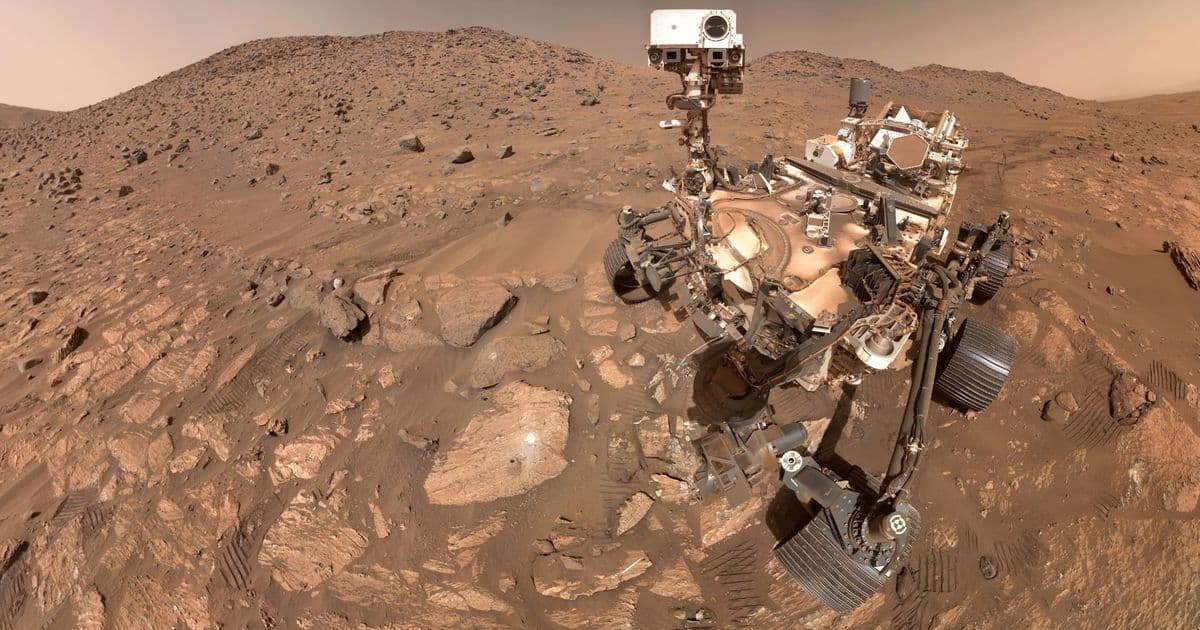
NASA engineers reprogrammed the Mars helicopter's unused Qualcomm Snapdragon 801 SoC to help the Perseverance rover navigate autonomously on Mars, achieving 10-inch accuracy without requiring a satellite constellation.
NASA engineers have successfully repurposed an unused Qualcomm Snapdragon 801 SoC from the retired Ingenuity Mars helicopter to give the Perseverance rover autonomous navigation capabilities comparable to GPS on Earth. The innovative solution allows the rover to determine its precise location on the Martian surface to within 10 inches, dramatically improving its ability to explore the red planet independently.
The Navigation Challenge on Mars
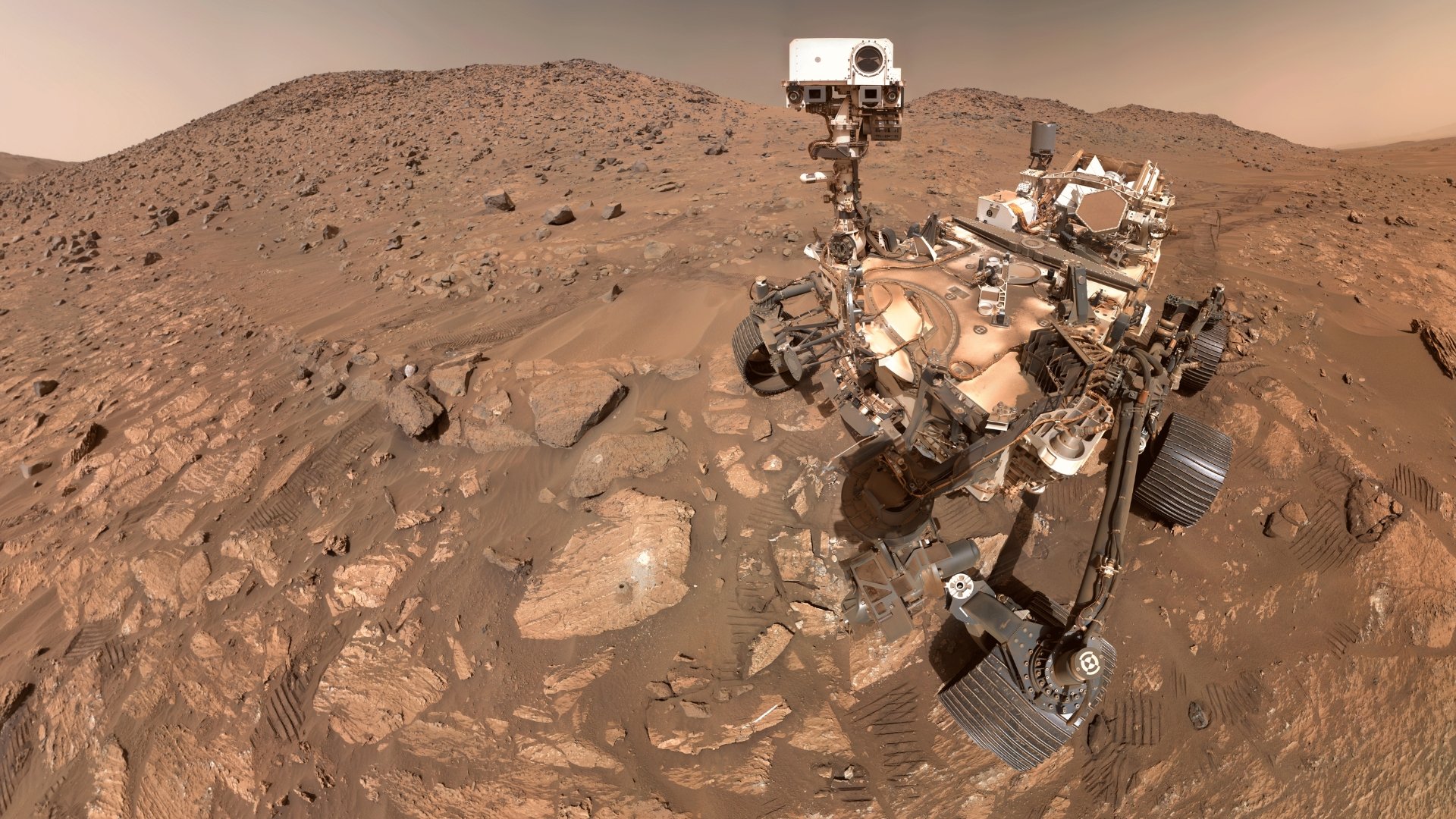
Prior to this breakthrough, Perseverance faced significant limitations in its autonomous navigation capabilities. While the rover could determine its general location using onboard systems, it required daily guidance from Earth to pinpoint its exact position and avoid hazardous terrain. This dependency on human controllers severely restricted the rover's operational range and efficiency.
The communication delay between Earth and Mars compounds the problem. Even though signals typically take about 24 minutes to travel between the two planets, NASA can only establish contact with Perseverance once per day to update its location data. This constraint meant the rover had to operate with outdated positional information for extended periods, limiting its autonomous exploration capabilities.
Repurposing the Snapdragon 801 SoC
The solution came from an unexpected source: the Qualcomm Snapdragon 801 processor that once powered the Ingenuity helicopter's base station. After Ingenuity's retirement in 2024, this chip remained idle and unused on the rover. NASA engineers recognized an opportunity to leverage this dormant hardware for a critical navigation function.
The Snapdragon 801, while considered ancient by modern smartphone standards, proved more than capable for this specialized task. The chip's processing power was sufficient to handle the computational demands of converting panoramic images into usable navigation data.
How Mars Global Localization Works
The new navigation system, dubbed "Mars Global Localization," operates through a sophisticated process that mimics GPS functionality without requiring a constellation of satellites:
Image Capture: Perseverance uses its panoramic cameras to capture 360-degree images of its surroundings
Data Processing: The Snapdragon 801 SoC processes these images, converting them into a bird's-eye view representation of the terrain
Satellite Comparison: The processed data is compared against high-resolution satellite maps of Mars' surface, captured by orbiting spacecraft
Precise Localization: By matching the rover's perspective with overhead satellite imagery, the system can determine the rover's exact position on the planet's surface
This approach effectively provides Perseverance with GPS-like capabilities, enabling it to navigate autonomously with unprecedented accuracy.
Technical Implications and Benefits
The implementation of this system represents a significant advancement in planetary exploration technology. Vandi Verma of NASA's Jet Propulsion Laboratory explained the impact: "This is kind of like giving the rover GPS. Now it can determine its own location on Mars. It means the rover will be able to drive for much longer distances autonomously, so we'll explore more of the planet and get more science."
Several key benefits emerge from this innovation:
- Extended Autonomous Range: The rover can now travel greater distances without requiring Earth-based guidance
- Increased Scientific Output: More autonomous exploration translates to more data collection and scientific discoveries
- Reduced Communication Dependency: The rover requires less frequent contact with Earth for navigation updates
- Scalability: The technology could be adapted for future rovers and other planetary exploration vehicles
The Challenge of Remote Reprogramming
What makes this achievement particularly remarkable is that NASA engineers accomplished this reprogramming while the hardware was operating on Mars, approximately 140 million miles from Earth. Remote software updates and hardware repurposing at this distance represent a significant engineering feat.
This isn't the first time NASA has successfully performed complex remote operations on distant spacecraft. The agency previously demonstrated similar capabilities when it bypassed a failed memory module on the Voyager 1 spacecraft, which launched in 1977 and has now traveled beyond one light-day from Earth.
Future Applications
The Mars Global Localization technology has broader implications for future space exploration. NASA engineers suggest that this approach could be implemented on virtually any rover designed for extensive autonomous travel on planetary surfaces.
The success of repurposing existing hardware also demonstrates the value of designing spacecraft with flexible, multipurpose components that can be adapted for new functions as mission requirements evolve.
Technical Context
The Qualcomm Snapdragon 801, while outdated by consumer electronics standards, represents a robust and reliable processor architecture. Originally designed for high-end smartphones in the early 2010s, the chip's quad-core CPU and Adreno 330 GPU provide sufficient computational power for specialized tasks like image processing and terrain analysis.
This repurposing effort highlights an important principle in space exploration: sometimes older, proven technology can be more valuable than cutting-edge components when reliability and adaptability are paramount.
Conclusion
NASA's innovative use of the Mars helicopter's Snapdragon 801 SoC to enable GPS-like navigation for the Perseverance rover demonstrates the agency's resourcefulness and technical expertise. By transforming idle hardware into a critical navigation tool, engineers have significantly enhanced the rover's autonomous capabilities, paving the way for more extensive and efficient exploration of Mars.
The success of this project not only advances our understanding of Mars but also provides a template for future planetary exploration missions, where adaptability and creative problem-solving will continue to be essential for overcoming the challenges of operating complex machinery across vast interplanetary distances.
Comments
Please log in or register to join the discussion