
Netgear’s counterclaim reframes the TP-Link dispute as a test of where router value is really created: headquarters paperwork, final assembly, component sourcing, firmware engineering, or manufacturing scale.
Netgear has escalated its legal fight with TP-Link, filing counterclaims in federal court in Delaware on June 11 that accuse its larger router rival of false advertising under the Lanham Act. The central allegation is not about Wi-Fi speed claims, antenna counts, or retail packaging language in the usual consumer-electronics sense. Netgear is arguing that TP-Link’s 2024 positioning as an independent American company is itself a misleading commercial claim because, according to Netgear, the company still depends heavily on China-based engineering, manufacturing, and component supply.
The counterclaim responds to TP-Link’s earlier lawsuit against Netgear, filed in November, which accused Netgear of orchestrating a smear campaign and linking TP-Link unfairly to Chinese state-backed cyber activity. Netgear denies that framing and has now pushed the dispute into supply chain territory. In its filing, Netgear says TP-Link remains dependent on China-based operations even after its corporate restructuring, and it asks the court for damages plus an injunction blocking TP-Link from repeating disputed claims about its independence and country of origin.
The timing matters. Netgear’s filing landed one day after the U.S. Department of Defense added TP-Link Technologies to its list of Chinese military companies operating in the United States, according to reports on the updated Section 1260H list. That designation does not automatically ban consumer sales by itself, but it changes the risk model for federal procurement, enterprise buyers, retailers, and channel partners. The router market is now being treated less like a commodity hardware category and more like strategic network infrastructure, where firmware provenance, manufacturing control, and component origin carry commercial value.
Announcement
Netgear’s counterclaim targets the commercial meaning of TP-Link’s U.S. rebrand. TP-Link has presented itself as a U.S.-headquartered company after a corporate restructuring that separated global operations from China-based TP-Link Technologies. The company’s public-facing U.S. presence is centered on TP-Link Systems, while Netgear argues that the operational center of gravity remains elsewhere.
Netgear’s filing claims that the restructuring did not fundamentally alter TP-Link’s engineering and production base. According to the counterclaim described in the article, TP-Link employed more than 13,000 people in China through 2024, including roughly 9,000 workers in Chinese manufacturing centers, compared with about 350 employees in the United States. That ratio, roughly 37 Chinese employees for every 1 U.S. employee, is the numerical spine of Netgear’s argument. The issue is not simply where a headquarters is incorporated, but where the product is designed, sourced, assembled, tested, and supported.
Netgear also challenges TP-Link’s “Made in Vietnam” positioning. The filing alleges that Vietnam serves mainly as the final assembly point for U.S.-bound products and that 99.5% of the components in those products are imported from China. If proven, that would make the dispute a classic supply chain attribution problem: final assembly can qualify a product for one label, while the economic and technical value of the hardware may still be concentrated in another country.
TP-Link rejects the premise. The company says it is U.S.-headquartered, not controlled by a foreign government, and that its products are made in Vietnam. That distinction is commercially important because U.S. router buyers are now evaluating not only price and Wi-Fi performance, but also regulatory exposure. A router is a network-edge device with persistent firmware, remote management features, automatic updates, DNS handling, and direct visibility into household or small-business traffic flows. That makes corporate control and software development location more material than it would be for a passive cable or power adapter.
Technical Specs
The lawsuit is not a chip launch, but the technical substrate is chip architecture and manufacturing. Consumer routers are built around Wi-Fi system-on-chip platforms, RF front ends, power amplifiers, Ethernet switch silicon, memory, flash storage, antennas, and firmware stacks. In a tri-band Wi-Fi 6E or Wi-Fi 7 router, the semiconductor bill of materials often matters more than the plastic enclosure or final assembly site.
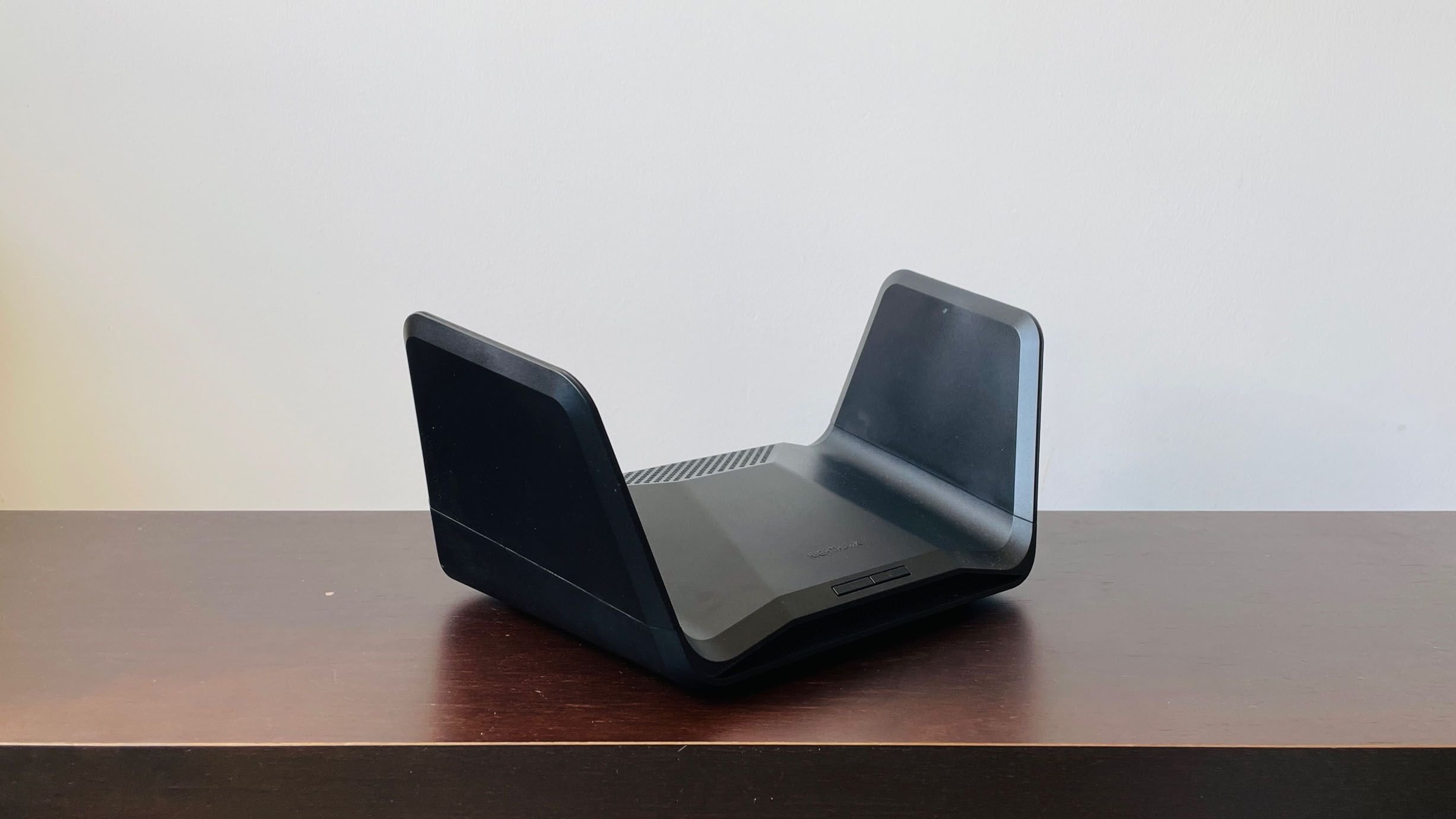
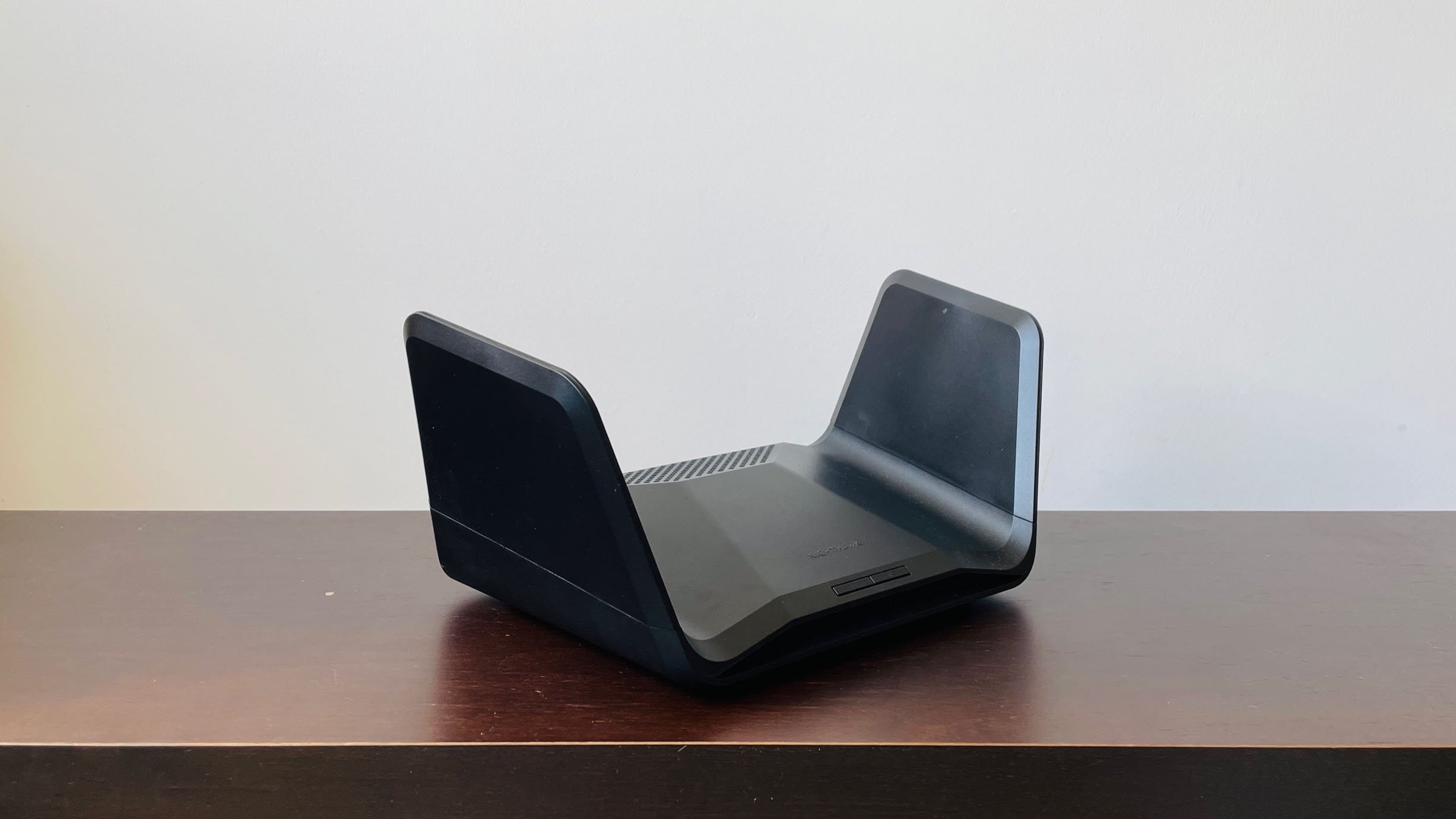
A product such as the Netgear Nighthawk RAXE300 sits in the Wi-Fi 6E class, using 2.4 GHz, 5 GHz, and 6 GHz spectrum to reach advertised aggregate throughput in the multi-gigabit range. TP-Link’s competing Deco, Archer, and Omada families use similar architectural building blocks: a central networking SoC, multiple radio chains, beamforming support, multi-user scheduling, and firmware that coordinates channel selection, mesh roaming, quality of service, and security updates.
The process-node angle is indirect but significant. Router SoCs do not compete on leading-edge logic nodes in the same way smartphone application processors or AI accelerators do. The cost curve favors mature and midrange process technologies where RF integration, thermal behavior, yield, and bill-of-material efficiency matter more than absolute transistor density. A Wi-Fi router chipset may combine logic fabricated on a relatively advanced node with RF components, power amplifiers, filters, and analog parts built on specialized mature processes. The practical result is that supply chain control is distributed across several layers: foundry capacity, outsourced semiconductor assembly and test, module sourcing, printed circuit board assembly, and final product integration.
That matters for the legal claims because “made in” language can obscure where the value is created. Final assembly in Vietnam may include board installation, enclosure assembly, testing, packaging, and logistics. But if 99.5% of the components are sourced from China, as Netgear alleges, then the upstream manufacturing risk is still tied to Chinese component supply, Chinese subassembly availability, and Chinese logistics. A tariff, export control, cyber rule, or procurement restriction can hit that chain even if the final box ships from Vietnam.
Performance claims also sit inside this supply chain context. Modern routers advertise aggregate figures such as AXE7800 or BE-class numbers by adding theoretical maximum rates across multiple bands. Those numbers do not equal single-client throughput. Real throughput depends on client radio count, channel width, interference, backhaul configuration, Ethernet port speed, processor headroom, and firmware efficiency. A router with 6 GHz support can show a large paper advantage over an older Wi-Fi 5 model, but that advantage narrows if the client has only a 2x2 radio, if 160 MHz channels are unavailable, or if the WAN port is limited below the wireless aggregate rate.
For buyers, the technical question is now broader than “which box is faster.” It is also “which supplier controls the firmware pipeline, the update infrastructure, the signing keys, the R&D organization, and the component map.” In routers, firmware is part of the product architecture. A low-cost hardware design can become expensive to operate if patch cadence is slow, cloud services are opaque, or security review is difficult. That is why U.S. scrutiny has centered not only on manufacturing location but also on engineering control and cyber risk.
Market Implications
Netgear’s filing puts TP-Link’s U.S. retail router share at roughly 65%, while TP-Link has reportedly disputed that scale and has cited a much lower figure for the North American residential Wi-Fi router segment. The difference is not a rounding error. A 65% retail share would imply category-defining pricing power, retailer dependence, and enormous installed-base influence. A sub-10% segment share would imply a more fragmented market where TP-Link is one of several competitors rather than the central supplier.
That share dispute shapes the commercial stakes. If TP-Link’s market share is high and its U.S. identity claims are found misleading, Netgear could argue that the alleged advertising affected a large portion of consumer and channel buying decisions. If TP-Link’s share is much smaller, the damages argument becomes harder to scale. Either way, the litigation gives competitors, retailers, and regulators a structured forum to examine a question that has been building for years: how should the U.S. classify networking hardware companies that have U.S. corporate entities but substantial China-linked engineering and manufacturing capacity?
The case also intersects with federal policy. Reports have tied TP-Link scrutiny to the Commerce Department, the FCC, the FTC, and state attorneys general in Texas and Florida. The FCC has already become a major gatekeeper for communications equipment authorization, and the DoD’s Section 1260H list adds another procurement-related pressure point. Even when a designation does not ban retail sales directly, it can influence enterprise purchasing committees, managed service providers, government-adjacent customers, and insurers evaluating network risk.
For Netgear, the upside is obvious. A legal finding that TP-Link’s U.S. branding misleads customers could weaken a price-aggressive rival and shift attention toward suppliers with more diversified manufacturing footprints. Netgear has historically relied on outsourced manufacturing partners rather than owning a vertically integrated China-heavy production base. That does not make its supply chain simple, but it gives the company a different risk profile in a market where country-of-origin scrutiny is rising.
For TP-Link, the risk is that the case reframes its low-cost advantage as a supply chain liability. The company has competed strongly in home networking by offering high feature counts at aggressive price points. That strategy works well when retailers optimize for unit volume, consumer ratings, and headline specifications. It works less well when buyers start assigning economic value to U.S. control, audited firmware development, domestic assembly commitments, and regulatory insulation.
The broader market effect could be a two-tier router category. At the lower end, consumers may continue to compare price, coverage, and advertised speed. At the higher end, especially in small business, education, healthcare, and government-adjacent deployments, buyers may demand clearer disclosures on component origin, firmware signing, vulnerability response, and manufacturing location. That would push networking gear closer to the procurement model already seen in servers, security appliances, and telecom infrastructure.
The semiconductor supply chain is the quiet force underneath the dispute. Router makers do not control leading foundries, RF component ecosystems, or memory pricing. They assemble products out of a global chain where China, Taiwan, Vietnam, Malaysia, Singapore, and the United States all play different roles. What Netgear is testing in court is whether a company can shift the legal identity of the brand faster than it shifts the operational identity of the hardware. In a market where a few dollars can decide a retail sale, that question may carry more weight than another 1 Gbps of advertised aggregate Wi-Fi speed.
Comments
Please log in or register to join the discussion