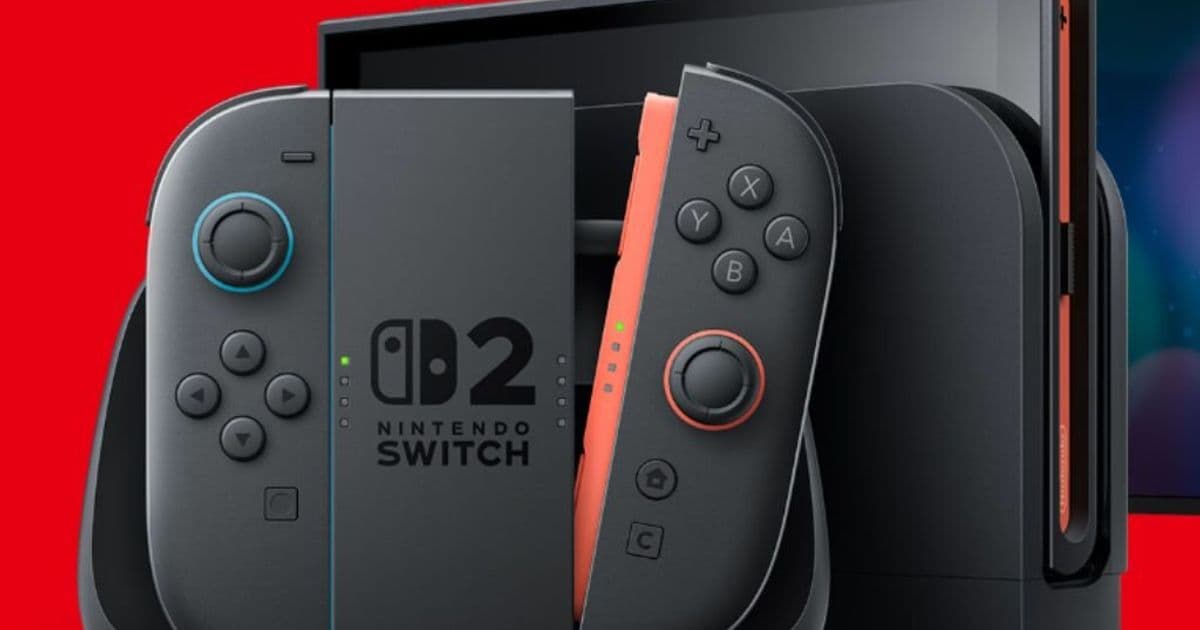
Nintendo is turning Switch history into a purchase filter, using real playtime to separate likely players from bulk resellers.
Nintendo's latest Switch 2 buying rule in Japan is less about specs than access, but it could have a real effect on who gets the hardware at retail. According to the report, Nintendo has temporarily suspended some multi-language Switch 2 sales through its Japanese online store after detecting orders suspected of scalping, then reopened access with a stricter qualification test: a Nintendo Account must show at least 50 hours of playtime on the original Switch by 11:59 PM on May 31, 2026. Demo software and free software do not count, and each qualifying account is limited to one multi-language Switch 2 unit.
What's new
The key change is that Nintendo is no longer treating every Nintendo Account as equal for this specific model. For the multi-language Nintendo Switch 2 sold through the Japanese Nintendo Store, the company is now tying eligibility to prior paid-game activity on the original Switch. That matters because it is harder to fake a long, clean account history than it is to create a fresh account, run checkout automation, and flip hardware into a higher-priced import market.
The policy targets the multi-language model, not the Japan-only Switch 2 variant. That distinction is central to the story. The multi-language console is more attractive to importers because it works for buyers outside Japan who want English or other language support. The Japan-only unit, by contrast, is less appealing to overseas resale buyers because it is restricted to Japanese text and characters. Nintendo is aiming the restriction at the version scalpers can move most easily.
On paper, the rule is simple: 50 hours on an original Switch account, paid or downloaded games only, one console per account. In practice, it changes the economics of scalping. A reseller can still buy accounts, borrow accounts, or try to age accounts ahead of time, but the friction is much higher than a normal checkout queue. The requirement also uses a signal Nintendo already controls, account-level play history, instead of relying only on payment cards, shipping addresses, or CAPTCHA systems that resellers routinely work around.
The timing makes the policy more aggressive. The report says Nintendo is moving before a $50 U.S. price increase in September that would bring the standard Switch 2 to $499.99. That means Japanese multi-language units become even more attractive to importers if currency differences and regional pricing keep them cheaper than U.S. retail. A hardware launch already has enough pressure from limited stock, but a known upcoming price increase adds another incentive for buyers to stockpile units before the new price lands.
How it compares
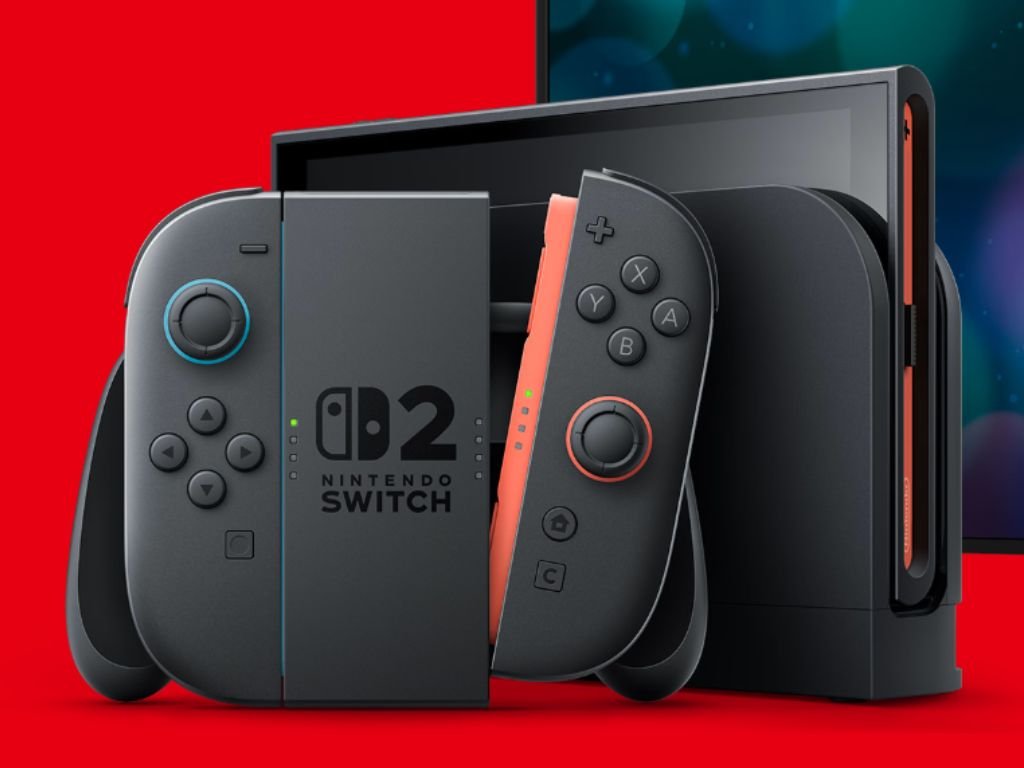
Compared with the original Nintendo Switch, the Switch 2 is a much more expensive and more capable machine. Nintendo's official Switch 2 technical specs list a 7.9-inch 1920x1080 LCD with HDR10 and VRR up to 120 Hz, a custom NVIDIA processor, 256 GB of UFS storage, Wi-Fi 6, Bluetooth, two USB-C ports, microSD Express support up to 2 TB, and HDMI output up to 4K at 60 fps in TV mode. The original Switch, by comparison, has a 6.2-inch 1280x720 LCD, 32 GB of storage, Wi-Fi 5-class wireless, Bluetooth 4.1, and docked output up to 1080p.
That spec gap explains why the Switch 2 is easier to scalp than the older model was this late in its life. It is not just a minor refresh. The larger 1080p handheld screen makes portable play sharper, the 120 Hz panel gives supported games more headroom, and the 256 GB internal storage is eight times the base storage of the original Switch. For buyers coming from the OLED model, the screen technology is a trade-off, LCD instead of OLED, but the resolution, refresh rate, graphics hardware, docked output, storage, and system bandwidth all move the Switch 2 into a different class.
The storage change is especially relevant for practical buyers. The original Switch's 32 GB internal storage pushed owners toward microSD cards almost immediately. The OLED model improved that to 64 GB, but it still filled quickly with large digital games and updates. The Switch 2's 256 GB UFS storage gives the system more breathing room and should deliver better internal storage performance, while microSD Express support raises the ceiling for expansion. The downside is accessory compatibility: older microSD cards are not equivalent to microSD Express cards for Switch 2 expansion.
Against handheld PC competitors, the Switch 2 is still a console-first device rather than a portable Windows or SteamOS machine. Devices like Steam Deck-class handhelds offer more flexible libraries and PC settings, but they also bring more power tuning, compatibility checks, and battery-management compromises. Nintendo's advantage is fixed hardware, a first-party software pipeline, and a user base that expects physical cartridges, local multiplayer, and low-maintenance sleep-and-resume behavior. That is exactly why account-based anti-scalping is such a big lever for Nintendo: the company has years of player data attached to a closed ecosystem.
The pricing comparison is less flattering for Nintendo than the spec comparison. At $499.99 after the reported September increase, the standard Switch 2 would sit much closer to entry handheld PCs and current living-room consoles than the original Switch did at launch. That price makes availability matter more. A $300-ish console selling above retail is frustrating, but a $500 console pushed even higher by resellers becomes a much harder recommendation for families, casual players, and anyone buying multiple systems for a household.
Nintendo's Japanese rule also differs from normal retailer anti-bot controls because it filters for behavior before the purchase attempt. Store queues and purchase limits usually operate at checkout, where professional resellers are strongest. A playtime requirement moves the gate earlier and asks whether the account looks like it belongs to someone who actually used Nintendo hardware. It is not perfect, but it is more targeted than a lottery that gives a brand-new account the same odds as a seven-year Switch owner with a paid library.
There are edge cases. A genuine buyer who skipped the original Switch, mostly played free-to-play titles, used physical cartridges across multiple accounts, or shared a family console under someone else's account may fail the check despite having no resale intent. That is the cost of using account history as a proxy for buyer legitimacy. Nintendo is deciding that false negatives are acceptable for this specific high-demand, import-friendly model because the alternative is letting more inventory flow to accounts created only to resell hardware.
Who it's for
For Japanese Switch owners who already have more than 50 hours in paid or downloaded games, the new rule is mostly a protection mechanism. It should reduce competition from low-effort bulk buyers and make Nintendo's own store a more useful channel for actual players. Those buyers still need stock to be available, but their existing play history now has value in the queue.
For import buyers, the message is less friendly. The multi-language Japanese Switch 2 was attractive because weaker yen pricing could make it cheaper than buying in other regions, especially before the reported U.S. price increase. Nintendo's policy does not ban importing outright, but it makes the official Japanese online store much harder to use as a bulk supply source. Buyers outside Japan may need to rely on their own regional Nintendo Switch 2 buying channels instead of chasing Japanese multi-language stock.
For first-time Nintendo buyers, the requirement is a reminder that launch-window hardware can reward ecosystem history. A new customer may be perfectly legitimate, but this rule prioritizes people who can prove they were already using the platform. That feels harsh if you are entering the ecosystem with Switch 2, but it is rational from Nintendo's perspective when the target is a specific model being pulled into resale channels.
For families, the one-unit-per-account rule is the bigger practical limit. A household with several players may have enough total playtime across a shared console, but not every account will necessarily qualify. Families planning to buy more than one Switch 2 should check which Nintendo Account actually holds the play history and purchases. The rule rewards clean account organization, which is not how every family uses a shared console.
From a buyer-guidance angle, I would not pay a resale premium for the multi-language Japanese model unless there is a very specific reason to import. The Switch 2 hardware is meaningfully stronger than the original Switch, especially in display resolution, storage, wireless, docked output, and controller features, but those gains do not justify feeding a resale market if official regional stock is available. The smarter play is to use Nintendo's official channels, compare local warranty coverage, and factor in the upcoming price change rather than treating every cheaper import listing as a better value.
Nintendo's 50-hour rule is not a technical upgrade, but it is a hardware-launch control built from platform data. It shows Nintendo using the same closed ecosystem that powers its store, save data, and online services as a filter for scarce physical inventory. For buyers who actually play on Switch, that may be one of the more practical anti-scalping measures Nintendo has tried.
Comments
Please log in or register to join the discussion