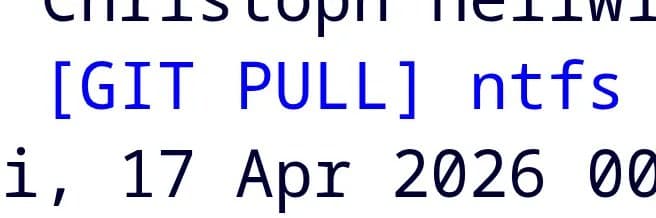
A modern NTFS driver developed by Namjae Jeon has been submitted for Linux 7.1, promising better performance, stability, and feature support compared to the aging NTFS3 driver.
After four years of development, a new NTFS file-system driver has been submitted for inclusion in Linux 7.1, potentially replacing the current NTFS3 driver that has been in the kernel since 2019. The pull request, submitted during the Linux 7.1 merge window, introduces a complete overhaul of Linux's NTFS support with significant performance and stability improvements.
The Evolution of Linux NTFS Support
The current NTFS3 driver was upstreamed by Paragon Software several years ago, but has seen limited feature development since its initial merge. This has left Linux users with a driver that, while functional, lacks modern kernel integration and has been criticized for stability issues and incomplete feature support.
Veteran Linux developer Namjae Jeon, known for his work on the exFAT driver and KSMBD (SMB server in kernel), announced the NTFSPLUS project last year as a comprehensive replacement. The driver has since evolved beyond its "PLUS" branding to become a complete remake of the original Linux NTFS kernel driver, incorporating modern kernel technologies and addressing long-standing limitations.
Key Improvements and Features
The new driver brings several significant enhancements over NTFS3:
Performance and Stability
- Full write support with improved reliability
- Better XFStests passing rate, indicating superior stability
- Modern kernel integration using IOmap and folio support
- Optimized I/O operations leveraging current kernel infrastructure
Technical Architecture
- 36,000+ lines of new code representing a complete rewrite
- Modern memory management with folio integration
- Enhanced I/O mapping capabilities through IOmap support
- Cleaner codebase with better adherence to current kernel coding standards
User Space Utilities
- New FSCK utility for file system checking and repair
- Enhanced diagnostic tools for troubleshooting
- Improved user-space integration for better administration
Development Timeline and Testing
The driver has undergone extensive testing over the past two months in the Linux-Next tree, where it received exposure to the broader kernel development community and underwent review by key stakeholders. This testing period allowed developers to identify and address potential issues before the official submission.
Namjae Jeon's four-year development effort has focused on creating a driver that not only matches but exceeds the capabilities of existing NTFS solutions on Linux. The result is a driver that promises to deliver a more reliable and feature-complete NTFS experience for Linux users.
Current Status and Future Prospects
As of the submission, Linus Torvalds has not yet commented on whether he will merge the driver for Linux 7.1. The merge window closes at the end of next week, leaving limited time for review and potential feedback.
The pull request maintains NTFS3 in the kernel source tree as a fallback option, allowing users to continue using the existing driver if they prefer or if compatibility issues arise with the new implementation.
Implications for Linux Users
If merged, this new driver would represent the most significant improvement to Linux NTFS support in years. Users working with Windows-formatted drives would benefit from:
- More reliable write operations
- Better performance on modern hardware
- Improved compatibility with Windows NTFS features
- Enhanced stability for production environments
- Better integration with modern Linux kernel features
Technical Context
The move to replace NTFS3 reflects a broader trend in kernel development toward modernizing legacy drivers and ensuring they take full advantage of current kernel infrastructure. The integration of IOmap and folio support demonstrates how the new driver aligns with contemporary kernel development practices.
For users and administrators managing mixed Windows/Linux environments, this development could significantly improve cross-platform file system compatibility and reliability.
Learn more about the new NTFS driver and track its progress through the official pull request: Linux 7.1 NTFS Driver Pull Request
The Linux Storage category continues to evolve with improvements like this new NTFS driver, ensuring better compatibility and performance for users working across different operating systems.
Comments
Please log in or register to join the discussion