Nvidia is positioning itself to become the world's largest server CPU supplier with its Grace and Vera processors, targeting $20 billion in revenue and potentially capturing two-thirds of the x86 server CPU market from established players Intel and AMD.
Nvidia has announced record-breaking financial results for Q1 2027, with $81.65 billion in revenue driven by AI and data center products. The company's ambitious projection to capture $20 billion in CPU revenue this fiscal year through its Grace and Vera processors would position it as the world's largest CPU supplier, surpassing both Intel and AMD in the server market.
According to Dean McCarron, principal analyst and president of Mercury Research, Nvidia's expectations are realistic. "Vera CPU opens a brand-new $200 billion TAM for Nvidia, a market we have never addressed before," stated Colette Cress, Nvidia's chief financial officer, during the company's conference call with financial analysts.
Nvidia clarified that the $20 billion figure includes sales of Grace and Vera processors within Superchip combinations, NVL72 systems, and standalone CPUs. This revenue target represents approximately two-thirds of the traditional x86 server CPU market, which is valued at around $30 billion annually.
The significance of Nvidia's projection becomes clearer when compared to current market leaders. Intel's data center and AI division reported $16.8 billion in revenue last year, while AMD's data center unit earned $16.635 billion in 2025. Although these figures include non-CPU revenue, they highlight the magnitude of Nvidia's ambition.
What makes Nvidia's entry particularly noteworthy is that while Grace CPUs are already shipping in volume, the 88-core Vera CPU has yet to achieve high-volume production. 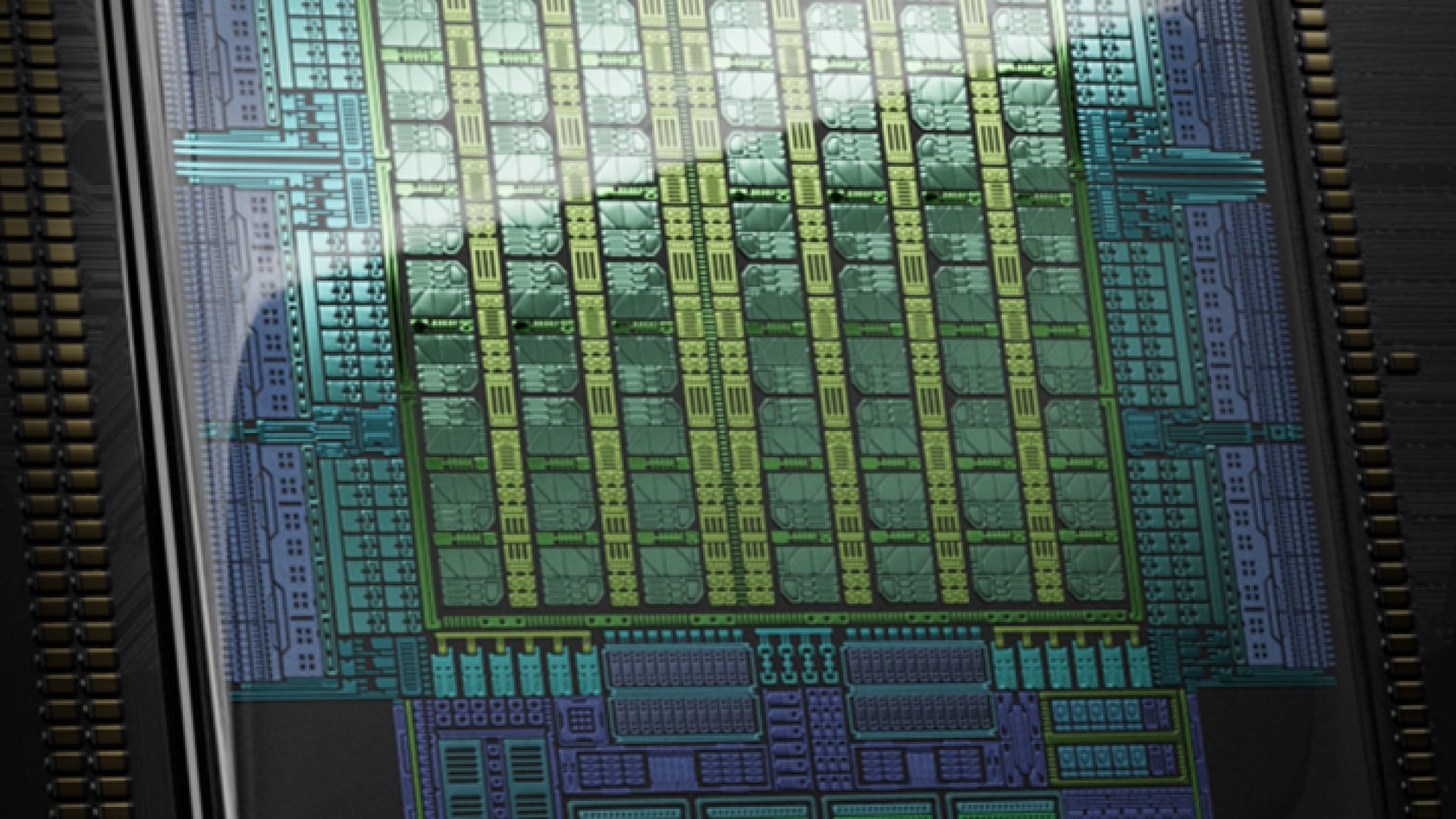 Nvidia's strategy hinges on the integration of Vera CPUs with its upcoming Rubin GPUs. "We will sell millions of Rubin GPUs and every two of them is connected to a Vera CPU," explained Jensen Huang, Nvidia's CEO.
Nvidia has identified four primary use cases for the Vera CPU: as part of the Vera Rubin platform (containing two Rubin GPUs and one Vera CPU), as a standalone CPU, with CX9 for storage solutions, and with CX9 for security and confidential computing.
The pricing strategy appears aggressive, with estimates suggesting Nvidia will charge approximately $5,000 per Vera CPU when sold as part of VR200 NVL72 machines. At this price point, achieving $20 billion in revenue would require selling 4 million Vera units.
McCarron believes this target is achievable, noting that "Nvidia is already on track to deliver a number very near that for its GB300 and Rubin systems in FY2027." The analyst suggests that Nvidia could potentially exceed this volume if additional production capacity were secured.
Nvidia's position in the market is unique due to its vertically integrated approach, offering complete solutions rather than standalone components. This integration allows Nvidia to command premium pricing while still potentially outcompeting traditional x86 vendors on volume.
"Nvidia is in a unique situation, and I do not think we can really call them a 'new entrant," McCarron observed, highlighting that while Nvidia may not be known for CPUs, it brings significant expertise in system design and software optimization. 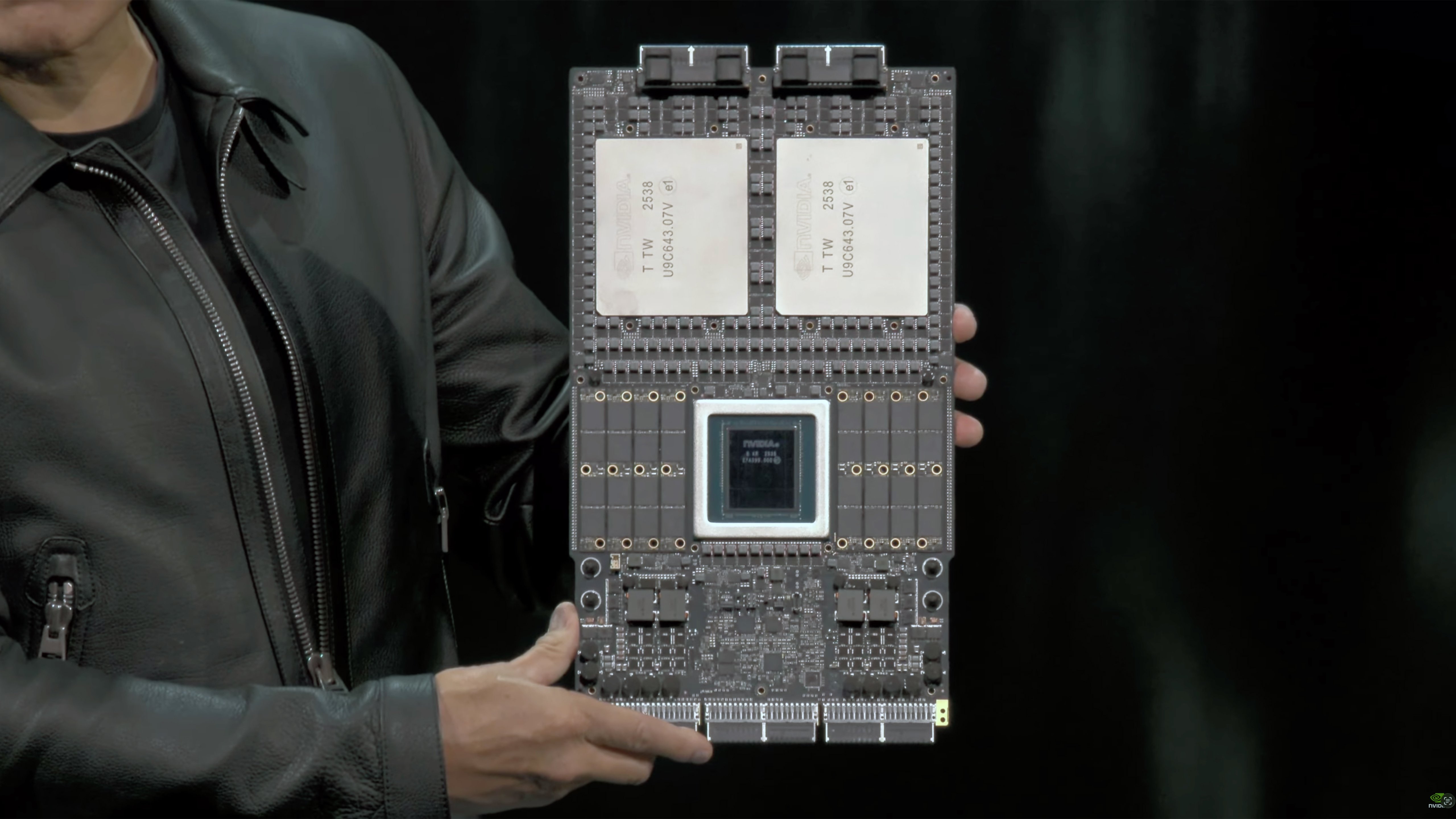
The competitive landscape faces further disruption as Nvidia has secured $145 billion in capacity commitments and inventory, ensuring supply chain advantages over competitors. This positions the company to meet potentially surging demand for its CPU offerings.
If successful, Nvidia's $20 billion CPU revenue target would not only make it the revenue leader but also a formidable competitor in unit sales terms. AMD and Intel collectively shipped nearly 20 million EPYC and Xeon SP processors in 2025, with average selling prices of approximately $1,325 and $1,125, respectively. Nvidia's projected 4 million units at $5,000 each would represent a dramatic shift in market dynamics.
The emergence of Nvidia as a major CPU supplier could force Intel and AMD to accelerate innovation and potentially reconsider their pricing strategies. The traditional x86 duopoly that has dominated server computing for decades faces a formidable new competitor with deep technical expertise and strong market positioning in the rapidly growing AI and data center segments.
This development underscores the broader trend of increasing vertical integration in the semiconductor industry, where companies control more of the value chain from design to software optimization. As AI workloads continue to drive demand for specialized computing solutions, the competitive dynamics in the server market are likely to undergo significant transformation.
Comments
Please log in or register to join the discussion