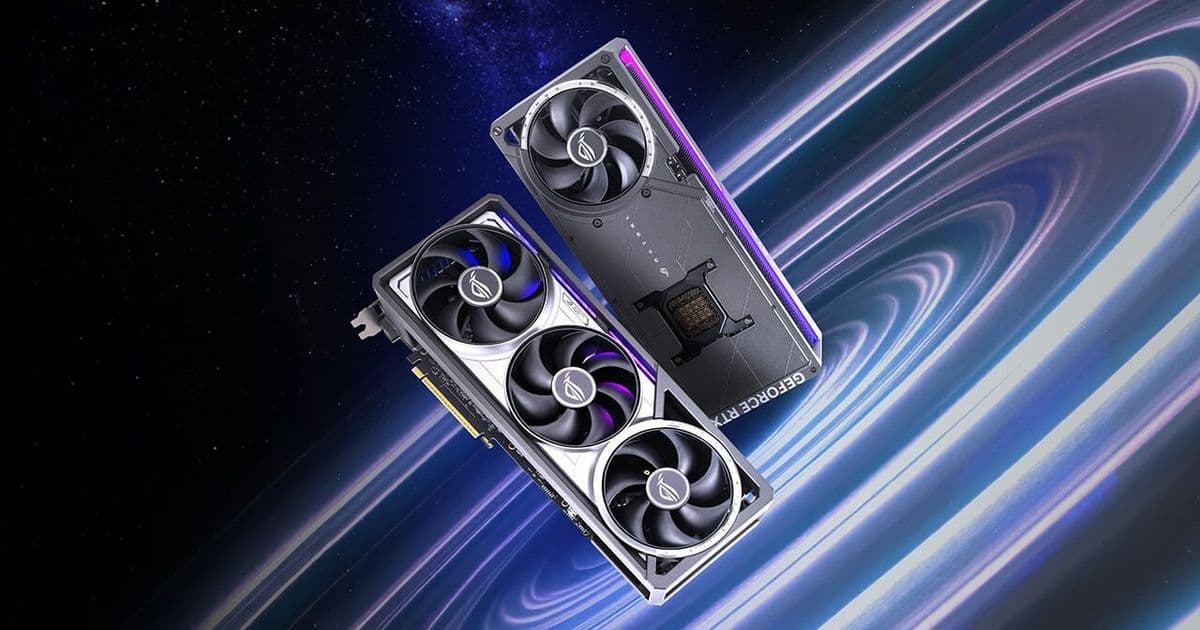
A leak from tech YouTuber der8auer claims Nvidia has discontinued its 'OPP' program, a financial incentive that helped board partners sell some graphics cards at manufacturer-suggested retail prices. The move comes amid a memory supply crisis and record demand for AI chips, suggesting gamers may face sustained price pressures.
The gaming GPU market may be entering a new phase of sustained price inflation as Nvidia appears to have terminated a program that helped keep some graphics cards near their official suggested retail prices. According to a leak from prominent hardware YouTuber der8auer, Nvidia has ended its 'OPP' program, a financial scheme that provided rebates to add-in board (AIB) partners for selling specific models at MSRP.
The OPP Program and Its Function
The OPP program, whose full name remains unclear, reportedly operated as a cash-back incentive for AIB partners like Asus, MSI, and Gigabyte. Under this system, board partners would sell certain GPU models at MSRP and report these sales to Nvidia. In return, Nvidia would provide a rebate covering the cost of the GPU chip and memory for those specific cards sold at the target price.
This mechanism was Nvidia's response to persistent market conditions where AIBs and retailers routinely sold graphics cards at prices significantly above MSRP, particularly during the cryptocurrency mining boom and subsequent supply chain disruptions. The program aimed to ensure at least a portion of the market had access to reasonably priced cards, though its scope and effectiveness were never officially detailed by Nvidia.
Memory Crisis and Financial Pressure
Der8auer's sources indicate Nvidia stopped the program several days ago, with the ongoing memory crisis cited as the likely catalyst. The current memory market faces constrained supply and elevated prices, affecting everything from consumer DRAM to high-bandwidth memory (HBM) used in AI accelerators.
This creates a difficult financial equation for Nvidia. While the company has posted record revenues driven by its data center business and AI chip sales, subsidizing memory costs for gaming GPUs becomes increasingly expensive when memory prices are high. The OPP program essentially required Nvidia to absorb part of the cost differential between market memory prices and the subsidized MSRP.
Nvidia's position is complicated by its dual market focus. The company's data center business, fueled by demand for AI training and inference, has become its primary revenue driver. Gaming, while still significant, represents a smaller portion of overall profits. This shift in financial priorities may influence how the company allocates resources between market segments.
RTX 5070 Ti Supply Concerns
Beyond the OPP program termination, der8auer also addressed recent confusion surrounding the RTX 5070 Ti. Earlier reports suggested the card was being discontinued or marked as end-of-life, based on statements from an Asus representative to Hardware Unboxed. Asus later clarified that its PR representative provided incomplete information and that the company has no plans to stop selling these models.
However, industry sources reportedly indicate that Nvidia is prioritizing the RTX 5080 over the RTX 5070 Ti for its GB203 chip supply. Both GPUs use the same silicon, but the RTX 5080 commands a higher price point. With the GB203 reportedly having high yields, Nvidia appears to be maximizing profits by allocating more silicon to the premium model.
This prioritization strategy could result in limited supply for the RTX 5070 Ti, even if it remains technically available. AIBs may receive fewer chips for this model, leading to higher prices and reduced availability for consumers seeking mid-to-high-end gaming performance.
Market Implications for Gamers
The combination of the OPP program ending and potential RTX 5070 Ti supply constraints points toward a challenging environment for gaming GPU buyers. Without the MSRP subsidy, AIBs have less financial incentive to price cards at or near MSRP, especially when memory costs remain elevated.
Current market data shows RTX 5080 prices from various AIBs trending upward on retail platforms like Amazon. This suggests that even without explicit price hikes from Nvidia, retail pricing continues to climb due to supply chain pressures and strong demand.
The broader context includes sustained demand for memory from multiple sectors. AI infrastructure build-out continues to consume vast quantities of high-performance memory, while consumer electronics and other computing segments also compete for the same memory supply. This multi-front demand keeps memory prices elevated, which directly impacts GPU manufacturing costs.
Industry Context and Future Outlook
Nvidia's strategic decisions reflect the company's evolving business model. The gaming division, while culturally significant and technically important, now operates within a company where data center revenue dwarfs consumer sales. This financial reality influences everything from chip allocation to program subsidies.
For gamers, the immediate outlook suggests continued price pressure. The termination of MSRP support programs removes one mechanism that helped keep some cards affordable. Combined with potential supply constraints for specific models and ongoing memory cost issues, consumers may face limited options at historical price points.
The situation also highlights the interconnected nature of modern electronics manufacturing. A disruption in memory supply doesn't just affect memory prices—it cascades through the entire graphics card ecosystem, influencing everything from chip allocation to final retail pricing.
As the market adjusts to these changes, consumers may need to recalibrate expectations around GPU pricing and availability. The era of readily available MSRP-priced graphics cards appears to be ending, replaced by a market where pricing reflects the complex interplay of supply constraints, manufacturing costs, and strategic business priorities.
Nvidia has not officially commented on the OPP program termination or the RTX 5070 Ti supply situation. The company's silence on these matters suggests they may be viewing these as internal operational decisions rather than public announcements, further indicating the shifting priorities within the organization.
For now, gamers and industry watchers will need to monitor retail channels closely, as the market dynamics continue to evolve in response to both supply-side constraints and strategic decisions from the dominant GPU manufacturer.
Comments
Please log in or register to join the discussion