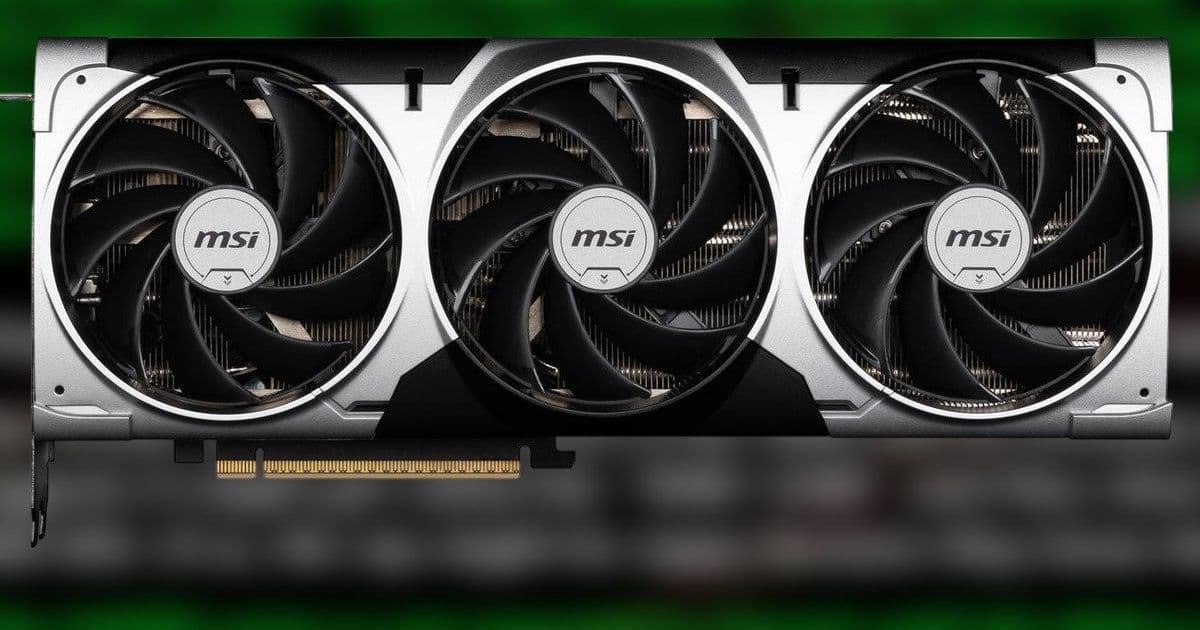
Fresh specs from Moore's Law Is Dead suggest the RTX 50 Super refresh leans on bigger memory pools and higher power limits rather than core counts, with the RTX 5080 Super reportedly landing 24 GB at the same $999 starting price as the card it replaces.
The RTX 50 Super refresh that was supposed to arrive in 2025 and quietly vanished is back in the rumor mill. Moore's Law Is Dead has put numbers to four cards, the RTX 5080 Super, RTX 5070 Ti Super, RTX 5070 Super, and RTX 5060 Super, and the pattern is consistent across the stack: more VRAM, faster memory, and higher TDPs, with core counts mostly left alone. If the leaked pricing holds, this is the rare refresh where you get meaningfully more for roughly the same money.
What's new
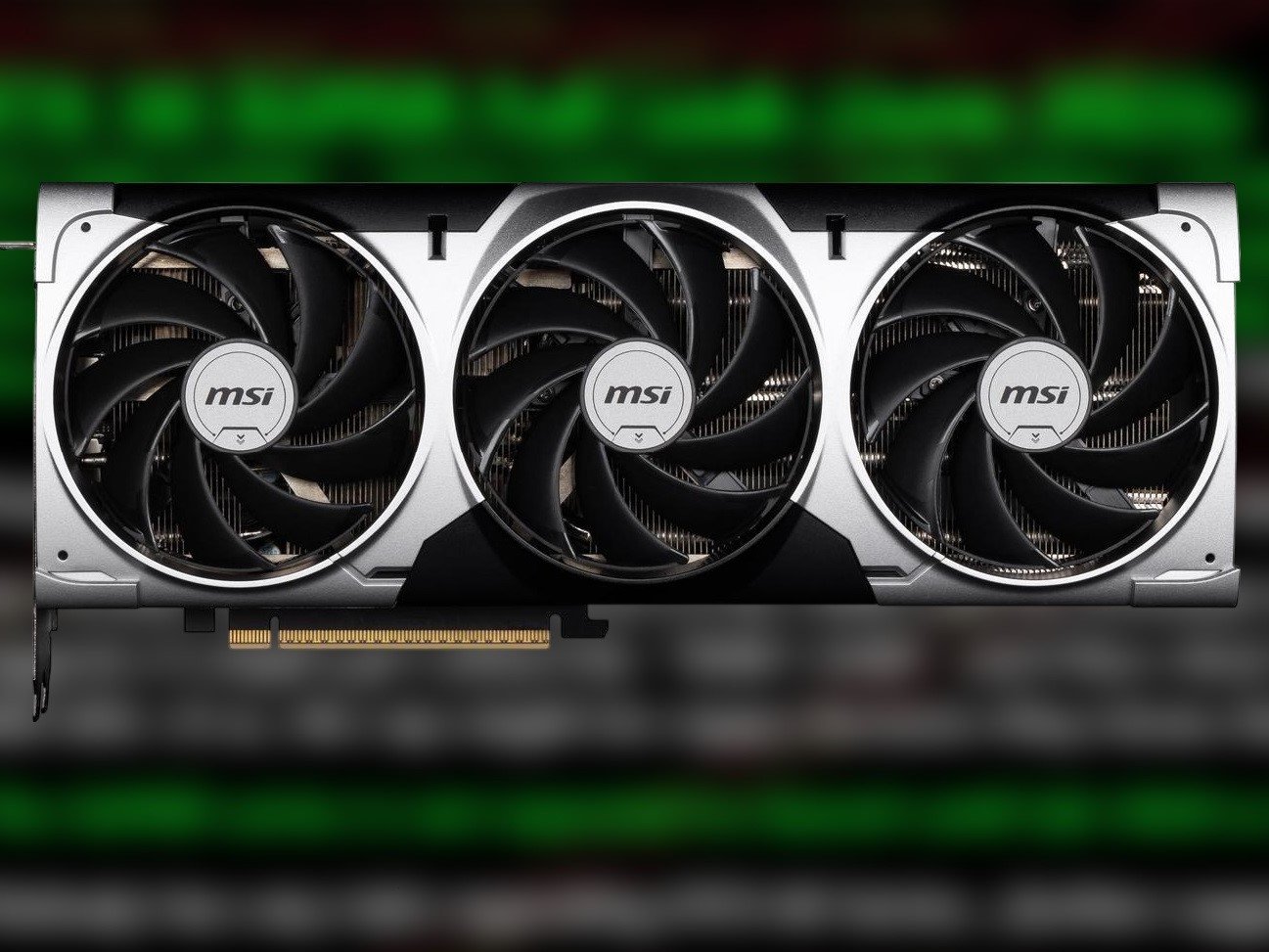
The headline change is memory. The RTX 5080 Super keeps the standard 5080's 10,752 CUDA cores but pairs them with 24 GB of 32 Gbps GDDR7, up from 16 GB. Power draw climbs to a reported 415 W from 360 W, which tells you where the performance is coming from. Nvidia is not adding shaders here, it is feeding the existing ones more bandwidth and pushing clocks higher.
The RTX 5070 Ti Super follows the same recipe. Same CUDA core count as the RTX 5070 Ti, but 24 GB of 28 Gbps memory instead of 16 GB, and a 350 W TDP versus 300 W. The RTX 5070 Super is the one card that gets a small core bump, a 4 percent increase to 6,400 CUDA cores, alongside 18 GB of VRAM (up from 12 GB) and a 275 W TDP, 25 W higher than the non-Super.
At the bottom, the RTX 5060 Super, which could just as easily ship as an RTX 5060 12 GB, doubles memory to 12 GB while keeping the same 3,840 cores as the 6 GB RTX 5060. MLID did not share a TDP figure for this one, but given how the rest of the lineup behaves, a higher power ceiling is a safe bet.
{{IMAGE:2}}
How it compares
Performance gains, per MLID, are noticeable but modest, and they trace directly back to bandwidth and clocks rather than architecture. The RTX 5080 Super is pegged at 7 to 14 percent faster than the RTX 5080. The RTX 5070 Ti Super lands 5 to 10 percent ahead of the 5070 Ti, and the RTX 5070 Super gets the largest relative jump at 8 to 12 percent, which makes sense given it is the only card with extra cores.
The pricing is where this gets interesting. The RTX 5080 Super is rumored at $999 to $1,199, matching the standard RTX 5080's launch price while adding 8 GB of VRAM and a performance bump. The RTX 5070 Ti Super sits at a rumored $749 to $799. That number matters because the original RTX 5070 Ti launched at $749 in February 2025 and has since drifted above $900 at retail thanks to some of the worst price inflation in the current generation. A Super variant at the original MSRP would effectively be a price correction. The RTX 5070 Super, at a leaked $549 to $599, looks like the value pick of the group if it ships anywhere near that figure.
The extra VRAM is the practical story across all four cards. 16 GB has become the floor where high-resolution textures and heavier ray tracing workloads start bumping into limits, and 24 GB on the 5080 Super and 5070 Ti Super gives those cards real headroom for 4K and for the growing number of local AI workloads that are bottlenecked by memory capacity rather than compute.
Who it's for
If you already own a base RTX 50 card, none of this is worth an upgrade. A 7 to 14 percent gain does not justify swapping a GPU, and the higher TDPs mean you would also be paying more at the wall for the privilege. The Super refresh is aimed squarely at buyers who have been sitting out this generation, either because of pricing or because 16 GB felt like a compromise at the high end.
The 5070 Super and 5070 Ti Super are the cards most people should watch. The 5070 Super's larger 18 GB buffer and slight core bump make it the most balanced option for 1440p and entry-level 4K, and the 5070 Ti Super's 24 GB gives it staying power for anyone who keeps a GPU for several years. The 5080 Super is the choice for buyers who want near-flagship performance without stepping up to the RTX 5090, and the extra memory makes it more credible for local AI experimentation.
The caveats are familiar by now. These are leaked specs and leaked prices, and Nvidia's recent track record with the gaming market does not inspire confidence that the cards will arrive at those numbers or in sufficient volume. The RTX 5070 Ti's post-launch price climb is the cautionary tale here: a reasonable MSRP means little if supply is thin and street prices balloon. Until Nvidia's approach to the gaming segment shifts, a strong spec sheet on paper is no guarantee of a better deal at checkout. The full specs and performance targets come from Moore's Law Is Dead on YouTube, and the current RTX 5060 remains available on Amazon for anyone comparing against the existing lineup.
Comments
Please log in or register to join the discussion