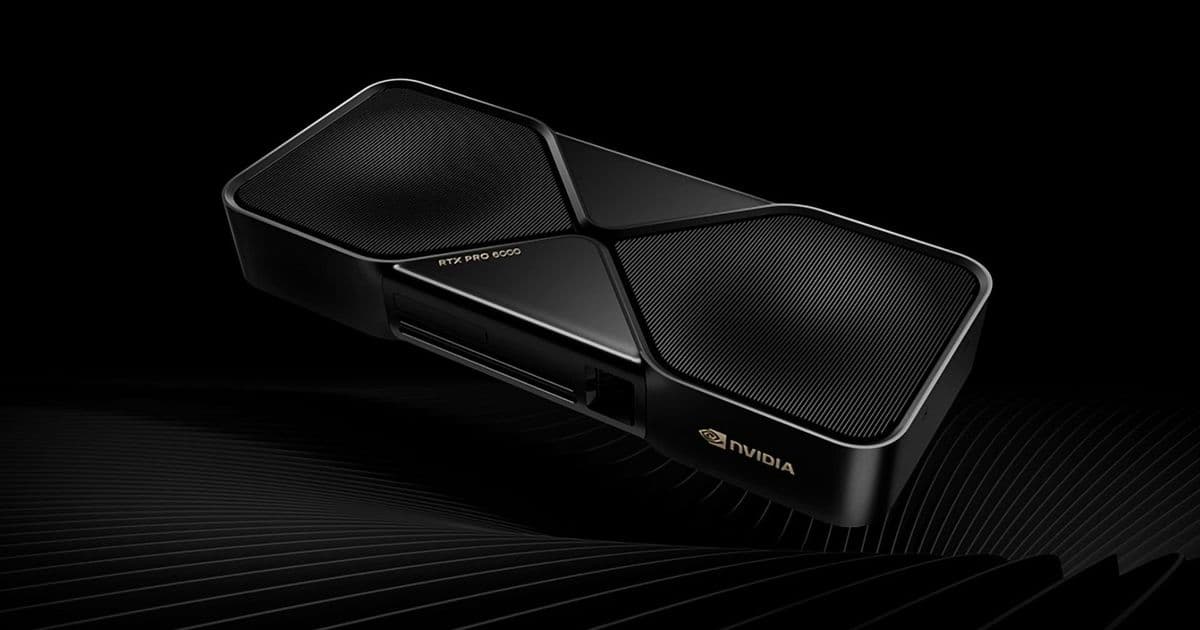
Nvidia’s workstation flagship has moved from an $8,565 launch listing to $13,250, turning a 96GB Blackwell GPU into a clear pricing signal for the AI-era component squeeze.
Announcement
Nvidia has raised the official marketplace price of the RTX Pro 6000 Blackwell workstation GPU to $13,250, up from its original $8,565 launch price. That is a $4,685 increase in roughly a year, or about 55%, for a card that was already positioned as the premium end of Nvidia’s professional desktop lineup.
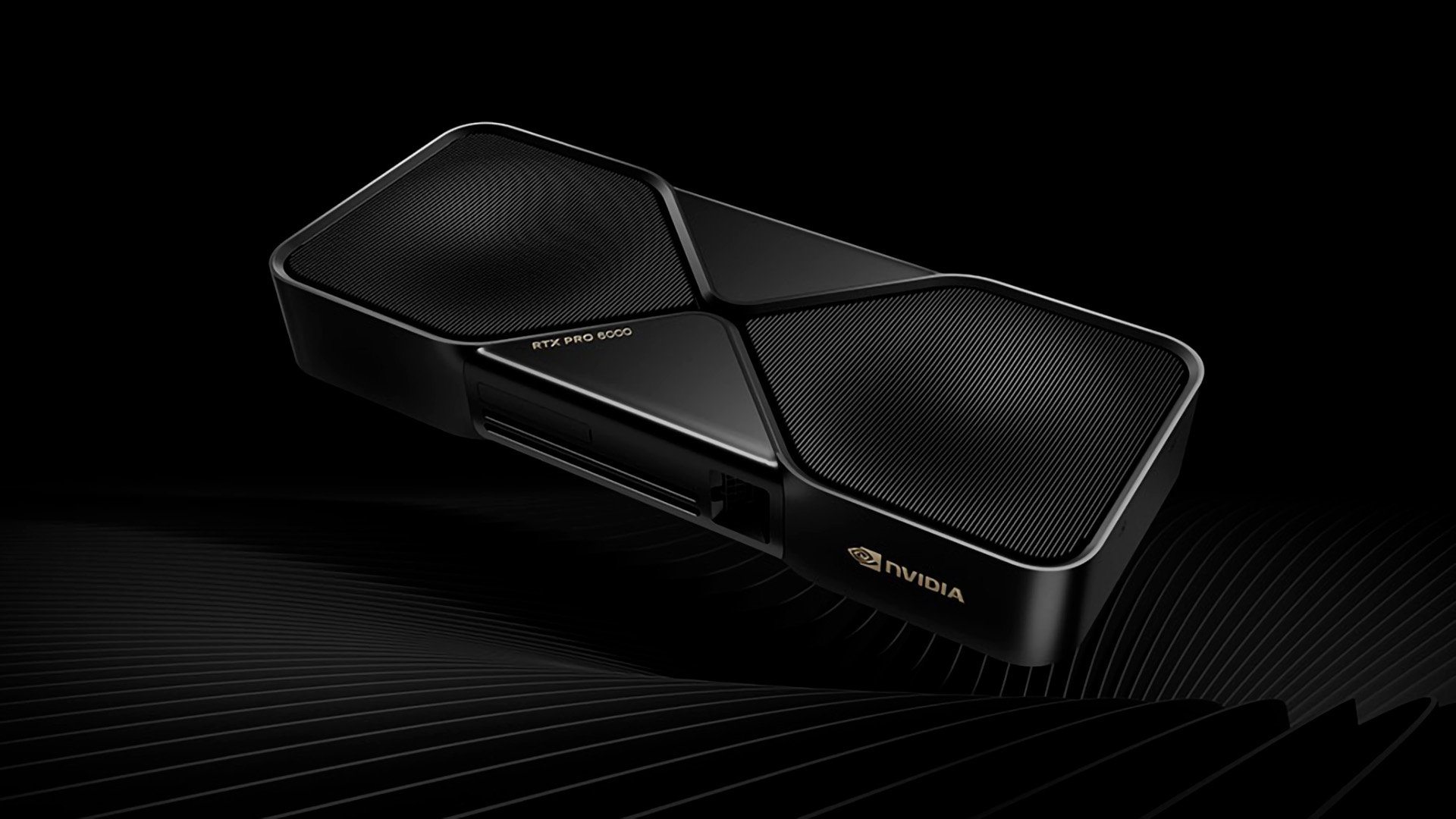
The price move matters because the RTX Pro 6000 is not a gaming halo product. It is a production workstation part aimed at AI development, rendering, simulation, digital content creation, engineering, and local model work where 96GB of VRAM changes what can run on a single card. Nvidia’s RTX professional graphics lineup sits between consumer GeForce cards and full data center accelerators, which makes it especially exposed to both workstation procurement cycles and AI infrastructure demand.
Retail pricing is uneven. The Tom’s Hardware report cites Nvidia’s own marketplace at $13,250 for the RTX Pro 6000 Blackwell, while a PNY-branded RTX Pro 6000 Blackwell listing on Nvidia’s marketplace is lower at $11,359.99. Newegg shows the standard RTX Pro 6000 Blackwell at $12,099.99, about 9% below Nvidia’s official listing, while B&H is cited at $13,349. The Server Edition is not broadly offered through Nvidia’s public storefront, but Newegg listings reach $14,999. The Max-Q workstation version is also quoted at $13,250 through Nvidia, with higher listings at other retailers.
That spread is the story. A workstation buyer is no longer comparing a single MSRP against a tidy channel price. They are looking at a $3,600-plus gap between the cheapest cited PNY listing and the highest server or Max-Q listings. For enterprise procurement teams buying 10, 50, or 100 cards, the difference between $11,360 and $14,999 is not noise. It can swing a deployment budget by hundreds of thousands of dollars before chassis, power delivery, support contracts, or spare units are included.
Technical Specs
The RTX Pro 6000 Blackwell is built around Nvidia’s Blackwell-generation professional GPU platform. The workstation card uses GB202-class silicon manufactured on TSMC’s Nvidia-custom 4N process, the same broad process family used across high-end client Blackwell products. Unlike a classic node-driven shrink where cost per transistor drops materially, Blackwell’s professional desktop parts get much of their value from architecture, memory configuration, and board-level engineering rather than from a dramatically cheaper manufacturing node.
The headline specification is memory: 96GB of GDDR7 on a 512-bit interface, delivering 1,792GB/s of bandwidth. That 96GB capacity is enabled by 24Gb, or 3GB, GDDR7 modules arranged in a clamshell configuration, with memory packages on both sides of the PCB. Compared with 48GB-class workstation cards, the RTX Pro 6000 doubles the local working set. Compared with common 24GB and 32GB desktop GPUs, it provides 3x to 4x the capacity. For AI inference, large scene rendering, video pipelines, and simulation, capacity can be more important than peak shader throughput because spilling to system memory or splitting workloads across cards adds latency and complexity.
Compute resources are also heavy. The RTX Pro 6000 Blackwell is cited with 24,064 CUDA cores, 188 RT cores, 752 Tensor cores, 128MB of L2 cache, and up to 126 FP32 TFLOPS. Nvidia has also promoted Blackwell’s fifth-generation Tensor Cores and FP4 support across the architecture, positioning the generation for AI workloads where lower precision can raise throughput and reduce memory pressure. Developers working in CUDA can track architecture-level support through Nvidia’s CUDA documentation, while broader Blackwell platform details are available on Nvidia’s Blackwell data center page.
The workstation card’s board power is 600W, a figure that moves it well beyond traditional pro graphics cards and into small-server territory. The Max-Q variant reduces the power envelope for systems where thermals and acoustics matter more than absolute performance, while the Server Edition is designed for rack systems with external chassis airflow. That three-way split is commercially important: the same core silicon family can feed deskside workstations, lower-power OEM systems, and dense AI servers, but each version competes for the same high-end GPU die supply and high-density GDDR7 memory pool.
This is where the process node and supply chain context become central. TSMC 4N is not a bargain-basement node, and large GB202-class dies are expensive because yield loss scales with die area. A small defect that would kill a tiny chip also kills a large GPU, and high-end Nvidia parts use large reticle-class designs with advanced packaging, dense PCBs, strict power delivery requirements, and extensive validation. The memory side adds a second bottleneck. GDDR7 at this density and speed is newer, more expensive, and less abundant than mature GDDR6. When each RTX Pro 6000 needs 96GB, every board consumes a large number of premium DRAM packages.
The GDDR7 requirement also explains why professional cards can feel pressure even when the AI data center market is mostly associated with HBM. DRAM manufacturers allocate wafer starts, test capacity, packaging lines, and engineering focus across HBM, DDR5, LPDDR, and graphics memory. AI server demand has pulled capacity toward high-margin memory categories, and graphics memory suppliers have limited incentive to flood the market with lower-margin supply when enterprise buyers are proving they will absorb higher prices. The result is not a simple chip shortage. It is a stack of constraints across wafers, memory packages, board assembly, validation, and channel inventory.
Market Implications
For workstation customers, the immediate effect is a higher cost per local GPU node. A single RTX Pro 6000 at $13,250 is now priced like a small server component rather than a desktop add-in card. A dual-GPU workstation can carry more than $26,000 in GPUs alone, and a four-card development box can exceed $50,000 before CPU, memory, storage, chassis, cooling, and support. That pushes some buyers toward cloud instances, shared lab servers, or lower-tier cards such as RTX Pro 5000-class products when workloads fit inside 48GB or 72GB memory limits.
The price increase also changes the workstation-versus-data-center decision. The RTX Pro 6000 Blackwell offers 96GB of local GDDR7 and strong FP32, ray tracing, and Tensor performance, but it is not the same product class as an H100, H200, B200, or GB200 system with HBM and NVLink-scale infrastructure. Its value is in local ownership, display support, workstation compatibility, and the ability to run very large single-GPU jobs without renting time. At $8,565, that was expensive but defensible for many studios, labs, and engineering groups. At $13,250, the payback calculation becomes tighter, especially if utilization is inconsistent.
There is also a procurement timing signal. When official marketplace prices rise while third-party listings vary by thousands of dollars, buyers often accelerate purchases to avoid later increases. That can worsen near-term supply tightness because channel inventory gets pulled forward. Conversely, some organizations pause purchases and wait for OEM workstation bundles from Dell, HP, Lenovo, or system integrators, where total system discounts may hide some GPU pricing. Both behaviors reduce transparency. The public shelf price becomes less useful as a market reference, and negotiated enterprise pricing becomes more important.
For Nvidia, the pricing reflects unusual control over a scarce performance tier. AMD and Intel can compete in portions of professional graphics, but Nvidia retains a strong position in CUDA software support, AI frameworks, rendering engines, workstation certification, and data center adjacency. A 96GB CUDA-capable workstation GPU is valuable not only because of silicon speed, but because it fits into software pipelines that already target Nvidia hardware. That software gravity gives Nvidia more room to raise prices when supply is tight.
The risk is substitution. If RTX Pro 6000 pricing remains near $13,250, buyers with less memory-intensive workloads may step down the stack. Others may use multiple cheaper GPUs, even if multi-GPU scaling is less efficient. Some AI developers may shift more work to cloud accelerators, while smaller studios may extend Ada-generation workstation deployments instead of refreshing. The price increase does not eliminate demand, but it does make workload profiling more important. A team that needs 96GB on one card has fewer alternatives. A team that only needs 32GB to 48GB has more room to negotiate.
The broader semiconductor signal is clear: advanced GPU pricing is now being set by memory availability as much as by the GPU die itself. Blackwell’s 4N silicon is expensive, but the 96GB GDDR7 bill of materials and tight DRAM allocation are doing a large share of the work. A 55% price increase in a year suggests that the market is assigning a premium to capacity, not just compute throughput. In prior workstation cycles, buyers paid mainly for certified drivers, larger VRAM, ECC support, and pro application validation. In the AI cycle, they are also paying for the right to secure enough high-speed memory in a constrained supply chain.
That makes the RTX Pro 6000 Blackwell a useful pricing barometer. If GDDR7 supply loosens, workstation card prices should normalize first through retail discounts and board partner competition. If memory remains tight, official prices and channel markups can stay elevated even as more Blackwell models enter the market. For now, the $13,250 listing says that Nvidia’s flagship workstation GPU is no longer priced simply as a premium graphics card. It is priced as scarce AI-capable memory capacity attached to one of the most software-compatible accelerator platforms available outside the data center.
Comments
Please log in or register to join the discussion