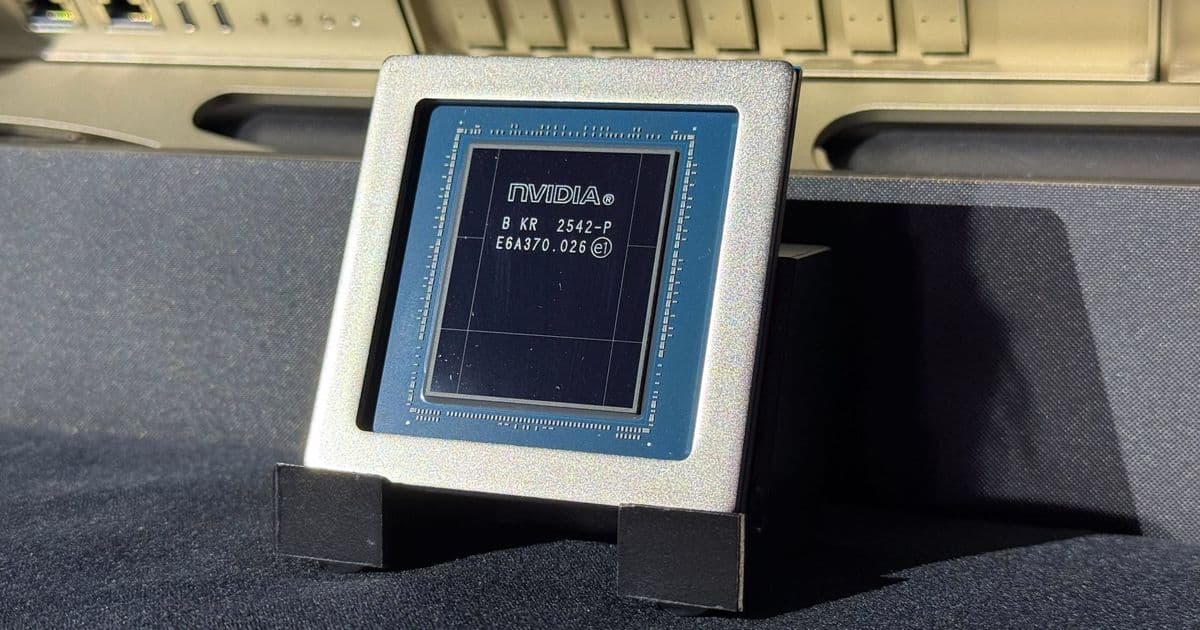
First‑generation Nvidia Vera, an 88‑core custom ARM‑ISA server processor, delivered competitive scores against AMD EPYC “Turin” and Intel Xeon “Granite Rapids” in a curated set of Linux benchmarks. While power‑efficiency data remains pending, the results highlight Vera’s strong single‑thread performance and solid software support, hinting at a new competitive vector in the high‑performance server market.
Nvidia’s Vera CPU Shows Strong Linux Benchmark Results, Challenging EPYC and Xeon in Targeted Workloads
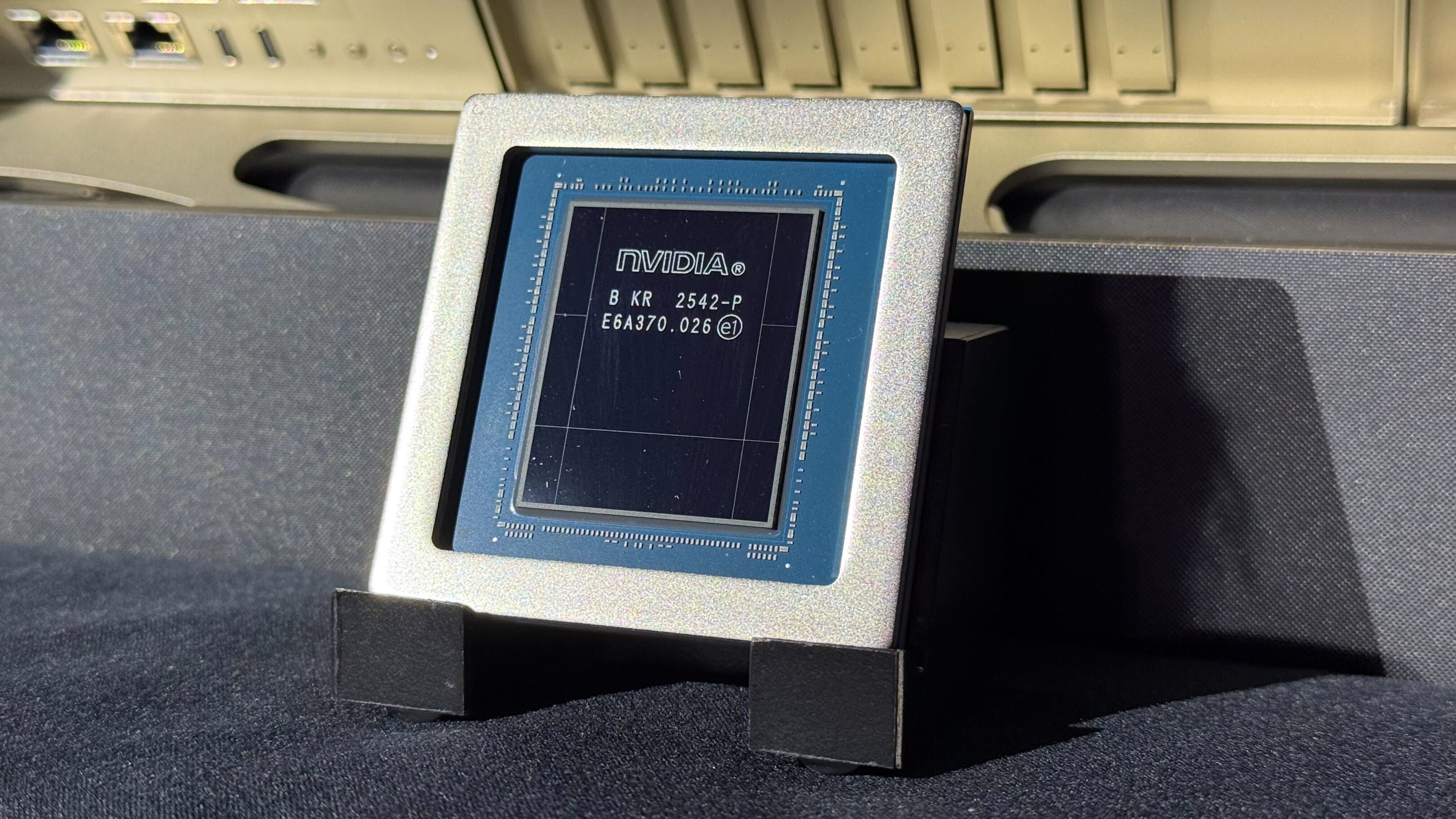 Image credit: Future
Nvidia invited Phoronix to its Santa Clara lab to run a suite of Linux benchmarks on the upcoming 88‑core Vera processor. The tests, selected by Nvidia to reflect its intended market segments, covered compilation, memory bandwidth, AV1 encoding, Python, Java, compression, LuaJIT, and database workloads. Across most metrics Vera sat within a few percentage points of AMD’s EPYC “Turin” and Intel’s Xeon “Granite Rapids,” and in three tests it posted the highest score.
Technical specifications and benchmark highlights
| Metric | Vera (88‑core) | EPYC 9575F (96‑core) | Xeon Granite Rapids (56‑core) |
|---|---|---|---|
| TDP (rated) | 450 W CPU + 50 W memory | 500 W CPU | 500 W CPU |
| Core architecture | Custom "Olympus" core, ARM ISA | Zen 4 | Sapphire Rapids, x86‑64 |
| Process node | 5 nm (TSMC) | 5 nm (TSMC) | 18 A (Intel) |
| L3 cache per core | 2 MiB | 4 MiB | 2 MiB |
Compilation (Gem5) – EPYC edged out Vera by 2 % on a per‑core basis, the only case where a competing chip led.
Linux kernel build – Vera finished 3 % faster than EPYC and 7 % faster than Xeon.
LuaJIT FFT – Vera posted a 12 % lead over EPYC and a 20 % lead over Xeon, driving the overall geometric‑mean advantage.
ClickHouse OLAP query – Vera outperformed both rivals by roughly 9 %.
Renaissance JVM benchmark – Vera topped the field, beating EPYC by 6 % and Xeon by 11 %.
The geometric mean of all tests placed Vera ahead of the x86‑64 reference platforms by a modest but consistent margin. The per‑thread analysis showed that Vera’s single‑thread latency is comparable to the best Zen 4 cores, a notable achievement for a first‑generation custom ARM server core.
Supply‑chain and power considerations
Nvidia lists a 450 W thermal design power for the Vera die and an additional ~50 W for the eight SOCAMM2 LPDDR5X memory modules. By contrast, the EPYC and Xeon chips used in the comparison are rated at 500 W each, not counting platform memory. Real‑world power draw can diverge from TDP, especially under mixed workloads, so the efficiency picture remains incomplete. Data‑center operators will be watching for measured watts‑per‑performance numbers once the chips enter production.
From a supply‑chain perspective, Vera’s reliance on TSMC’s 5 nm node aligns it with AMD’s current EPYC silicon, potentially easing fab capacity constraints. Nvidia’s decision to design a custom ARM core rather than license an existing design mirrors Apple’s approach and may give Nvidia tighter control over silicon‑level optimizations for its Rubin GPU ecosystem.
Software ecosystem and driver support
Phoronix reported that the benchmarks ran on a mainline Linux kernel without the need for custom device‑tree overlays or proprietary drivers. Upstream support for the Olympus core appears solid, which mitigates a common risk for new server architectures. Nvidia’s established relationships with major Linux distributions should accelerate driver integration for both compute and AI workloads.
Market implications
- Competitive pressure on x86‑64 – Vera’s near‑parity in multi‑threaded workloads and its edge in several single‑threaded tests suggest that ARM‑based server CPUs can now contend for traditional data‑center workloads, not just AI‑specific tasks.
- Potential for differentiated offerings – By pairing Vera with Nvidia’s Rubin GPU, the company can market tightly integrated CPU‑GPU servers for AI training, inference, and high‑performance computing (HPC) clusters.
- Upcoming generational shifts – AMD’s “Venice” EPYC variant aims for 256 Zen 6 cores per socket, while Intel’s “Clearwater Forest” targets 288 Darkmont cores on an 18 A process. Both roadmaps promise higher core counts and improved efficiency, meaning Vera will face stiffer competition within a year.
- Power‑infrastructure bottleneck – If Vera’s real‑world power draw matches its TDP claim, the 500 W envelope per socket could be more attractive than higher‑TDP Xeon or EPYC platforms, especially for hyperscale AI facilities constrained by power delivery.
Outlook
The first benchmark batch paints Vera as a capable, well‑supported entrant in the server CPU market. Its performance per core narrows the gap that has traditionally favored x86‑64, while its custom ARM core gives Nvidia flexibility to co‑design around its GPU portfolio. The next steps will be to validate power efficiency at scale, expand the benchmark suite to include AI‑heavy kernels, and observe how quickly OEMs adopt Vera‑based server platforms.
For further details on the benchmark methodology, see the original Phoronix report.
Comments
Please log in or register to join the discussion