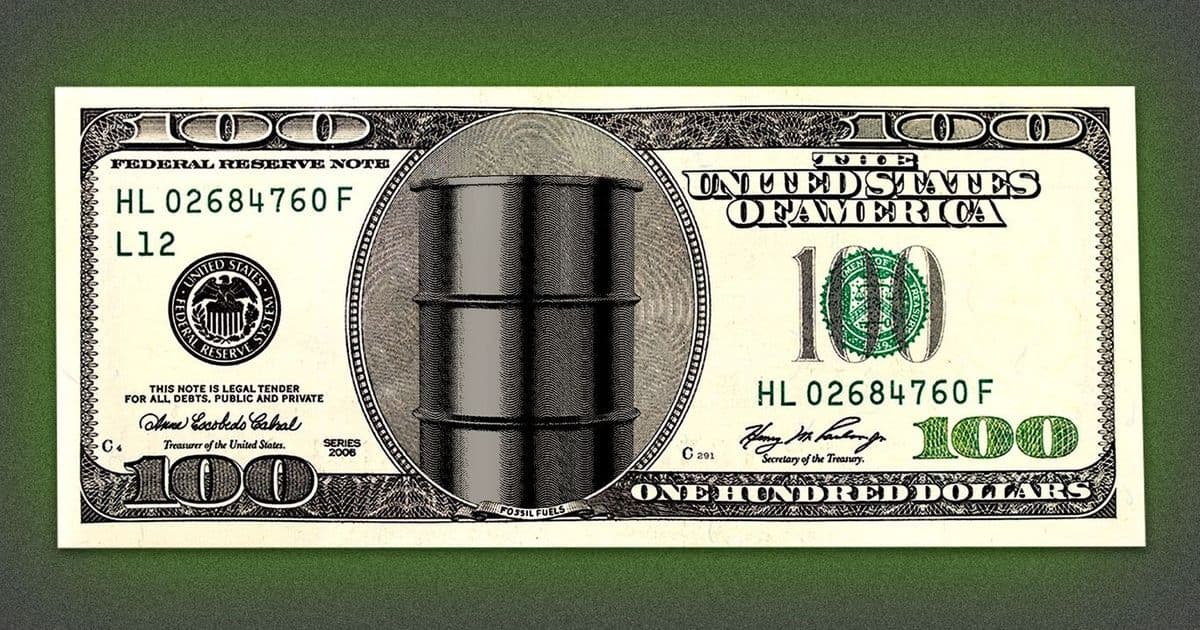
Energy analysts warn that sustained closure of the Strait of Hormuz could push oil prices to $200 per barrel, triggering global economic shockwaves.
The global oil market faces a potential catastrophe if the Strait of Hormuz remains closed, with energy analysts warning that prices could surge to $200 per barrel - more than double current levels.
The Strait of Hormuz: Global oil's critical chokepoint
The Strait of Hormuz, a narrow waterway between Iran and Oman, handles approximately 20% of the world's oil supply. Roughly 21 million barrels of crude oil pass through this strategic chokepoint daily, making it the most important oil transit route on the planet.
Any prolonged disruption to this vital shipping lane would immediately impact global energy markets, as alternative routes cannot handle the massive volume of oil that flows through Hormuz.
Current market context
Before any potential closure, Brent crude oil was trading around $90 per barrel in August 2023. A jump to $200 would represent a 122% increase, creating immediate and severe economic consequences worldwide.
Economic implications of $200 oil
Such a dramatic price increase would trigger a cascade of economic effects:
- Transportation costs would skyrocket, affecting everything from personal vehicle use to commercial shipping
- Inflation would accelerate as energy costs permeate through the entire economy
- Consumer spending would decline as households allocate more income to fuel and heating
- Global growth would slow significantly as higher energy costs reduce economic activity
Historical precedents
While oil has reached $140 per barrel during the 2008 financial crisis, a sustained price of $200 would be unprecedented in modern economic history. The 1973 oil embargo saw prices quadruple, but even that increase fell short of the potential 122% jump from current levels.
Geopolitical factors
The threat to Hormuz typically emerges during periods of heightened tension between Iran and Western nations. Iran has repeatedly threatened to close the strait in response to military action or severe economic sanctions.
Mitigation strategies
Countries and companies have developed various strategies to reduce vulnerability to Hormuz disruptions:
- Strategic petroleum reserves held by nations like the US, Japan, and members of the International Energy Agency
- Alternative shipping routes through pipelines and other waterways
- Diversification of energy sources including renewables and domestic production
- Increased energy efficiency to reduce overall oil consumption
Market psychology
Energy markets are particularly sensitive to Hormuz-related news. Even rumors of potential closure can cause price spikes of $5-10 per barrel, as traders price in the risk premium.
The path forward
While $200 oil represents a worst-case scenario, it serves as a stark reminder of the global economy's continued vulnerability to energy supply disruptions. The incident underscores the ongoing need for energy diversification and the development of alternative energy sources to reduce dependence on this critical chokepoint.
The international community continues to work on diplomatic solutions to prevent such a scenario, while simultaneously preparing contingency plans should the unthinkable occur.
Comments
Please log in or register to join the discussion