
Microsoft announces Oracle Database@Azure availability in West Europe (Netherlands) and Brazil Southeast (Rio de Janeiro), enhancing regional compliance and disaster recovery capabilities for enterprises.
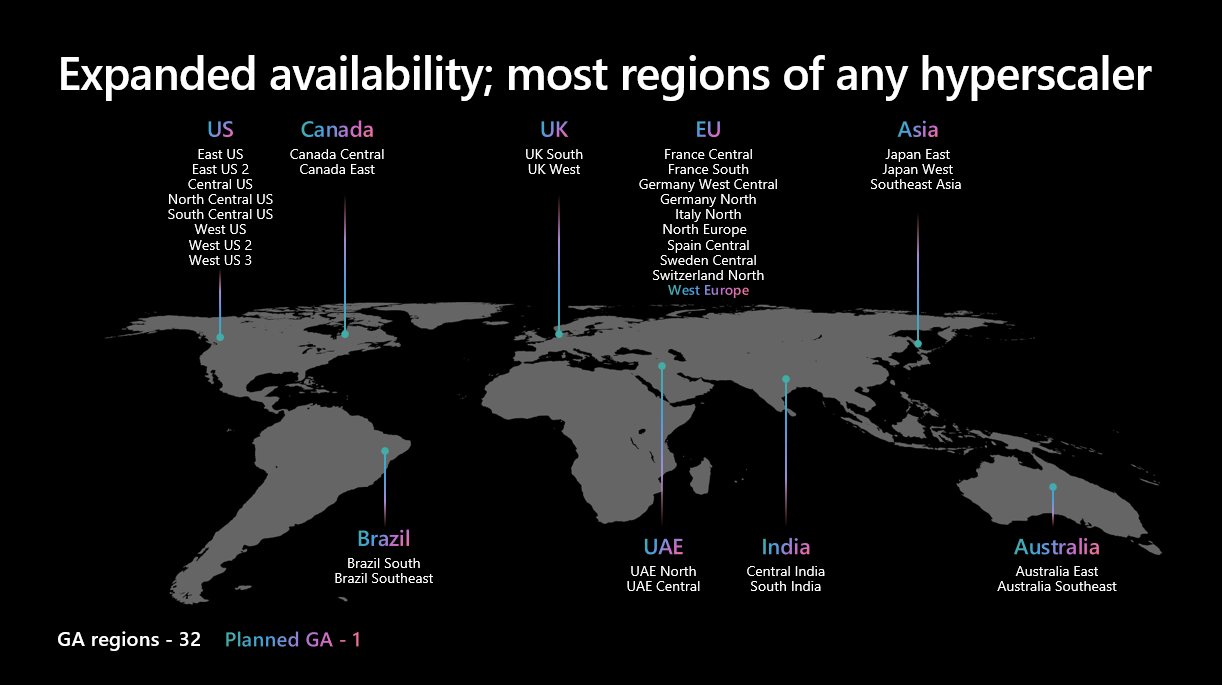
Microsoft and Oracle have expanded their strategic cloud partnership with the launch of Oracle Database@Azure in the West Europe (Netherlands) region and Brazil Southeast (Rio de Janeiro). This expansion addresses critical enterprise requirements for data residency, sovereignty, and compliance while simultaneously strengthening regional disaster recovery architectures. With this rollout, Oracle Database@Azure now operates in over 30 Azure regions globally, creating a differentiated multi-cloud proposition that combines Oracle's database expertise with Azure's cloud ecosystem.
Strategic Regional Expansion
The Netherlands deployment specifically targets European enterprises needing to comply with EU Data Boundary requirements and GDPR mandates. By hosting Oracle databases physically within Dutch borders, organizations can process sensitive customer data locally while leveraging Azure's adjacent services like Microsoft Fabric and Azure AI. Meanwhile, the Brazil Southeast launch creates a paired-region architecture with the existing Brazil South (São Paulo) location. This dual-region approach enables active-active deployments using Oracle Maximum Availability Architecture (MAA) alongside Azure Availability Zones—a configuration that provides sub-30-second recovery point objectives (RPO) for mission-critical workloads.
Comparative Cloud Advantage
Oracle Database@Azure fundamentally differs from traditional multi-cloud setups by eliminating cross-cloud data movement. Where competitors require network bridges between separate cloud environments—introducing latency, egress costs, and management complexity—this solution deploys Oracle Exadata hardware directly inside Azure datacenters. This architecture delivers:
- Sub-2ms latency between Oracle databases and Azure services
- Unified operations via Azure Portal, Microsoft Entra ID, and Azure Monitor
- Predictable performance for Oracle Autonomous Database and Exadata systems
- Consistent billing without inter-cloud transfer fees
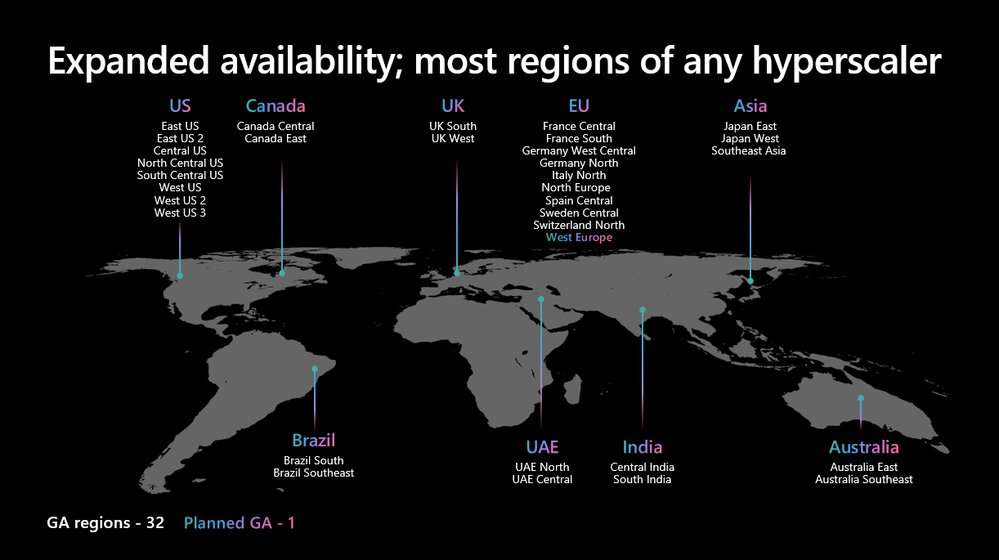
Comparative latency between traditional multi-cloud vs. Oracle Database@Azure architecture
For enterprises standardized on Oracle, this model removes migration barriers. Organizations can lift-and-shift using Oracle Zero Downtime Migration with no application changes, while maintaining licensing flexibility through Bring Your Own License (BYOL) or Azure-included licenses. The integration enables novel use cases like running Oracle Real Application Clusters (RAC) alongside Azure Kubernetes Service (AKS), or processing Exadata data with Azure Synapse Analytics.
Business Impact Analysis
This expansion creates tangible advantages across three dimensions:
- Regulatory Compliance: Dutch financial services firms can now deploy AI-driven fraud detection using Oracle Autonomous Database and Azure Machine Learning while meeting EU data localization rules.
- Disaster Recovery: Brazilian manufacturers gain certified business continuity with synchronous replication between São Paulo and Rio regions, exceeding local compliance thresholds.
- AI Acceleration: The colocation of Oracle databases with Azure's AI stack enables real-time analytics pipelines. For example, retailers can combine Oracle transaction processing with Azure Cognitive Services for instant personalization.
Cost structures also shift meaningfully. By avoiding data transfer fees between separate Oracle and Azure environments, a typical enterprise moving 50TB of daily cross-cloud data could save over $350,000 annually in egress costs alone.
Implementation Considerations
Enterprises evaluating this expansion should note:
- Migration Paths: Oracle Zero Downtime Migration automates schema conversion but requires validation of PL/SQL dependencies
- High Availability: MAA Gold architectures on Azure provide <30-second failover but necessitate precise network configuration
- AI Integration: Pairing Oracle databases with Azure Machine Learning requires data pipeline redesign to leverage co-location benefits
The roadmap indicates continued regional expansion throughout 2026. Enterprises can explore resources including the technical documentation and Azure region pairing strategies. For migration planning, Microsoft offers structured learning paths at ODAA_Learn.
As cloud strategies evolve beyond single-provider approaches, this Oracle-Microsoft collaboration demonstrates how integrated solutions can overcome traditional multi-cloud tradeoffs. The Dutch and Brazilian expansions provide concrete examples of how enterprises can balance regulatory requirements with technical innovation—without compromising on performance or operational efficiency.
Comments
Please log in or register to join the discussion