
As lightweight markup languages face fragmentation issues, Org Mode's consistent syntax gains recognition for its usability outside Emacs ecosystems.
The lightweight markup landscape has become increasingly fragmented, with Markdown alone splintering into dozens of incompatible flavors like GitHub Flavored Markdown, CommonMark, and MultiMarkdown. This fragmentation creates usability nightmares when moving content between tools. Against this backdrop, Org Mode syntax – originally developed for Emacs – is gaining attention as a remarkably consistent alternative that works even outside its native environment.
The Standardization Problem
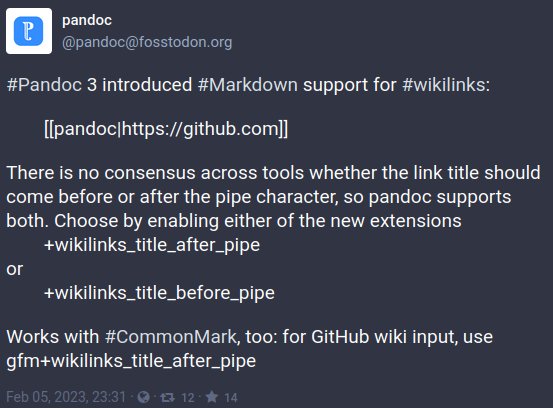
Markdown's original simplicity has been its downfall. As different implementations added features like tables, footnotes, and definition lists, they created mutually incompatible syntax variations. Pandoc alone lists six distinct Markdown variants in its documentation. When a platform claims to support "Markdown," users must now investigate which specific dialect they're working with and risk formatting errors during conversions.
Org Mode syntax presents a contrasting approach. While not formally standardized, its reference implementation in Emacs provides a comprehensive syntax specification. Other tools like Pandoc implement subsets rather than variations, ensuring greater compatibility. As developer Karl Voit observes: "All Org-mode syntax elements are part of the Emacs Org-mode implementation and all derivatives are sub-sets of this set of syntax elements."
Syntax Design Advantages
Org's design choices prioritize consistency and memorability:
- Headings: Uses simple asterisk prefixes (
* Level 1,** Level 2), avoiding the inconsistency of underlined headings (===) or prefix/postfix combinations (= Heading =) found in AsciiDoc and reStructuredText - Formatting: Uniform single-character delimiters (
*bold*,/italic/,~code~) instead of Markdown's mixed approaches (**bold**,_italic_,code) - Links: Predictable
[[URL][Description]]structure that's more intuitive than Markdown's[Text](URL)or reStructuredText's complex`Text <URL>`_ - Lists: Single syntax for bullet points (
- item) regardless of nesting level
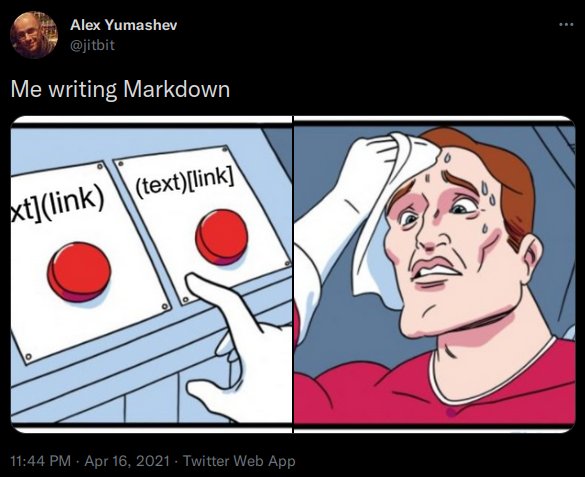
The consistency extends to practical use. Unlike formats requiring manual alignment of underline characters or varying list indicators, Org syntax remains typeable in any plain text editor without specialized tooling.
Growing Ecosystem Support
Critical tools now support Org syntax outside Emacs:
- Pandoc converts
.orgfiles to HTML, PDF, Word, and dozens of other formats - GitHub and GitLab render
.orgfiles natively in repositories - Org-roam and Logseq have adopted the syntax for knowledge management
As Voit notes: "Many people already type Org mode syntax without knowing it because it aligns with natural text structuring instincts." The format's readability in plain text makes it suitable for notes, documentation, and content that might outlive specific tools.
Why This Matters Now
The Markdown ecosystem's fragmentation has reached a tipping point. Djot's recent emergence as a CommonMark alternative explicitly cites standardization failures as motivation. Org Mode offers a proven, feature-complete syntax that avoids these issues while maintaining accessibility. With key tools now supporting it outside Emacs, organizations can consider it a viable solution for documentation systems and knowledge bases.
As Voit concludes: "Lightweight markup languages are designed to be used with minimum effort compared to full-blown markup languages. Some do their job better than others." For teams prioritizing long-term consistency over temporary trends, Org Mode warrants serious consideration.
Further Exploration:
- Org Mode Manual: Syntax
- Pandoc's Org Mode Support
- Orgdown Proposal for formal standardization
Comments
Please log in or register to join the discussion