
A backup drive holding personal data on 10.9 million customers vanished from a locked server room cabinet at Japan's Kyushu Electric Power, a reminder that physical access controls and backup hygiene are security problems too, not just IT housekeeping.

Kyushu Electric Power Co., Inc. has disclosed that an external storage drive containing personal information on more than 10.9 million customers went missing from a server room cabinet, turning a routine backup task into one of the largest data exposure incidents the Japanese utility sector has faced this year.
The sequence is almost mundane in how it unfolded. According to the company's disclosure, IT staff regularly run backups to manage server storage. On April 27, capacity constraints pushed them to offload data onto an external drive, which they then placed in a server room cabinet protected by what the company described as multiple physical security layers. When staff returned to retrieve the device on May 26, the cabinet was unlocked and the drive was gone. Kyushu Electric filed a police report on June 4, suspecting deliberate removal.
The utility supplies electricity across the Kyushu region, covering Fukuoka, Saga, Nagasaki, Kumamoto, Oita, Miyazaki, and Kagoshima prefectures, a population of roughly 12.6 million people. The 10.9 million affected accounts mean that almost everyone served by the company is touched by this.
What was on the drive
The exposed data is significant even without financial details. According to the company, the missing device held:
- Customer names
- Service location addresses
- Electricity usage data
- Telephone numbers
- Names of retail electricity providers
- Other related account information
Kyushu Electric clarified that no bank account numbers or credit card data were stored on the drive. That distinction matters for fraud risk, but it does not make the dataset harmless. Names tied to physical addresses, phone numbers, and electricity consumption patterns are a useful starting point for targeted phishing, physical surveillance, and social engineering. Usage data alone can reveal when a household is typically empty, information that has obvious value to anyone planning a burglary.
Why a lost drive is a security incident, not just a logistics failure
There is a tendency to treat physical media loss as a lesser category of breach, something closer to misplaced paperwork than a network intrusion. That framing is wrong. The outcome here is identical to a successful exfiltration: a complete copy of sensitive records is now in unknown hands, outside the organization's control, with no ability to revoke or rotate the exposed information. You cannot reset a customer's home address the way you reset a password.
The detail that 57 people had access to the server room is the part security practitioners should sit with. A cabinet protected by "multiple physical security layers" still failed because the access model around it was permissive and accountability was thin. Investigators interviewed everyone who entered the room and could not determine what happened, which points to a gap that is common and underappreciated: physical access logging that records entry to a room but not interaction with specific assets inside it.
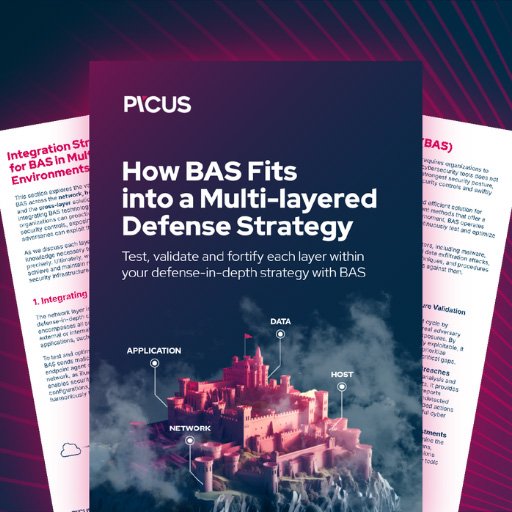
This is precisely the kind of blind spot that breach and attack simulation and detection testing are meant to surface. Industry data referenced in a recent Picus Security whitepaper found that organizations log 54% of successful attacks but alert on only 14% of them, meaning most malicious activity moves through environments without triggering a response. The same logic applies to physical controls. Logging an event is worthless if nothing flags the anomaly, and an unlocked cabinet in a server room is exactly the kind of anomaly that should generate an immediate alert rather than being discovered a month later.
The encryption question
The disclosure does not state whether the drive was encrypted, and that omission speaks volumes. Full-disk encryption on backup media is the single control that would have reduced this incident from a major breach to a manageable hardware loss. If the drive had been encrypted with a strong key managed separately from the device, the data would be inaccessible to whoever has it, and the company's notifications could reasonably reassure customers rather than warn them.
The practical takeaway for any team handling backups: treat removable and external storage as hostile-environment media by default. If a drive can leave a controlled rack, even temporarily, it should be encrypted at rest before any data is written to it. This is not advanced security engineering. Hardware-encrypted external drives and software solutions like LUKS, BitLocker, and VeraCrypt have made this a solved problem for over a decade. The failure is almost always procedural, an exception made under capacity pressure, which is exactly what happened here when staff reached for external storage to relieve a full server.

Practical steps for teams managing backups and physical media
The lessons from Kyushu Electric translate directly into controls other organizations can audit today:
Encrypt everything that can be carried. Any backup written to portable media should be encrypted before it leaves the system that created it. Make this a hard gate in the backup tooling, not a checklist item that can be skipped.
Track assets, not just rooms. Physical access logs that record who entered a space are necessary but insufficient. High-value media should be inventoried with check-in and check-out accountability, ideally with tamper-evident storage that flags when a container is opened.
Shrink the access list. Fifty-seven people with access to a room holding 10.9 million customer records is a control failure on its own. Access to sensitive backup storage should follow least privilege and be reviewed regularly, with separation between people who can enter the room and people who can open the asset cabinet.
Plan for capacity before it forces shortcuts. The drive was used because the server storage was full. Capacity planning is a security control in this context, because the moment teams improvise around a constraint is the moment policy exceptions get made.
Detect the anomaly, do not just record it. An unlocked cabinet should trigger an alert, not a discovery a month later. The gap between logging and alerting is where most incidents hide.
What comes next
Kyushu Electric has reported the incident to Japan's Personal Information Protection Commission and relevant government authorities, and the Ministry of Economy, Trade, and Industry has set a July 8 deadline for the company to report full details and the preventative measures it has taken. The utility has promised to notify affected customers individually in the coming period.
For the millions of people whose data is now unaccounted for, the most useful posture is caution around unsolicited contact. Phishing and vishing campaigns that reference accurate names, addresses, and provider details are far more convincing than generic spam, and this dataset gives an attacker exactly those ingredients. Customers should treat any unexpected call or message claiming to be from their electricity provider with suspicion and verify through official channels rather than responding directly.
The broader pattern this incident reinforces is that data security does not end at the firewall. A backup strategy that protects against ransomware and disk failure but ignores the physical custody of the media leaves a door open that no amount of network monitoring will close. Kyushu Electric's experience is a costly demonstration that the weakest layer of defense is often the most physical one.
Comments
Please log in or register to join the discussion