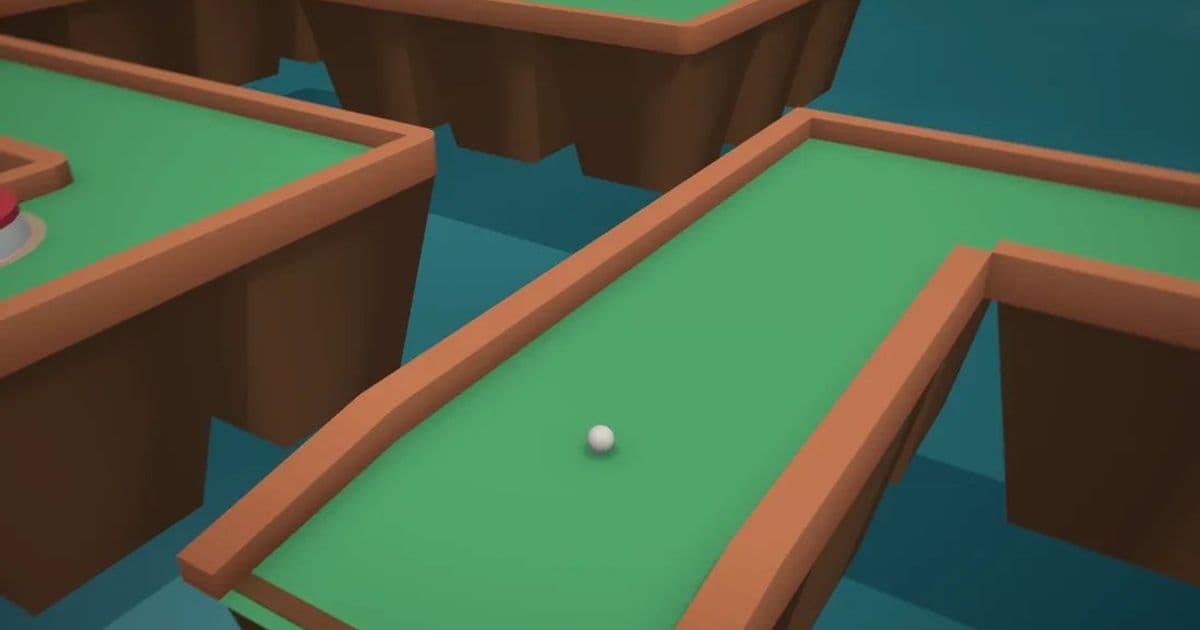
A one-hole mini golf site is tapping into a familiar developer-community pattern: small, repeatable, browser-native toys that feel shareable without needing to become platforms.
Trend observation
putt.day is built around a very compact promise: one new hole of mini golf every day. The page for No. 31, dated June 12, 2026, presents a simple loop: grab the ball, drag back, release, and try to finish in as few strokes as possible. Water resets the shot position. Old days live in a calendar, and only the first finish counts.
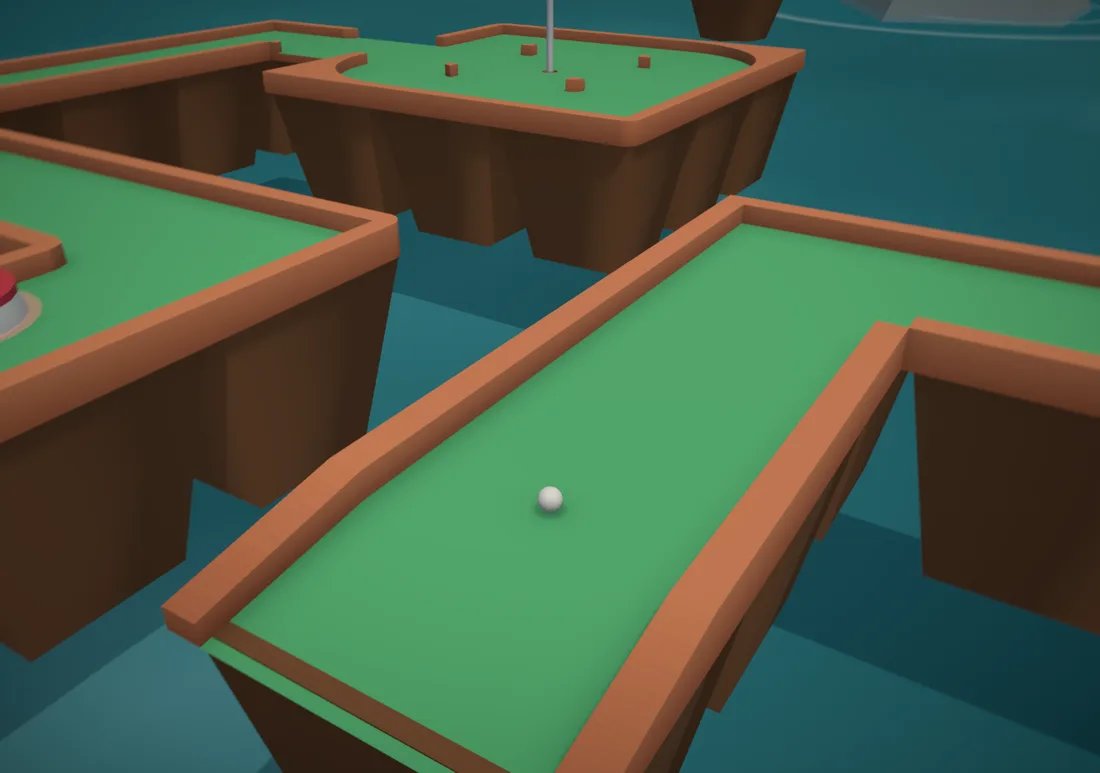
That sounds small, but small is the point. Developer and tech communities have been gravitating toward tiny, daily, highly legible web experiences again. The appeal is not only nostalgia for browser games. It is also a reaction against heavy apps, account walls, infinite feeds, and productivity software that asks users to configure half the experience before they can enjoy it.
putt.day fits the pattern that made games like Wordle travel through group chats and developer timelines: one unit of play, a fixed daily reset, a visible personal score, and enough constraint to make the experience comparable across players. The interesting part is that mini golf adds physicality. A word puzzle can be solved silently in a grid. A putting game has angle, force, friction, camera movement, failed shots, and small betrayals of spatial judgment. That gives it a different social texture. People do not just compare whether they solved it. They compare how badly they misread the ramp.
The broader developer-community signal is that browser-native craft still has room to surprise people. A daily web game does not need a token economy, an app store install, a multiplayer lobby, or an AI companion. It can be a URL, a mechanic, and a habit. In a period when much of tech discourse is dominated by large models, agent workflows, framework churn, and cloud bills, putt.day points toward a quieter countercurrent: the web as a place for lightweight, durable amusements.
Evidence
The adoption signals visible from the supplied page are product-level rather than metric-level. There are no public share counts, GitHub stars, funding notes, or leaderboard screenshots included here. That matters, because it keeps the observation grounded. The available evidence is in the design choices, and those choices map closely to formats that developer communities tend to pass around.
The first signal is the daily cadence. “One new hole a day” creates a built-in reason to return without needing a feed or notification system. Daily cadence also limits scope for both creator and player. The builder only needs to ship one playable challenge per day. The player only needs to spend a few minutes. That constraint is a feature, not a lack of ambition. Many successful community web toys work because they refuse to become general-purpose sandboxes.
The second signal is first-finish scoring. “Your first finish counts” changes the emotional contract. If retries were unlimited and equally valid, the site would become a practice tool. By counting the first completed run, putt.day turns each attempt into a small record of judgment under uncertainty. That is the same basic pressure that gives daily puzzles their social force. The result is less about mastery over time and more about how today went.
The third signal is input clarity. The instructions are short enough to remember: drag the ball back, release, pull farther for more power, drag elsewhere to look around, pinch or scroll to zoom. This is especially important for web games, where users arrive with no patience for onboarding. A successful browser toy has to teach itself in seconds. If the first interaction works, the user stays. If the camera fights the player or the drag direction feels backward, the tab closes.
The fourth signal is the archive. “Old days are in the calendar” gives the project memory. A daily game without an archive can feel disposable. An archive turns it into a growing collection, and for developers it also hints at an underlying content pipeline. Each hole is probably data, geometry, or a level definition that can be loaded by date. That raises interesting technical questions even if the implementation is not public: how are holes authored, tested, versioned, and made fair across devices?
For technical readers, the core mechanic is a familiar but demanding web problem. Mini golf looks simple until the details matter. The ball needs movement that feels physical enough to be trusted. The surface needs predictable friction. Obstacles need collision behavior that players can learn. The water reset rule needs a clear saved position. The camera has to allow inspection without making the shot interaction ambiguous.
A typical browser implementation might use a 3D renderer such as Three.js or a higher-level layer like React Three Fiber, paired with a physics engine such as Rapier or cannon-es. That is not a claim about putt.day’s internals, only a likely technical neighborhood for this type of project. The important engineering problem is not picking fashionable libraries. It is making the simulation feel consistent across phones, laptops, trackpads, and touch screens.
The drag mechanic also carries design trade-offs. Dragging backward to set shot power is intuitive for many golf and billiards games, but it has to coexist with camera controls. putt.day’s instruction, “Drag anywhere else to look around,” suggests that the ball itself is the mode switch. Touch the ball and you are aiming. Touch outside it and you are inspecting. That is a clean mental model, but it requires careful hit targets on mobile. If the ball is too small, aiming feels fiddly. If the hit area is too large, camera movement becomes frustrating.
Water as a penalty is another small but telling choice. It does not end the round. It sends the player back to the previous position. That keeps the daily challenge accessible while still making risk meaningful. In community games, harsh failure can create memorable stories, but too much punishment reduces sharing because casual players bounce off. putt.day appears to choose a middle path: mistakes cost strokes, not access.
The community sentiment around projects like this tends to split into a few recognizable reactions. Some developers enjoy the craft, especially when a site feels fast, self-contained, and playful. Some are drawn to the technical restraint. A browser game that works well across input modes is harder than it looks. Others see daily games as a solved format and judge new entries by whether the core mechanic adds enough variety. Mini golf has a stronger claim there than many puzzle clones, because level geometry can change the experience meaningfully without changing the rules.
There is also a social adoption path that does not require conventional virality. A daily mini golf hole can spread through small groups: coworkers comparing stroke counts, Discord servers posting the day’s pain point, developers inspecting the interaction model, designers discussing whether the first-finish rule is fair. That kind of circulation is slower than a front-page launch, but often more durable. It creates a habit before it creates a headline.
Counter-perspectives
The strongest counter-argument is that daily cadence alone is no longer novel. Since Wordle’s rise, many projects have adopted the same structure: one puzzle, one day, one shareable result. Users can feel the template immediately. If putt.day is going to hold attention, the daily hole design has to do real work. A weak hole is not just a weak level, it is the entire product for that day.
That creates production pressure. A word puzzle can be generated, curated, or drawn from a large corpus. A physical mini golf hole may need more hand tuning. Designers have to think about the intended line, lucky alternatives, stroke recovery, camera readability, and whether mobile players face a different challenge from desktop players. If the creator automates too much, holes may feel generic. If every hole is handcrafted, the daily schedule can become demanding.
Another counter-perspective is fairness. Physics-based web games invite disagreement over whether outcomes reflect skill or simulation quirks. A player who misses a word puzzle usually blames reasoning. A player whose ball clips an edge, slows unexpectedly, or bounces at a strange angle may blame the engine. That does not make the format bad, but it raises the quality bar. In a daily game, perceived fairness matters because players only get one counted finish.
There is also the question of depth. A one-hole daily mini golf game is charming, but charm can fade if the challenge space does not expand. Mini golf has many possible variations: ramps, banks, moving obstacles, tunnels, water, elevation, narrow gates, and trick shots. Too little variation and the daily habit becomes routine. Too much variation and the simple premise starts to feel noisy. The best version of putt.day will probably be one that treats restraint as an active design discipline, adding new ideas only when they make the day’s hole more readable or more interesting.
From a web performance angle, the project also sits in a delicate category. A daily browser game should load quickly because its value is immediate. If the site ships a large bundle, blocks on heavy assets, or stutters during the first shot, users will judge it more harshly than they would a larger game. The expectation for a tiny daily toy is that it behaves like a link, not like software asking for a warm-up lap.
The absence of visible community features can be read two ways. On one hand, no leaderboard, login, or public profile keeps the experience clean. It lets the game remain a daily ritual instead of a competitive service. On the other hand, shareability often benefits from a lightweight result format. If players cannot easily compare strokes, dates, or completion status, the site may rely on screenshots and manual posts. That can be enough, but it changes the growth pattern.
The more skeptical read is that putt.day is another example of tech culture romanticizing small web projects because they feel like relief from the current obsession with scale. That critique has some force. Not every small site signals a broad shift. Some are simply pleasant. But the repeated appearance of these projects still tells us something about developer appetite. Many people who build software all day remain drawn to experiences that are understandable at a glance, technically polished in the details, and free from the machinery of modern platforms.
That is the real pattern putt.day participates in. It is not trying to replace full games, social apps, or puzzle franchises. It is occupying a smaller and arguably healthier slot: a daily interaction with just enough physics to create stories and just enough constraint to become a habit. The consensus view might say that software keeps moving toward larger systems, smarter agents, and more automation. putt.day is a reminder that the web also rewards tiny rituals, especially when they respect the user’s time and give the community something concrete to compare.
Comments
Please log in or register to join the discussion