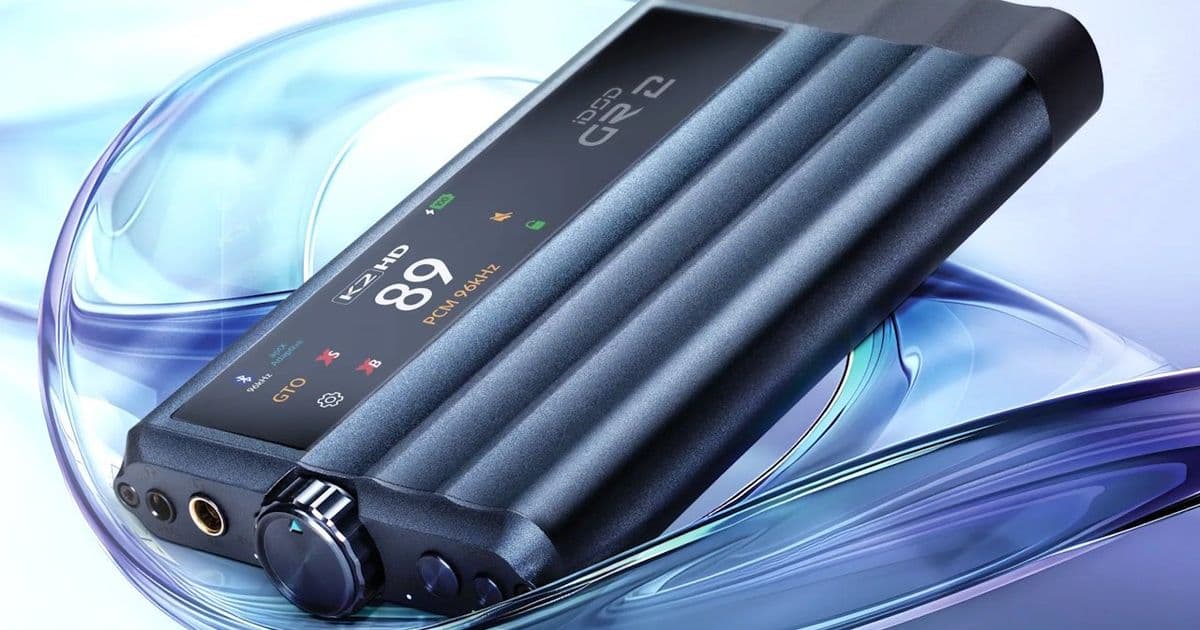
iFi’s new portable DAC/amp keeps the pocket hi-fi idea, but the buyer case now hinges on extra output power, aptX Lossless, LDAC, K2HD processing, and whether you need a true mobile desktop hybrid.
What's new
iFi has launched the iDSD GR 2, a portable DAC and headphone amplifier priced at $529 in the US and £529 in the UK. It is positioned as the successor to the xDSD Gryphon, which was already one of iFi’s more interesting portable units because it combined USB DAC duties, Bluetooth reception, S/PDIF input, balanced output, single-ended output, line functions, and onboard sound shaping in one pocketable chassis.
The headline upgrade is power. iFi rates the GR 2 at 1,513 mW RMS from its balanced 4.4 mm headphone output into 32 ohms, compared with more than 1,000 mW into 32 ohms for the xDSD Gryphon. That is not a small change if you use planar magnetic headphones, higher impedance dynamic headphones, or lower sensitivity full-size cans that make tiny dongle DACs sound flat when the track gets busy. Single-ended output is also much stronger than a typical phone dongle, with iFi listing 567 mW into 32 ohms from the S-Balanced 3.5 mm output.
The DAC section moves to a Burr Brown PCM1795 current-output chipset. iFi is leaning into that architecture because it lets the company build a more tailored analogue output stage after conversion. The format support is heavy for a portable device, with PCM up to 768 kHz and DSD512. In practical use, that matters less because most buyers will feed it 16-bit/44.1 kHz, 24-bit/48 kHz, or 24-bit/96 kHz files, but the extra headroom means the GR 2 is not likely to be format-limited when used with local hi-res libraries, Qobuz downloads, or a laptop playback chain.
Bluetooth is the other major spec shift. The GR 2 supports Bluetooth 5.4 with aptX Lossless, aptX Adaptive, aptX, LDAC, LHDC/HWA, AAC, and SBC. aptX Lossless is the one to watch if your phone supports it, since it targets CD-quality 16-bit/44.1 kHz playback under good radio conditions. LDAC remains useful for Android users because it can run up to 990 kbps, though it is still a lossy codec and depends heavily on connection quality. iPhone users should treat the GR 2 mainly as a wired DAC/amp because Apple devices still fall back to AAC over Bluetooth.
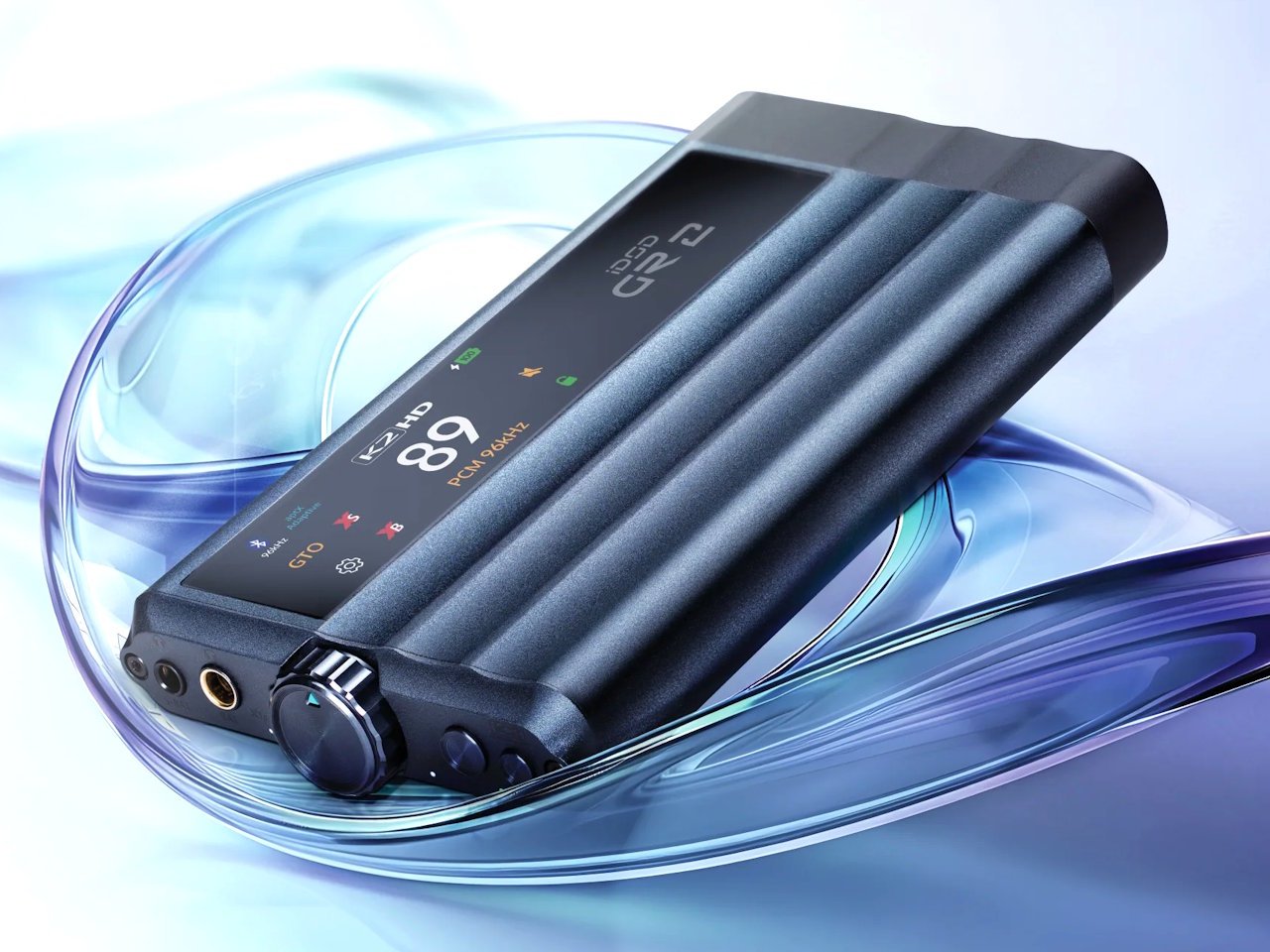
The interface is also more ambitious. The GR 2 has a color OLED capacitive touchscreen, replacing the older Gryphon’s more conventional display and controls. That sounds minor until you actually live with a portable DAC. Changing gain, input, filter, Bluetooth mode, XBass, XSpace, or channel-sensitive settings on small hardware can get annoying fast. A better display is not about luxury, it is about reducing the friction between different use cases, such as laptop USB during the day, Bluetooth from a phone on the couch, and S/PDIF from a transport at night.
iFi also adds support for the iFi Nexis Android app, which handles advanced settings and over-the-air updates. That Android limitation matters. If you use iOS, the core hardware still works, but the deeper app-based control story is not as strong. The battery is a 4,900 mAh lithium-polymer pack rated for about seven hours of playback, with charging in roughly 3.5 hours. The chassis measures 141 x 75 x 19 mm and weighs 268 g, which makes it transportable rather than jeans-pocket casual.
The audio processing feature that will split opinions is JVCKenwood K2HD. iFi describes it as a way to restore harmonic content, depth, and tone lost during digital recording or compression. In reviewer terms, I would treat that as a listening mode, not a guaranteed upgrade. On some lossy streams or older digital masters it may add pleasant density. On clean, well-mastered files it may be something you leave off. The good news is that iFi includes lighter K2 processing as well, so the GR 2 is not forcing one fixed sound profile.
How it compares
Against the xDSD Gryphon, the GR 2 looks like a focused power, interface, and wireless update rather than a total category shift. The old Gryphon already supported PCM 768 kHz, DSD512, USB-C, S/PDIF, Bluetooth, 4.4 mm balanced, 3.5 mm S-Balanced, XBass, XSpace, and iEMatch. The GR 2 keeps the same basic buyer promise, then raises the output ceiling, adds Bluetooth 5.4 with aptX Lossless, improves the display, adds Nexis app compatibility, and changes the DAC architecture.
The power delta is the easiest comparison to understand. The Gryphon’s balanced output was rated above 1,000 mW into 32 ohms, while the GR 2 reaches 1,513 mW into the same load. At 600 ohms, iFi lists 119 mW balanced for the GR 2, compared with more than 74 mW for the Gryphon. That does not automatically mean the GR 2 will sound better with every headphone, but it should have more voltage and current reserve before congestion sets in. If you use efficient IEMs, that extra power is less relevant, and low noise plus good volume control matter more.
Compared with the FiiO Q15, the GR 2 is playing in the same high-output portable DAC/amp class. FiiO’s unit uses an AK4191EQ plus AK4499EX DAC arrangement, an XMOS XU316 USB stage, QCC5125 Bluetooth, a 5,500 mAh battery, and balanced output rated at up to 1,610 mW plus 1,610 mW into 32 ohms in ultra high gain desktop mode. The Q15 is heavier at about 305 g and larger at roughly 143.5 x 71.75 x 21.75 mm. It also offers a more technical spec sheet in some areas, including very high SNR figures and app-based PEQ.
That makes the Q15 the more measurement-forward rival on paper, especially if you care about desktop mode power, PEQ, and AKM’s current flagship-style architecture. The iFi counters with a smaller, slightly lighter body, its analogue tuning tools, K2HD, iEMatch, and a simpler premium portable identity. I would put the FiiO in front for buyers who want maximum tweakability and raw spec density. I would put the iFi in front for buyers already using iFi gear, listeners who like XBass/XSpace style analogue shaping, and anyone who wants aptX Lossless plus a more polished pocket hi-fi control surface.
The Chord Mojo 2 is a different kind of competitor. Chord uses an FPGA-based DAC design rather than an off-the-shelf DAC chip, supports up to 768 kHz PCM and DSD256, and is rated at 600 mW into 30 ohms with support for very high impedance headphones. The Mojo 2 is smaller and lighter at 83 x 62 x 22.9 mm and 185 g, and it has a strong reputation for transparency and tone control through its UHD DSP system.
Where the Mojo 2 gives ground is wireless and convenience. Bluetooth is not built in without adding Chord’s Poly streamer, and the interface remains more button-code based than screen-led. The GR 2 is clearly the more flexible single-box travel unit if you regularly switch between wired and wireless sources. The Mojo 2 remains the purist pick if you want Chord’s FPGA sound, mainly listen wired, and care less about Bluetooth codecs or screen navigation.
The GR 2 also sits well below iFi’s own higher-end portable models, such as the iDSD Valkyrie, while offering enough output for many serious headphones. That pricing matters. At $529, it is not cheap, but it avoids the four-figure tier where buyers start expecting desktop-grade separation, balanced line integration, and near-reference measurements. The GR 2 is instead aimed at the person who wants one device to sit between a phone, laptop, tablet, CD transport, and several headphone types.
Who it's for
The iDSD GR 2 makes the most sense for buyers with difficult headphones who still want portability. If your collection includes Sennheiser HD 600-series models, higher impedance Beyerdynamics, portable planars, or full-size headphones that sound underfed from a dongle, the 1,513 mW balanced rating is the spec that matters. Power is not just about maximum volume. It affects bass control, transient grip, and how composed the amp sounds when a track has dense low-end energy and wide dynamic swings.
It is also a good match for Android users who split time between wired and wireless listening. LDAC and aptX Lossless give the GR 2 more useful Bluetooth credentials than older portable DAC/amps, and USB-C keeps the highest-quality path available when you want it. The limitation is source support. aptX Lossless requires compatible phones and stable conditions, while LDAC quality can drop if the radio link is weak. For critical listening, USB still wins.
IEM users should be more careful. The GR 2 includes iEMatch and low output impedance figures, which helps with hiss and impedance-sensitive earphones, but a $529 high-power DAC/amp is more hardware than many IEM setups need. If you mostly use efficient in-ear monitors with a phone, a smaller dongle or compact Bluetooth DAC can be more practical. The GR 2 is justified when you also own full-size headphones, need multiple inputs, or want iFi’s sound controls in one box.
Laptop and desktop listeners are another natural audience. The GR 2 can sit next to a MacBook, Windows laptop, tablet, or small streamer as a USB DAC/amp, then leave the desk without changing your headphone chain. The hybrid power mode is useful here because it prioritizes external power when plugged in and calls on the battery when demand rises. That should reduce pointless battery cycling during long desk sessions, though real battery behavior still needs long-term testing.
The weak spots are straightforward. Seven hours of battery life is acceptable, but the FiiO Q15 claims longer playback under its listed test conditions. At 268 g, the GR 2 is not a tiny travel accessory. iOS users do not get the same app story as Android users. Buyers who want parametric EQ may prefer FiiO or Qudelix-style control. Buyers who want maximum wired transparency at this price should still audition the Mojo 2.
My early buyer take is that the GR 2 is not trying to be the cheapest path to better headphone sound. It is a premium portable hub for people who have already outgrown dongles and want stronger amplification, modern Bluetooth, multiple wired inputs, and enough onboard control to make it usable every day. If you own the xDSD Gryphon and only use easy-to-drive headphones over USB, this is probably not an automatic upgrade. If you wanted more output, better Bluetooth, a friendlier screen, and K2HD in the same general form factor, the GR 2 is the version that fixes the most obvious pressure points.
Comments
Please log in or register to join the discussion