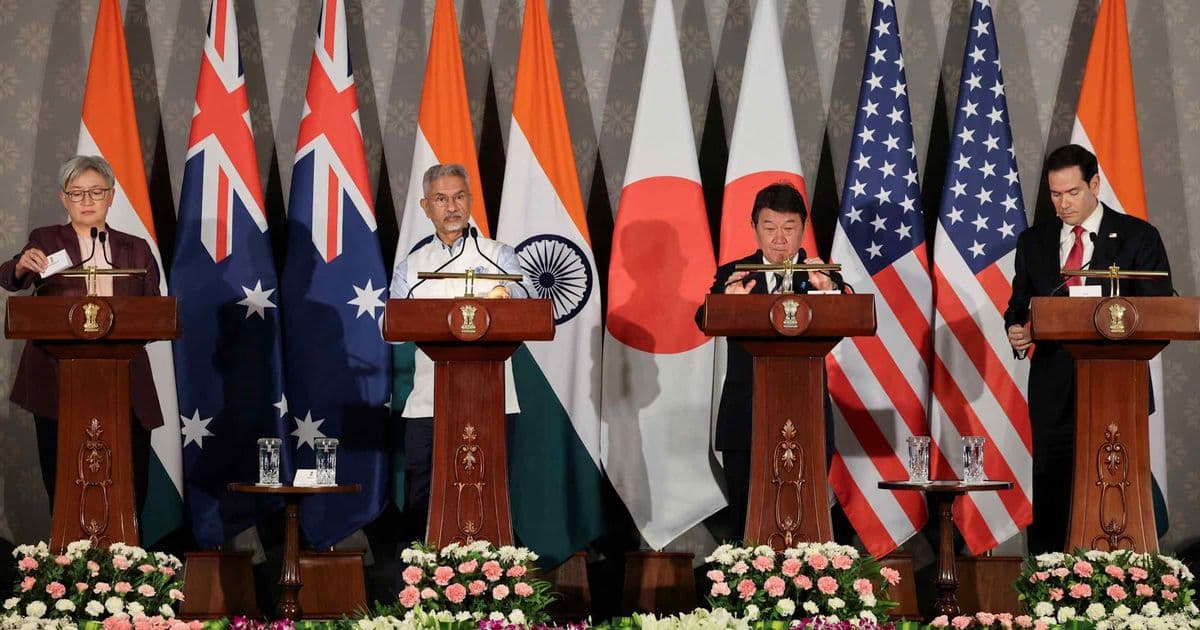
At a New Delhi summit, the foreign ministers of Australia, India, Japan and the United States announced coordinated steps to boost maritime surveillance, diversify energy supplies, secure critical mineral chains and fund a new deep‑water port in Fiji, signaling a deeper strategic alignment in the Indo‑Pacific.
Quad ministers unveil energy, critical mineral and Fiji port plans
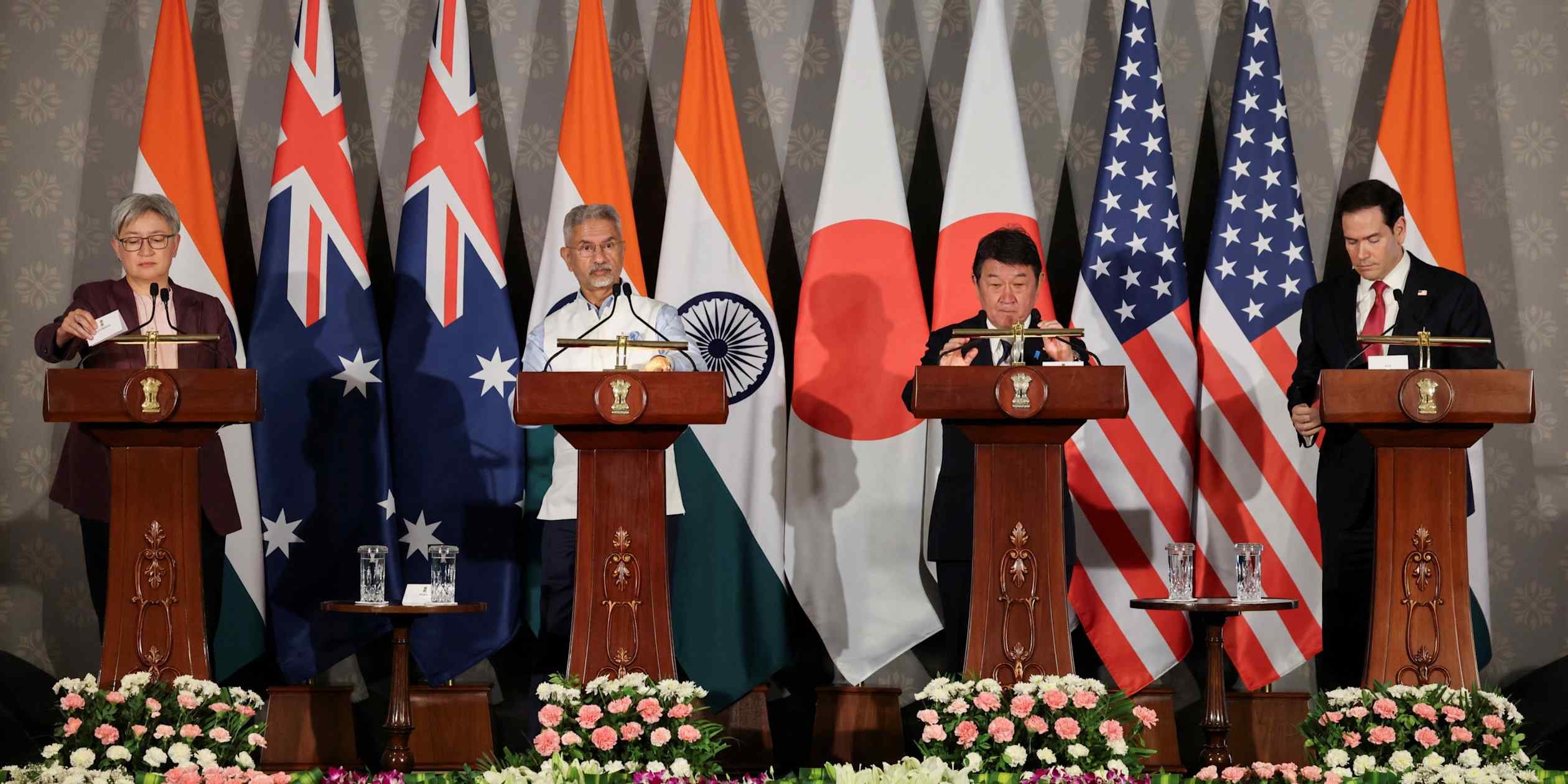
The foreign ministers of Australia, India, Japan and the United States gathered in New Delhi on May 26, 2026 and released a joint statement that bundles three priority tracks: maritime surveillance, energy and critical‑mineral resilience, and infrastructure development in Fiji. The announcements mark the first time the Quad has bundled a concrete port project with supply‑chain and energy initiatives, suggesting a shift from high‑level dialogue to implementable projects.
Maritime surveillance and Indo‑Pacific security
- Joint patrol framework – The four governments will fund a shared maritime domain awareness (MDA) platform, integrating satellite AIS data, unmanned surface vessels and AI‑driven analytics. Initial funding of US$150 million will be split equally, with each nation contributing US$37.5 million.
- Operational timeline – A pilot network covering the Bay of Bengal, the South China Sea and the Indian Ocean is slated for launch in Q4 2026, with full operational capability targeted for 2028.
- Strategic implication – By pooling sensor data, the Quad aims to reduce the detection lag for illicit ship‑to‑ship transfers of oil, weapons and people, a capability that has traditionally been fragmented across national navies.
Energy security and critical‑mineral supply chains
- Diversified LNG imports – India announced a $2 billion commitment to secure liquefied natural gas (LNG) cargoes from the United States, Australia and Qatar, reducing its reliance on a single supplier base that has been vulnerable to geopolitical pressure.
- Critical‑mineral hub – Japan and the United States pledged $1.2 billion to develop a processing hub in Australia’s Pilbara region for rare‑earths and lithium. The hub will be equipped to handle 30,000 tonnes of concentrate per year, enough to meet roughly 15 % of the Quad’s projected 2027 demand for battery‑grade lithium.
- Supply‑chain financing – A new Quad‑backed fund will provide low‑interest loans to small‑ and medium‑sized miners in India and Australia that meet ESG standards, aiming to bring $3 billion of private capital into the sector by 2029.
Fiji port project – a strategic gateway
- Project scope – The Quad will co‑finance a deep‑water port on Fiji’s northern coast, designed to accommodate vessels of up to 200,000 tonnes displacement. The port will feature a dedicated container terminal, a bulk‑cargo berth for LNG, and a logistics hub for critical‑mineral transshipment.
- Funding structure – Total project cost is estimated at US$1.8 billion. Contributions are slated as follows: Australia US$600 million, Japan US$600 million, the United States US$400 million, and Fiji will cover the remaining US$200 million through sovereign bonds.
- Economic impact – The port is projected to generate 1,200 direct jobs during construction and 300 permanent positions thereafter, while increasing Fiji’s cargo throughput by 40 % within five years.
What it means for the Indo‑Pacific
- Strategic depth – By linking surveillance, energy and infrastructure, the Quad is creating a layered approach that reduces dependence on any single supply route. The Fiji port, in particular, offers an alternative to the congested Singapore‑Malacca corridor, giving member states a foothold near the critical chokepoint of the Malacca Strait.
- Market signals – The announced funding packages are likely to stimulate private‑sector investment in regional LNG terminals, rare‑earth processing plants and logistics services. Analysts expect a 5‑7 % uplift in regional infrastructure‑related equities over the next 12 months.
- Geopolitical balance – While the Quad frames these initiatives as supply‑chain resilience, the timing coincides with heightened tension over maritime claims in the South China Sea. The coordinated effort may pressure rival powers to offer comparable incentives, potentially reshaping trade flows in the broader Indo‑Pacific.
The Quad’s integrated agenda underscores a shift from ad‑hoc diplomatic statements to concrete, financially backed projects that address both security and economic imperatives in the region.
Comments
Please log in or register to join the discussion