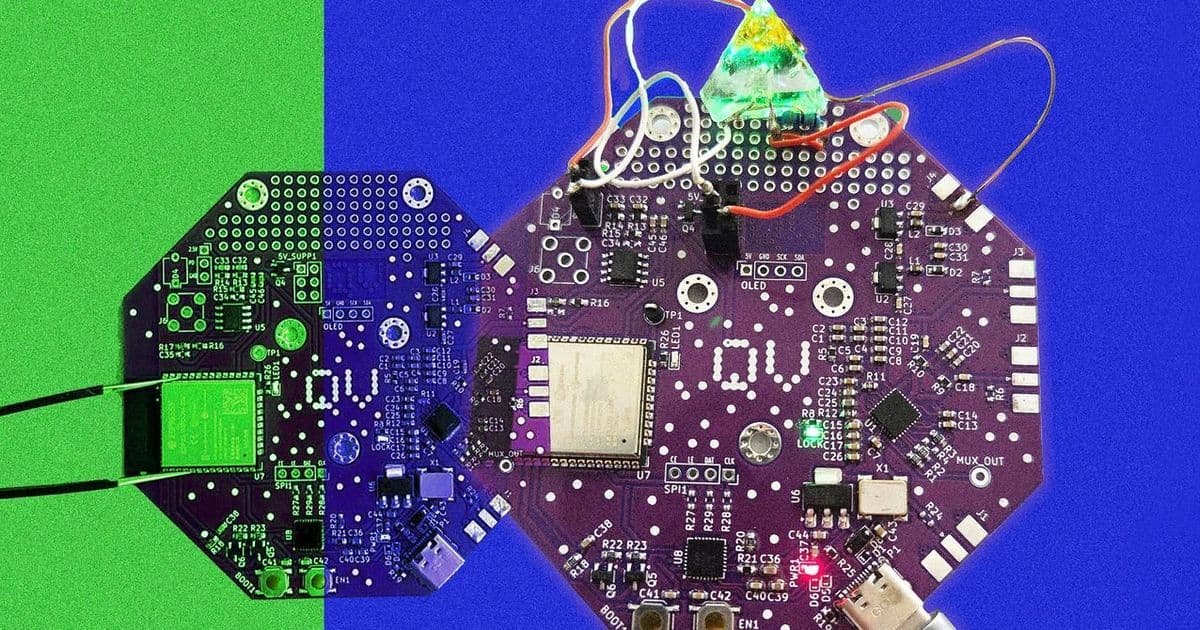
Defcon's Quantum Village unveils a fully open-source quantum sensor costing as little as $50 to build, using synthetic diamonds with nitrogen-vacancy defects. This accessible hardware enables experimentation in medical imaging, GPS alternatives, and quantum computing, aiming to accelerate real-world quantum applications through community collaboration.
Quantum computing often dominates headlines as a distant future technology, but practical quantum sensing is here today – albeit often locked behind exorbitant costs and proprietary systems. At Defcon's Quantum Village, co-founders Victoria Kumaran and Mark Carney are shattering that barrier. They've developed and open-sourced the "Uncut Gem," an affordable quantum sensor platform leveraging the unique properties of synthetic diamonds, with build costs plummeting from $160 for the first version to a targeted $50 for the upcoming third iteration.
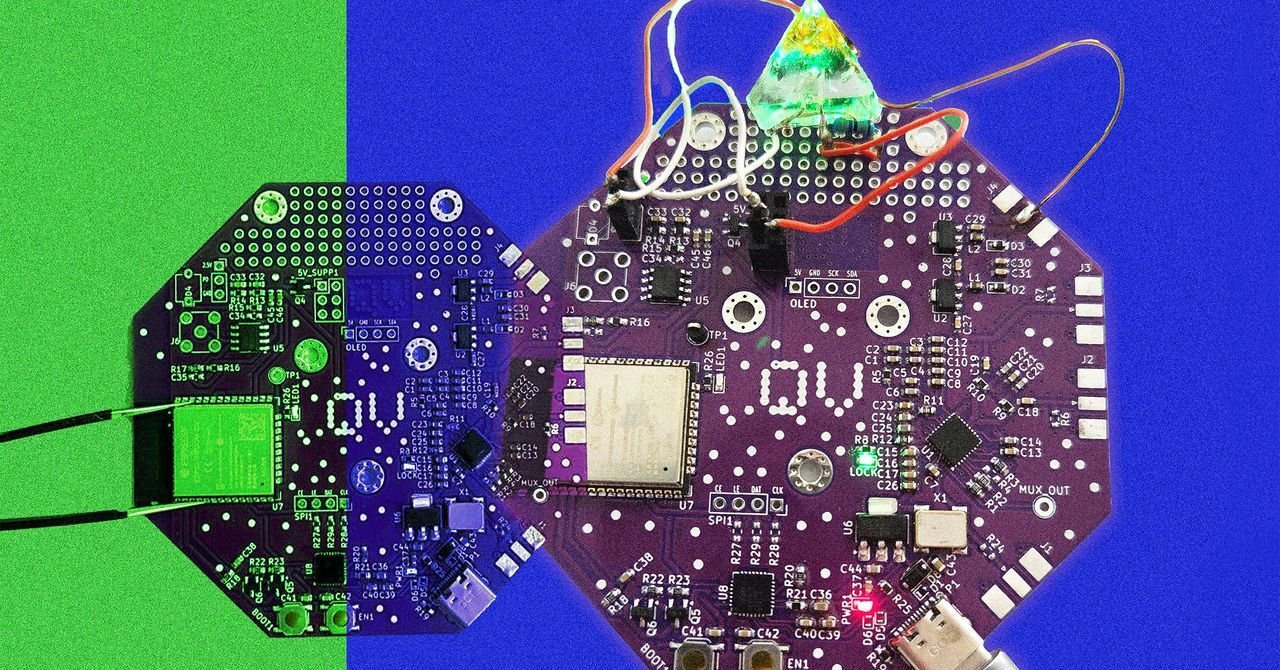
Caption: The core component: A synthetic diamond with nitrogen-vacancy defects, enabling quantum sensing capabilities at low cost.
The Diamond at the Heart of Sensing
The sensor's magic lies in a specific type of synthetic diamond, deliberately engineered with "nitrogen-vacancy" (NV) defects. These occur when nitrogen atoms replace carbon atoms in the diamond lattice, creating vacancies that grant the diamond extraordinary sensitivity to minute magnetic and electrical field fluctuations. While NV diamond sensors aren't new, their accessibility has been severely limited.
"These are diamonds with defects, synthetic diamonds that are the cheapest off-cuts you can get," Kumaran told WIRED. "I think there’s something a bit poetic that synthetic diamonds have this utility."
Beyond Theory: Real-World Applications Now
Quantum sensors like Uncut Gem aren't abstract lab curiosities. They enable:
- Portable Medical Diagnostics: Potential for low-cost, portable MRI-style devices usable outside traditional hospital settings.
- Resilient Navigation: Serving as GPS alternatives by detecting electromagnetic wave interference, crucial during system failures or jamming attacks (a capability actively explored by entities like the US Space Force).
- Fundamental Research & Development: Providing a hands-on platform for experimenting with quantum phenomena, random number generation, and developing associated software.
Truly Open Source: Schematics, Code, and Community
What sets Uncut Gem apart is its commitment to complete openness. Previous projects often shared partial schematics. Uncut Gem provides the full stack:
- PCB designs
- Component sourcing guides (including the NV diamonds)
- Firmware
- Software for signal processing and noise filtering (critical for interpreting sensor data)
- Detailed documentation and knowledge repository
"The reason we’re calling it the first fully open source is because... there’s no one other place that you could go that has the PCB, the source of diamonds, the designs, the schematics, the firmware, and also a repository of knowledge," Carney emphasized. Early prototypes have already demonstrated capabilities like detecting magnetic fluctuations in noisy environments and sensing a human heartbeat from several feet away.
Democratization Through Iteration
Independent researchers like Davide Gessa are already building and modifying Uncut Gems. "I'm following the instructions from the official project, but I made some customizations, too," Gessa said. "All my edits will be open source, so everyone can replicate and improve it." This community-driven iteration is central to the project's philosophy.
While Carney readily admits the current sensor isn't competing with high-end lab equipment ("Excuse me, but fuck no. There are much better sensors"), its power lies in accessibility. The goal isn't perfection out of the gate, but rapid evolution through widespread collaboration. By putting quantum sensing technology literally into the hands of hackers, researchers, and tinkerers for less than the price of a premium microcontroller board, the Uncut Gem project aims to catalyze innovation and accelerate the practical application of quantum physics far beyond specialized labs. The era of garage-built quantum sensing has begun.
Source: Adapted from original reporting by WIRED (https://www.wired.com/story/fully-open-source-quantum-sensor-uncut-gem/)
Comments
Please log in or register to join the discussion