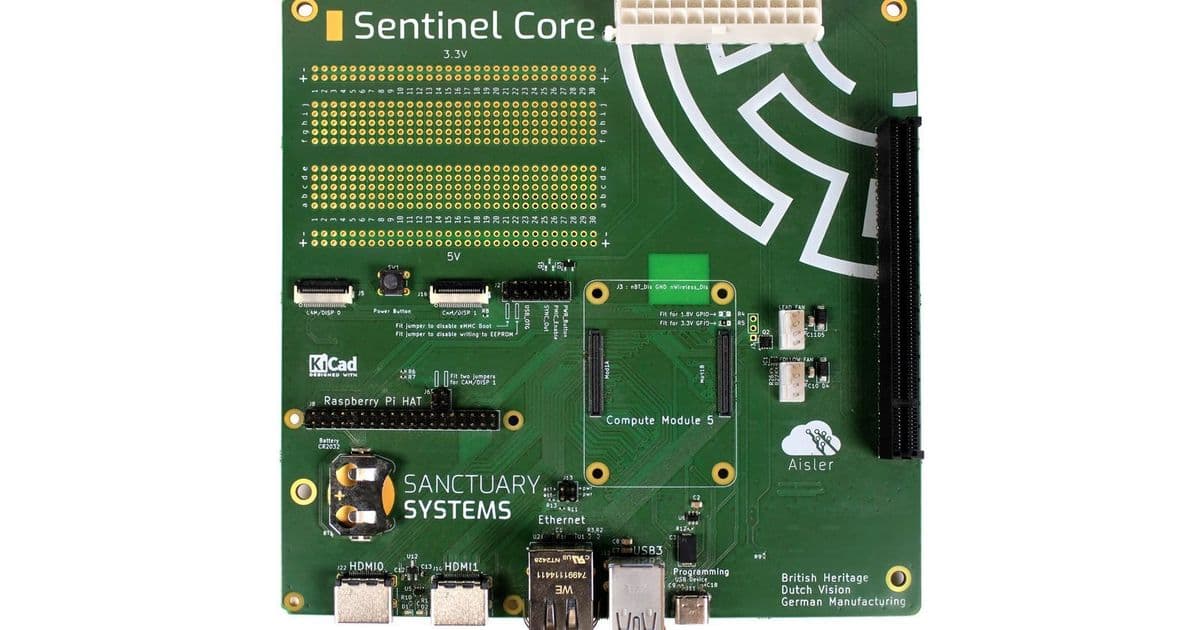
The Sentinel Core mini ITX carrier board unlocks the Raspberry Pi CM5's PCIe potential, letting you connect desktop GPUs and expansion cards for AI, video transcoding, and more.
The Raspberry Pi Compute Module 5 (CM5) packs impressive capabilities into a tiny form factor, but its single-lane PCIe connection has largely gone underutilized—until now. The new Sentinel Core mini ITX carrier board transforms the CM5 into a surprisingly versatile platform by providing a full-sized PCIe x16 connector.
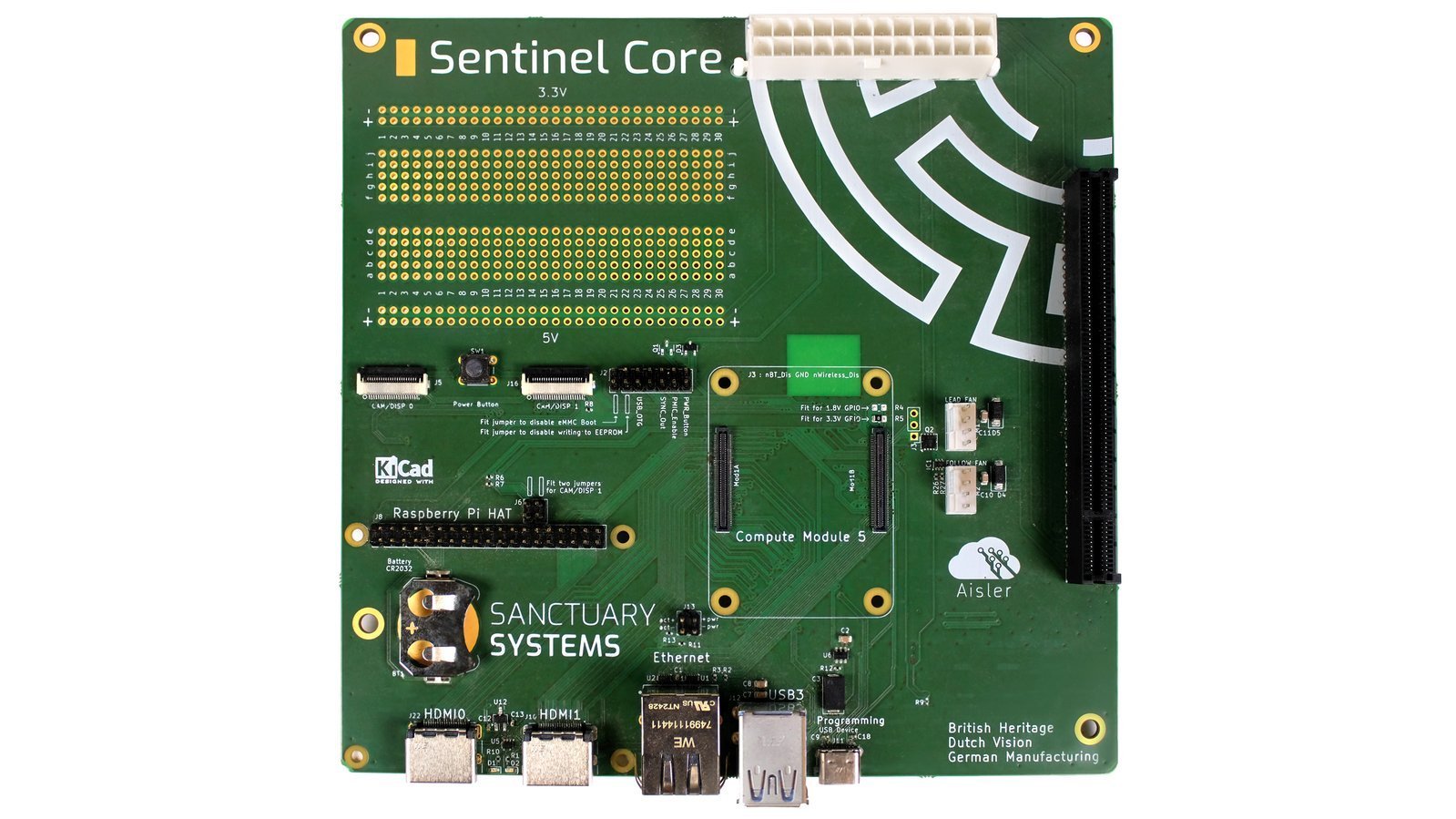
While most existing CM5 carrier boards use the PCIe lane for M.2 SSD storage, the Sentinel Core takes a different approach. By exposing the PCIe connection through a standard x16 slot, it opens up possibilities that go well beyond simple storage expansion. You can now connect desktop graphics cards, network interface cards, capture cards, or other PCIe devices to your Raspberry Pi-based system.
What Makes the Sentinel Core Different
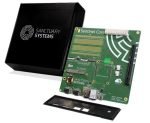
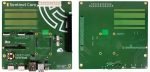
The board measures 170 x 170mm (6.7" x 6.7"), fitting standard mini ITX computer cases. It features the dual 100-pin connector required for CM5 attachment and includes a comprehensive I/O suite:
- 1 x PCIe x16 connector (PCIe 2.0/3.0 x1)
- 1 x Gigabit Ethernet
- 2 x HDMI ports
- 2 x USB 3.0 Type-A
- 1 x USB 2.0 Type-C
- 1 x 40-pin Raspberry Pi GPIO header
- 1 x 24-pin ATX 12V power input
The open-source nature of the project means technically inclined users could build their own version, though backing the Crowd Supply campaign at $129 appears to be the more practical option. The campaign promises shipping beginning in August.
Practical Applications Beyond Gaming
It's important to set expectations: a single-lane PCIe 2.0 or 3.0 connection won't turn your Raspberry Pi into a gaming powerhouse. The bandwidth limitations mean you won't be running the latest AAA titles at high settings. However, the developer behind Sentinel Core highlights several practical use cases where the extra GPU power makes sense:
Video Transcoding: Hardware-accelerated video encoding and decoding can significantly reduce CPU load for media servers and streaming applications.
Local AI Processing: Running large language models or other AI workloads locally becomes more feasible with GPU acceleration, even with limited PCIe bandwidth.
Specialized Computing: Scientific computing, machine learning inference, or other GPU-accelerated tasks that don't require maximum graphics performance.
Expansion Flexibility: The PCIe slot isn't limited to GPUs—you could use it for additional network interfaces, storage controllers, or specialized I/O cards.
The CM5 Cost Consideration
There's a significant caveat to the Sentinel Core's appeal: you need to provide your own Raspberry Pi CM5 module. With recent "RAMageddon" price increases affecting the entire industry, CM5 modules have become considerably more expensive than when they first launched. This means the total cost of a complete system could be substantial, especially compared to alternatives like the Raspberry Pi 5 or other single-board computers with integrated PCIe.
Who Is This For?
The Sentinel Core represents an interesting niche product that bridges the gap between embedded computing and desktop expansion. It's particularly appealing for:
- Developers experimenting with edge AI and machine learning
- Hobbyists building custom media servers or home lab equipment
- Educational institutions teaching computer architecture and expansion
- Anyone who already has CM5 modules and wants to expand their capabilities
The project demonstrates how even modest hardware constraints can be overcome with creative engineering, though the practical value will depend heavily on your specific use case and budget.
For more information about the Sentinel Core and to back the project, visit the official Crowd Supply page. The open-source design files are also available for those who prefer to build their own version.
Comments
Please log in or register to join the discussion