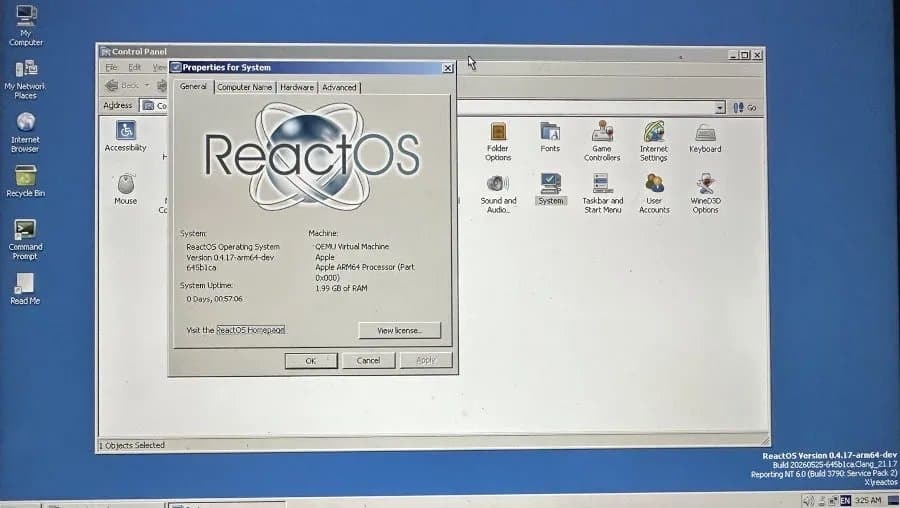
The open-source Windows-compatible project ReactOS has achieved experimental ARM64 support, expanding beyond its traditional x86 architectures and opening new possibilities for compatibility.
ReactOS, the ambitious open-source project aiming for Windows binary compatibility, has reached a significant milestone with experimental support for ARM64 architecture. This development, shared on X (formerly Twitter) by the ReactOS team, represents a major expansion beyond the project's traditional focus on i586 and AMD64 platforms.
The ARM64 implementation, developed over several months by an open-source contributor, successfully boots in a QEMU virtual environment targeting Apple's ARM64 processors. This experimental build requires a UEFI-compatible system with either GICv2 or GIC3 enabled and is confirmed to work on Armv8-A and newer architectures.
For homelab enthusiasts and compatibility-focused users, this development is particularly interesting. ReactOS has long served as an alternative for running legacy Windows applications on modern hardware, and ARM64 support could potentially enable this compatibility on increasingly popular ARM-based systems like those from Apple, Amazon (Graviton), and various ARM server offerings.
The technical requirements for running experimental ReactOS ARM64 include:
- UEFI compatible system
- GICv2 or GICv3 support
- Armv8-A or newer architecture
While performance benchmarks for this experimental build aren't yet available, the achievement itself is noteworthy. ReactOS has historically focused on x86 compatibility, making this architectural expansion a significant engineering accomplishment. The project's GitHub repository shows the ongoing work in this area, with contributors gradually implementing the necessary components for ARM64 support.
For those interested in testing this experimental functionality, the ReactOS team has indicated that builds are available through their development channels. However, given the experimental nature, users should expect instability and limited driver support compared to the more mature x86 versions.
This development comes as ARM64 continues to gain momentum in both consumer and enterprise spaces. While ReactOS ARM64 won't replace Windows on ARM or native ARM Linux distributions anytime soon, it represents an important step for the project's long-term vision of cross-architecture Windows compatibility.
For more technical details about the implementation, interested developers can refer to the ReactOS GitHub repository, where the ARM64-related code changes are being tracked and discussed. The project's documentation also outlines the current state of compatibility and known limitations for this new architecture support.
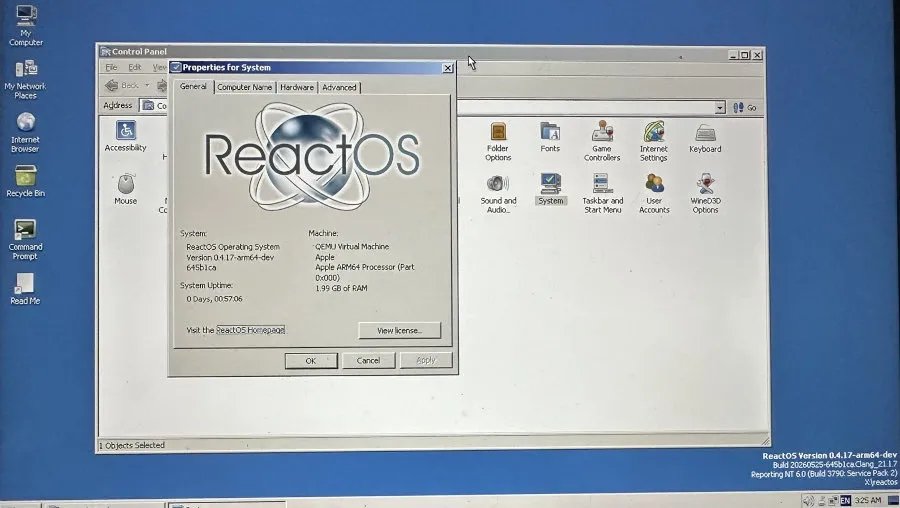
As ARM64 hardware becomes more prevalent, projects like ReactOS that expand their architectural support help maintain compatibility for legacy software ecosystems. While Windows on ARM has made strides in recent years, ReactOS offers an alternative path for those seeking open-source solutions or compatibility with specific legacy applications that may not function properly under Microsoft's ARM implementation.
The experimental nature of this support means we're likely months, if not years, away from a stable release. However, the mere fact that ReactOS can now boot on ARM64 hardware demonstrates the project's adaptability and the dedication of its contributor community to expanding its compatibility reach.
Comments
Please log in or register to join the discussion