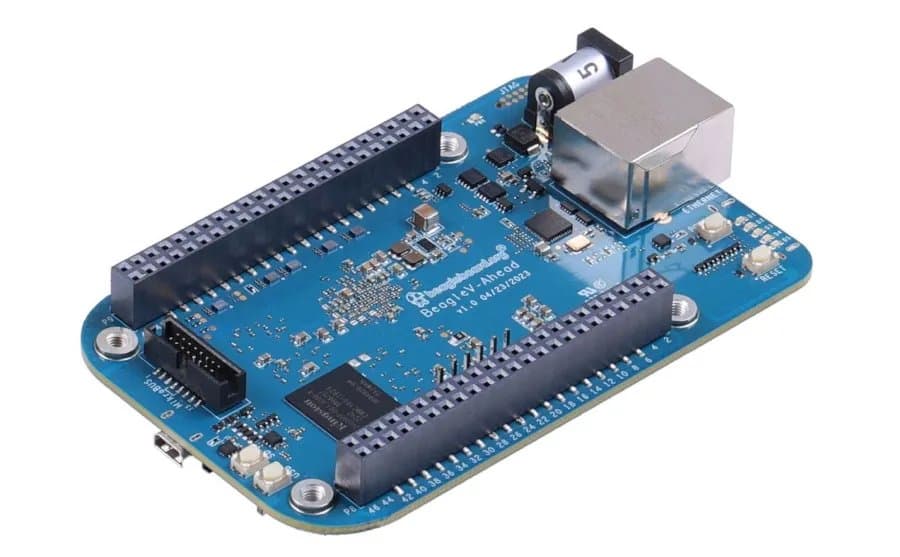
The BeagleV Ahead single board computer finally gets HDMI display support with Linux 7.1, making it more practical for everyday use.
The BeagleV Ahead, an open-source RISC-V single board computer, is set to gain HDMI display support with the upcoming Linux 7.1 kernel. This development comes as a welcome improvement for users of this low-cost RISC-V development platform, which has been somewhat limited in its practical applications due to the lack of display output capabilities.
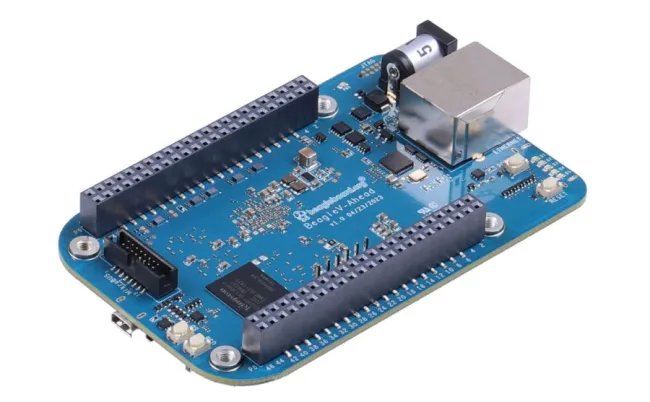
The BeagleV Ahead is built around the T-Head TH1520 SoC, which features four Xuantie C910 processors running at 2GHz. This quad-core RISC-V processor is paired with an Imagination BXM-4-64 GPU and an NPU rated for 4 TOPS at INT8 precision. The board comes with 4GB of LPDDR4 system memory and 16GB of eMMC storage, making it a modest but capable platform for RISC-V experimentation.
What makes this HDMI support particularly noteworthy is that it's coming to the mainline Linux kernel. The T-HEAD Device Tree updates have been submitted for inclusion in Linux 7.1, which means this support will be available to all users running the mainline kernel without requiring custom patches or out-of-tree drivers.
The Device Tree changes enable the display pipeline for the BeagleV Ahead and add the necessary HDMI connector node, activating both the Display Processing Unit (DPU) and HDMI nodes. This is a significant step forward for the RISC-V ecosystem, as display support has been one of the missing pieces for making RISC-V SBCs truly practical for everyday use.
While the BeagleV Ahead's specifications aren't particularly impressive compared to ARM or x86 alternatives, its $150 price point makes it an attractive option for developers and enthusiasts looking to experiment with RISC-V hardware. The addition of HDMI support significantly enhances its utility, allowing users to connect monitors and use the board for desktop-like applications.
The timing of this support is also interesting, as it coincides with growing interest in RISC-V across various sectors, from embedded systems to potential server applications. As the RISC-V ecosystem matures, having proper display support in mainline Linux is crucial for broader adoption.
For current BeagleV Ahead owners or those considering purchasing one, the Linux 7.1 kernel will provide out-of-the-box HDMI functionality. This means you'll be able to connect a monitor directly to the board and use it for development work, media playback, or other graphical applications without resorting to headless operation or serial console access.
The BeagleV Ahead continues to represent an important milestone in the RISC-V journey toward mainstream adoption. While it may not be a high-performance computing platform, its open-source nature and now-improved display capabilities make it a valuable tool for learning about and developing for the RISC-V architecture.
Comments
Please log in or register to join the discussion