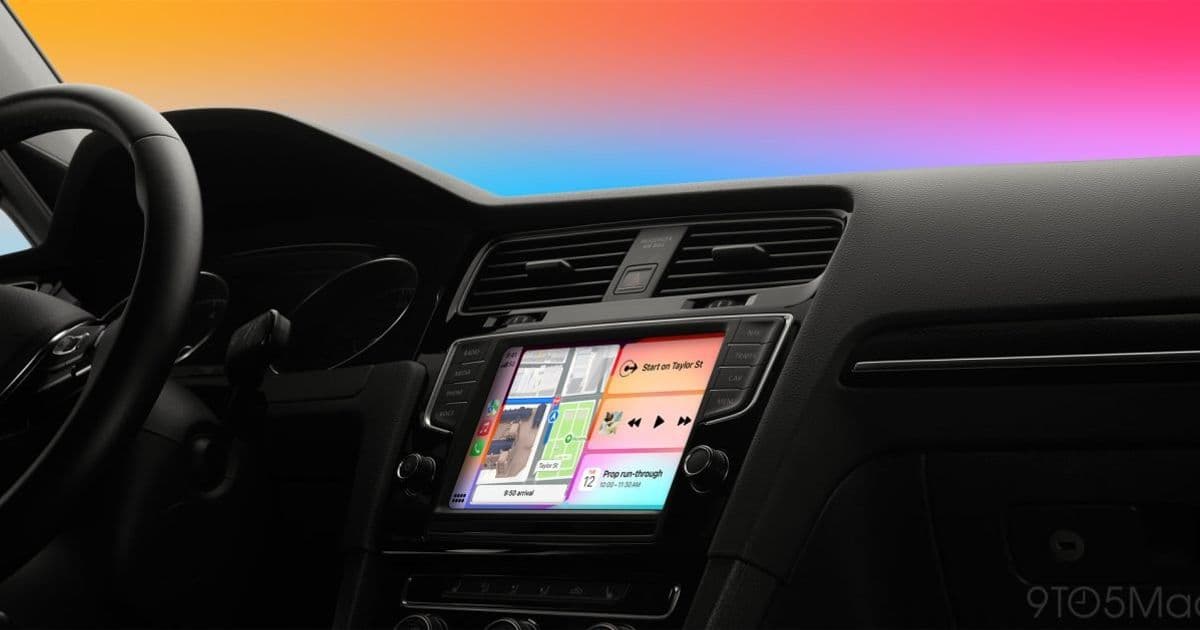
Rivian's software chief Wassym Bensaid argues that the rise of AI-powered automotive assistants renders external platforms like Apple CarPlay unnecessary, as the company doubles down on its proprietary software ecosystem.
Rivian is continuing its firm stance against supporting Apple's CarPlay platform, with Chief Software Officer Wassym Bensaid declaring that the entire debate over including CarPlay has become 'completely obsolete' due to advancements in artificial intelligence. In a recent interview on The Verge's Decoder podcast, Bensaid explained why Rivian remains committed to its own software ecosystem rather than adopting the widely-used automotive standard.
The AI-First Approach
Bensaid's comments come shortly after Rivian launched its own AI assistant, representing the company's broader shift from what he calls 'software-defined' vehicles to 'AI-defined' ones. According to Bensaid, the deep integration of AI into Rivian's vehicles creates possibilities that external solutions like CarPlay simply cannot match.
"What we're seeing right now with the advancement of AI technologies is just another reason why I deeply believe that RJ and Rivian made the right choice by investing into our own technology and software," Bensaid stated during the interview. "Cars are moving from, as you said, the buzzword 'software-defined' to 'AI-defined.' The possibilities now for such deep AI integration in the car make the entire CarPlay debate completely obsolete."
The Agentic Integration Vision
Bensaid elaborated on Rivian's vision for 'agentic integration'—a concept where AI assistants become the primary interface between drivers and their vehicles. This approach would fundamentally change how users interact with apps and vehicle functions, potentially making traditional screen-mirroring solutions like CarPlay seem outdated.
The company's resistance to CarPlay isn't new. Last fall, Rivian CEO RJ Scaringe suggested that customers would eventually appreciate the lack of CarPlay support. Now, with their AI assistant in place, Rivian appears to be doubling down on this strategy.
Consumer Perspective and Survey Data
Rivian bases its approach on internal survey data, showing a significant shift in customer preferences over time. According to Bensaid, five years ago, CarPlay was the top request from Rivian customers, with over 70% of customers requesting it after the launch of the R1T and R1S. However, in recent surveys, that number has dropped to less than 25%.
This data suggests that as Rivian's own software capabilities have improved, customer interest in third-party solutions has diminished. The company appears to be betting that its proprietary AI assistant will eventually become the default choice for most drivers.
The Financial Consideration
Critics have pointed out that Rivian's stance may be motivated by financial considerations rather than purely technical ones. CarPlay is offered free by Apple to automakers, while Rivian charges $15/month for its AI assistant. As one commenter noted, "CarPlay is obsolete in the sense that it would be offered for free, yet they can charge $15/month for their AI assistant. Free software is what's obsolete to Rivian."
Bensaid addressed concerns about screen-mirroring solutions taking over the vehicle's interface, stating that "the challenge with screen mirroring solutions is that they take over every single pixel in the car, and that's not the way we see ourselves interacting with our users." However, this claim has been disputed, as CarPlay and similar platforms only access the pixels they're given, with many automakers successfully implementing split-screen solutions.
Ecosystem Lock-In and Future Implications
Rivian's approach represents a broader trend in the automotive industry toward ecosystem lock-in. By developing proprietary software solutions and AI assistants, automakers can create more direct relationships with their customers, potentially opening up new revenue streams through subscription services.
This strategy raises questions about interoperability and consumer choice. While CarPlay provides a consistent experience across different vehicles, proprietary systems may limit functionality when switching between brands. As vehicles become increasingly software-dependent, the battle over control of the in-car interface will likely intensify.
The full interview with Wassym Bensaid can be read or listened to on The Verge, offering additional insights into Rivian's software philosophy and future plans. As AI continues to reshape the automotive landscape, we may see more automakers follow Rivian's lead in developing their own intelligent assistants rather than relying on third-party solutions.
Comments
Please log in or register to join the discussion