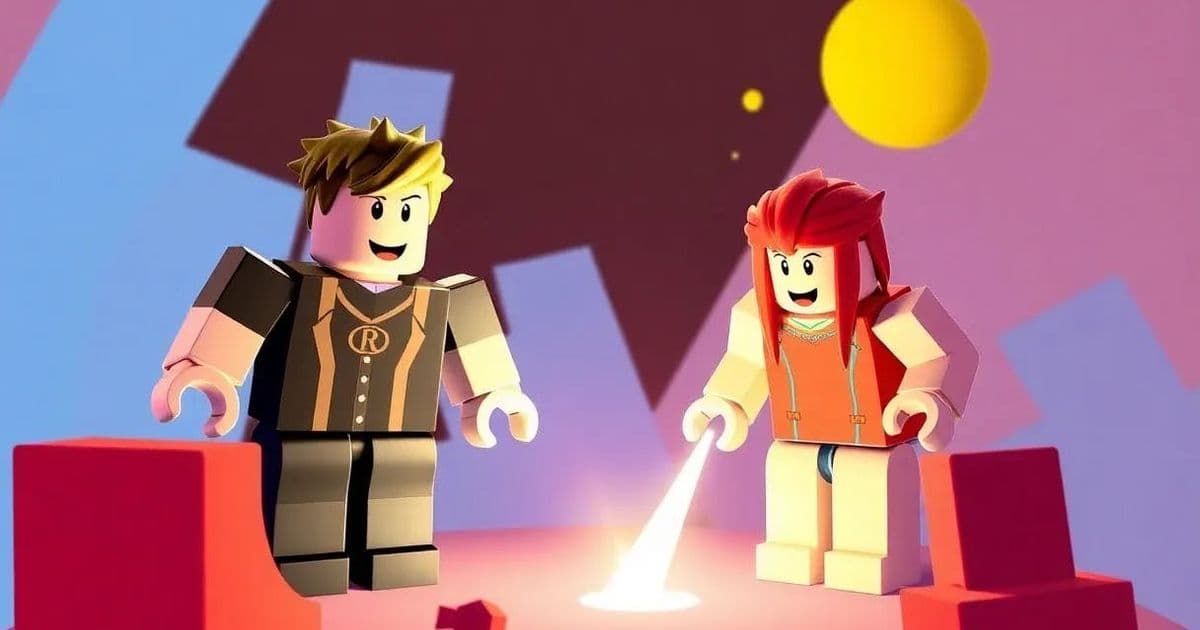
Roblox's new Learning Hub has attracted 50 million visitors by transforming gaming into experiential education, challenging traditional notions of screen time and classroom learning.
Roblox has evolved far beyond its reputation as "just a game" into a massive educational ecosystem where millions of young people design, code, and collaborate in real-time. The platform's recent launch of the Roblox Learning Hub represents a fundamental shift in how we think about digital education, attracting nearly 50 million visitors since July 2025.
From Digitized Textbooks to Interactive Worlds
The traditional approach to educational technology has long followed a predictable pattern: take existing materials, digitize them, and distribute them more efficiently. This model prioritized speed and scale over engagement, treating screens as delivery mechanisms rather than creative tools. But today's learners expect something fundamentally different—they want to interact with information, remix it, and build upon it.
Roblox embodies this shift perfectly. Instead of passive consumption, the platform functions as a massive public sandbox where users experiment with game design, write scripts, test mechanics, and collaborate across time zones. It's less like a traditional video game and more like a shared creative space that happens to be digital.
The Learning Hub: Education That Feels Native
The Roblox Learning Hub curates educational experiences across subjects including coding, mathematics, climate science, digital citizenship, and life skills. What makes this approach distinctive isn't just the content variety but the underlying philosophy: these aren't lectures disguised as games. Players don't "complete lessons"—they inhabit and interact with worlds.
Inside the hub, users can:
- Practice online safety through Google's Be Internet Awesome World
- Explore climate systems with BBC Bitesize's Planet Planners
- Walk through natural history in Ecos: La Brea
- Learn coding fundamentals through Lua Learning by building their own games
This experiential approach matters because research consistently shows that learning sticks when it's active rather than passive. The Entertainment Software Association's 2025 research supports this trend, finding that 45% of players use games to "keep their minds sharp," while half report that games have improved their education or career trajectory.
Play as Critical Thinking
Adam Seldow, Senior Director of Education Partnerships at Roblox, captures the platform's educational philosophy succinctly: "Play is one of the most powerful forms of learning. When kids explore and create together in immersive worlds, they aren't just playing—they're building the critical thinking skills they need to thrive."
This reframing challenges conventional wisdom about screen time. The traditional fear assumes passivity—a child consuming content. But creator-driven platforms like Roblox invert this dynamic entirely. The screen becomes a tool for construction, not just consumption.
In practice, this means kids are debugging scripts, balancing virtual economies, collaborating across time zones, and iterating on designs based on peer feedback. These activities develop skills that transfer directly to real-world problem-solving: systems thinking, iterative design, collaboration, and resilience in the face of failure.
Beyond the Classroom Walls
Roblox doesn't aim to replace traditional schooling—it models a different layer of learning entirely. The platform demonstrates three fundamental principles:
Learning by doing: Instead of reading about coding concepts, users write actual Lua scripts and see immediate results.
Learning with peers: Collaboration happens organically as users share worlds, provide feedback, and work together on complex projects.
Learning through systems: Players grasp complex concepts like economics, physics, and social dynamics by experiencing them firsthand in game environments.
This approach aligns perfectly with UNESCO's International Day of Education theme focusing on "the power of youth in co-creating education." Young people aren't waiting for curriculum to arrive—they're building it themselves, creating learning experiences that feel authentic to their digital-native sensibilities.
The future classroom won't be bounded by physical walls. It will look more like a shared world, one that students help design and continuously evolve. Roblox's Learning Hub demonstrates that when given the right tools and environment, young people will naturally gravitate toward learning that's interactive, collaborative, and deeply engaging.
The platform's success suggests that the next generation of educational technology won't be about making learning more efficient—it will be about making it more human, more creative, and more aligned with how young people already learn in their digital lives.
Comments
Please log in or register to join the discussion