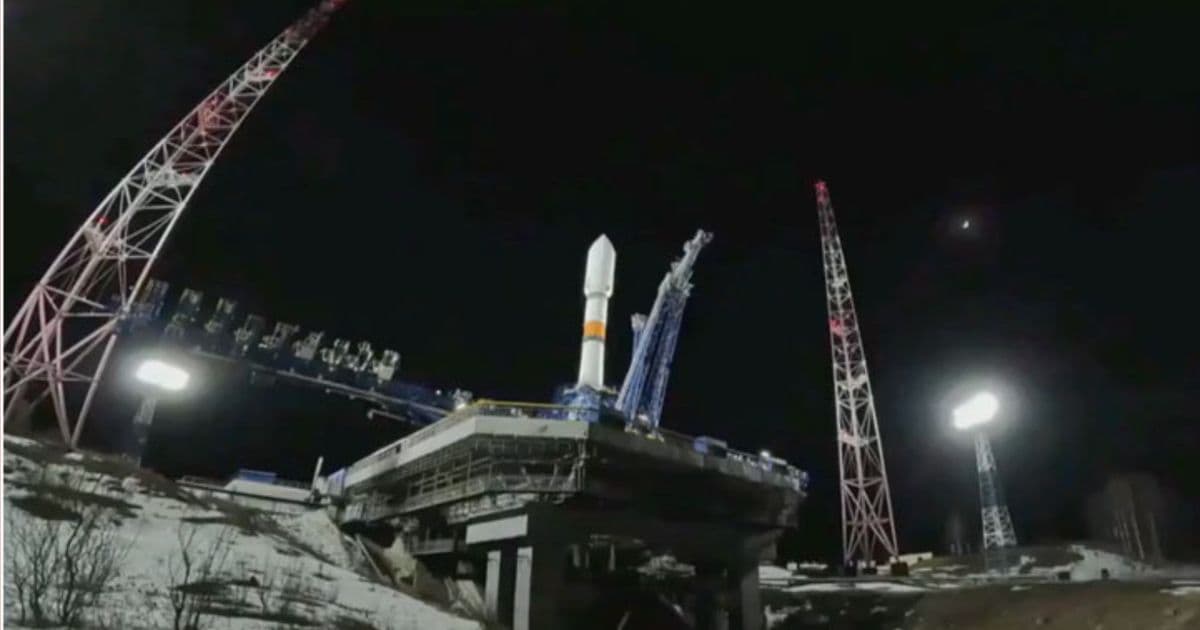
One of the 16 Rassvet‑3 satellites re‑entered the atmosphere after failing to perform any orbit‑raising maneuver, highlighting early reliability challenges for Russia’s Starlink‑style broadband effort and raising questions about its rollout schedule, funding, and competitive positioning.
Russia’s Rassvet Broadband Constellation Loses First Satellite – Implications for the Emerging Market
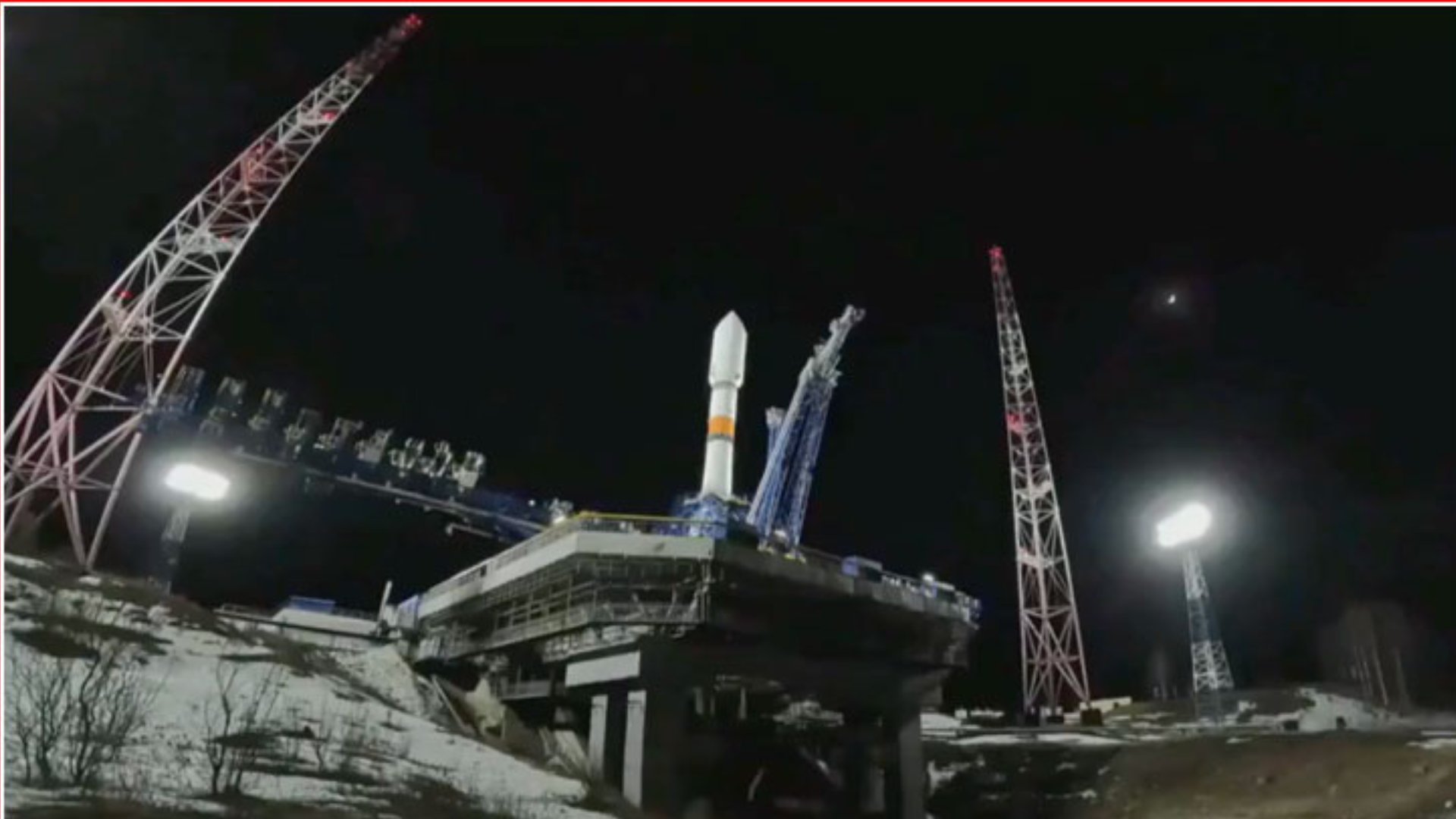 Image credit: Bureau 1440 / IKS Holding
Announcement
On ≈ 6 June 2026, Object 4 – the fourth unit of the 16‑satellite batch that formed the first operational segment of Russia’s Rassvet broadband constellation – burned up in the lower atmosphere. The satellite never executed a single orbit‑raising burn after its launch on 23 March 2026 from the Plesetsk Cosmodrome. All other members of the batch remain in orbit, with six already climbing to their planned service altitude and eight holding a quasi‑stable “parking” orbit.
Technical specs and failure analysis
| Parameter | Value |
|---|---|
| Satellite mass | ~370 kg (≈ 816 lb) |
| Initial insertion orbit | 288 km × 324 km, 82.3° inclination |
| Target service orbit | 550 km–600 km circular, 82.3° inclination |
| Propulsion system | Small bipropellant thrusters (typical for low‑Earth‑orbit (LEO) broadband sats) |
| Power | ~1.5 kW solar array, Li‑ion battery pack |
| Payload | Ka‑band phased‑array antenna, on‑board router |
| Ground segment | Central control at Moscow‑based Bureau 140, plus regional gateways |
The satellite’s trajectory decayed naturally because atmospheric drag at ~300 km is sufficient to lower perigee by several kilometres per day for an un‑propelled object. Without a thrust event, the orbital lifetime at that altitude is measured in weeks, not months. The failure mode points to either:
- Propulsion subsystem fault – a valve, valve‑driver, or fuel‑feed issue that prevented any burn.
- Loss of telemetry‑command link – a ground‑station antenna outage or software glitch that left the satellite unable to receive the burn command.
Both scenarios produce the same observable outcome: the satellite remains in its insertion orbit, loses altitude, and re‑enters.
Comparison with Starlink’s low‑orbit deployment
SpaceX deliberately releases Starlink units at ~300 km, then raises them to 540 km‑560 km. A failed unit at the initial altitude deorbits within weeks, limiting long‑term debris risk. Rassvet’s approach mirrors this, but the lack of any burn from Object 4 suggests a more fragile propulsion chain. Starlink’s redundancy (multiple thrusters, extensive ground‑station network) reduces the probability of a total loss.
Market implications
Short‑term rollout risk
- Target numbers: Bureau 140 announced a goal of 250 satellites by 2027 and ≈ 900 by 2035. The March launch was the first step toward that cadence.
- Funding pressure: The program is backed by ≈ $1.26 billion of state capital. Early failures could trigger tighter budget scrutiny, especially given the opaque launch timeline – the mission was not publicly announced by Roscosmos or the Defence Ministry.
- Supply‑chain constraints: Russia’s domestic satellite bus production capacity is limited. A failure that requires a replacement satellite consumes spare hardware that was meant for later batches, potentially delaying the next launch window.
Competitive positioning
- Domestic broadband: If Rassvet reaches its planned constellation size, it could provide broadband to remote Russian regions where terrestrial fiber is uneconomical. However, the current fleet’s 370 kg mass and Ka‑band payload suggest a throughput comparable to early‑generation Starlink v0.9 units – roughly 100‑150 Mbps per user terminal.
- International market: The European and Asian LEO broadband markets are already saturated with Starlink, OneWeb, and Telesat. Rassvet would need a price advantage or regulatory foothold (e.g., Russian‑controlled spectrum) to capture export contracts.
- Geopolitical factor: The launch was kept secret, likely due to the Ukrainian drone attack on Plesetsk around the launch window. This secrecy may limit commercial partnerships and reduce confidence among potential foreign investors.
Supply‑chain outlook
- Propulsion hardware: The failure highlights the need for more robust thruster qualification. Russian manufacturers may need to import or license more reliable components, which could be hampered by sanctions.
- Ground‑segment redundancy: A single point of failure in the command‑and‑control network could jeopardize multiple satellites. Expanding the network of ground stations across Russian territory would mitigate this risk.
- Future launch cadence: Rumors of a second launch around 18 June 2026 have circulated, but no official confirmation exists. If the next batch includes design revisions (e.g., redundant thruster lines), the failure of Object 4 could serve as a valuable data point rather than a program‑killing event.
Outlook
The loss of Object 4 is a cautionary data point rather than a definitive verdict on Rassvet’s viability. The remaining 15 satellites are still performing the planned orbit‑raising sequence, and their health will be the true barometer of the system’s reliability. Analysts should monitor:
- Telemetry from the next‑most‑recently‑launched unit (Object 5) for any anomalies in thrust performance.
- Official statements from Bureau 140 regarding design changes or additional ground‑segment investments.
- Launch manifest updates – a delayed second launch would signal a reassessment of the propulsion subsystem.
If the program can demonstrate a > 95 % success rate across the first 30 units, the projected 250‑satellite network by 2027 becomes plausible, and the state‑funded broadband ambition could start delivering service to underserved Russian regions. Conversely, repeated propulsion failures would force a redesign, likely extending the timeline to 2029 or later and eroding confidence among both domestic users and potential export customers.
For deeper technical details on the Rassvet bus and its propulsion architecture, see the official Bureau 140 documentation and the comprehensive tracking data compiled by Anatoly Zak at RussianSpaceWeb.
Comments
Please log in or register to join the discussion