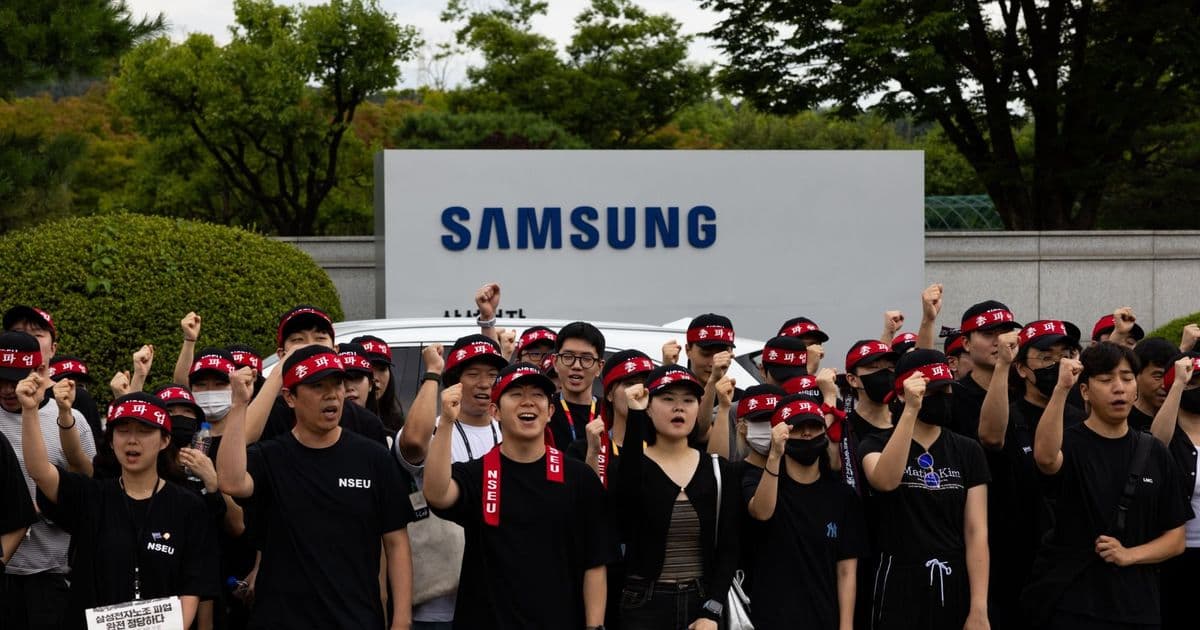
Samsung Electronics narrowly avoided an 18-day strike at its South Korean chip operations after reaching a tentative wage agreement with its 48,000-member union. The deal, which addresses performance bonus disputes, will be put to a worker vote with potential economic impact estimated at billions of dollars.
Samsung Electronics has successfully averted what would have been a crippling 18-day strike at its semiconductor manufacturing facilities in South Korea. The company reached a tentative wage agreement with its labor union representing nearly 48,000 workers just hours before workers were scheduled to walk out on May 21. The agreement suspends a strike that could have cost the company and the global tech industry billions of dollars in lost production.
The union announced it would suspend the general strike planned for May 21 to June 7 and put the deal to an internal vote. Voting is expected to run from May 22 to May 27, with the fate of Samsung's semiconductor operations hanging in the balance. If members approve the agreement, it becomes formal; if rejected, the strike threat returns at a critical moment for global AI chip supply chains.
Technical Context of the Dispute
The core of the labor dispute centered on performance bonus structures, reflecting the complex operational realities within Samsung's semiconductor divisions. The union had pushed for two major changes:
- Allocation of 15% of annual operating profit to employee bonuses
- Removal of a 50% annual salary cap on performance payouts
Samsung management resisted these demands, citing fundamental differences between its business units. The company's memory division has experienced significant growth driven by AI-driven demand, while its logic and foundry operations have performed more modestly. This divergence created challenges for implementing a uniform profit-sharing model across all semiconductor operations.
The technical complexity of Samsung's semiconductor operations played a central role in the negotiations. Memory chip production requires different processes, technologies, and workforce skills compared to logic chip manufacturing. The company operates across multiple process nodes, from mature nodes used in conventional chips to advanced nodes for high-performance computing applications.
Negotiation Breakdown and Last-Minute Intervention
Labor relations had deteriorated over several months, with talks collapsing in February and March. The union had already demonstrated its ability to disrupt operations during a one-day strike that reportedly saw over 40,000 workers participate. This action caused night-shift output at Samsung's foundry operations to fall sharply, with memory production also affected.
Further negotiations scheduled for May 11-12 broke down again without resolution. The situation reached a critical point when leaked transcripts revealed Samsung's proposed bonus structure: memory workers were offered a 607% bonus worth approximately $477,000, while logic chip staff were to receive as little as 50%. The union rejected this proposal, citing a potential retention crisis due to the extreme imbalance between divisions.
With the strike deadline approaching, Samsung had reportedly begun winding down chip production in preparation. The company also obtained court injunctions to limit potential strike impacts before direct government intervention helped bring both sides back to the negotiating table.
Economic Impact Assessment
Analysts had warned of substantial economic damage if the strike proceeded. Estimates suggested potential daily losses of around 1 trillion won (approximately $750 million) if production halted completely. More broadly, economists warned of tens of billions of dollars in economic risk across South Korea's technology sector and related industries.
The timing of the potential strike couldn't be more critical. Samsung's semiconductor operations play a vital role in the global AI chip supply chain. The company produces memory chips essential for AI systems, including high-bandwidth memory (HBM) used in advanced GPUs and AI accelerators. Any disruption to production would have immediate consequences for companies developing and deploying AI technologies.
Market Implications
The tentative agreement provides temporary relief for global semiconductor markets, which remain under pressure from fluctuating demand and ongoing supply chain adjustments. Samsung's position as one of the world's largest memory chip manufacturers and a growing player in foundry services makes its operational stability crucial for market equilibrium.
The resolution, if ratified by union members, would prevent a significant supply shock that could have affected pricing and availability across multiple semiconductor segments. Memory chips, particularly those used in AI applications, have seen increased demand as AI deployment accelerates across industries.
Broader Industry Context
This labor dispute occurs amid significant transitions in the semiconductor industry. Companies are investing heavily in advanced manufacturing technologies, with Samsung itself planning substantial capital expenditures for new fabrication facilities. The industry faces challenges including talent shortages, rising production costs, and increasing geopolitical tensions affecting supply chains.
The situation at Samsung reflects broader labor tensions in technology manufacturing, where workers in high-growth sectors increasingly seek fair compensation relative to industry profits. As AI drives unprecedented demand for semiconductors, the balance between corporate profitability and worker compensation continues to evolve.
Next Steps and Uncertainty
While the immediate strike threat has been suspended, significant uncertainty remains. The union's vote on the tentative agreement will determine whether the crisis is truly resolved or merely postponed. Even if approved, the agreement may set precedents for future labor negotiations across Samsung's semiconductor operations.
For the global technology industry, the coming days will bring clarity on whether Samsung can maintain stable production through what remains a critical period for AI chip supply. The company's ability to balance worker compensation demands with operational realities will likely influence labor relations across the semiconductor sector in the years ahead.
The tentative agreement represents more than just a resolution to a specific labor dispute—it reflects the complex interplay between technological advancement, economic growth, and worker rights in one of the world's most critical industries.
Comments
Please log in or register to join the discussion