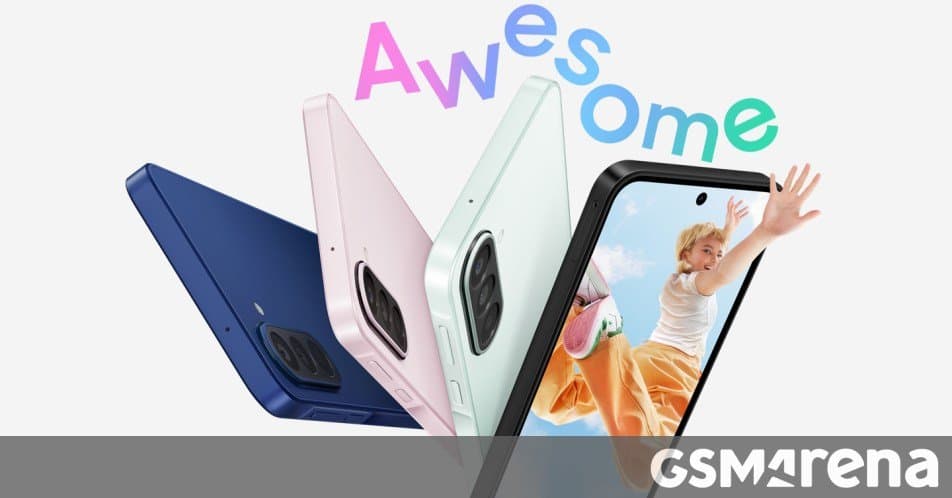
Samsung Czechia quietly listed the Galaxy A27 ahead of any formal announcement, confirming a switch to Qualcomm silicon, a long software commitment, and a few puzzling spec downgrades from last year's A26.
Samsung's mid-range Galaxy A series rarely arrives with much suspense, and the Galaxy A27 is no exception. After weeks of leaks, Samsung Czechia decided to cut the speculation short and posted the phone on its official site before any formal global announcement. The listing gives us a near-complete picture of what the company is bringing to its volume-selling A lineup this year, and the story is more interesting than the usual incremental bump.
A move to Qualcomm silicon
The headline change is under the hood. The Galaxy A27 runs on Qualcomm's Snapdragon 6 Gen 3, replacing the Exynos 1280 and 1380 chips that powered earlier A2x models. This matters more than a spec-sheet line suggests. Samsung has historically leaned on its own Exynos parts for budget and mid-range phones, partly for cost and partly for supply control. Putting a Snapdragon in the A27 points to a more pragmatic approach, picking the chip that delivers the best balance of efficiency, modem performance, and sustained thermals for the price bracket.
The Snapdragon 6 Gen 3 is a capable 4nm-class mid-range part with an emphasis on efficiency rather than raw peak performance. Paired here with 6GB or 8GB of RAM and 128GB or 256GB of storage, it should handle everyday workloads, social apps, and casual gaming comfortably. Buyers eyeing the 8/256GB configuration will get the most headroom, especially given how memory-hungry One UI and background AI features have become.
Display and design
Up front, the A27 carries a 6.7-inch Super AMOLED panel with FHD+ resolution and a 120Hz refresh rate. That combination is increasingly standard in this segment, but it remains the single feature that most separates a pleasant phone from a frustrating one. A fast, high-contrast OLED at this price is exactly what a mainstream buyer notices day to day. The design swaps the older notch styling for a cleaner centered punch-hole cutout housing a 12MP selfie camera, giving the phone a more current look.
Cameras, with some odd choices
The rear setup is led by a 50MP main camera with optical image stabilization, joined by a 5MP ultrawide and a 2MP macro sensor. The main shooter with OIS is the sensible centerpiece, and OIS at this tier genuinely helps low-light and video stability.
The supporting cast is where Samsung's decisions get strange. The ultrawide actually drops to 5MP from the 8MP unit on the Galaxy A26, a rare backward step on a yearly refresh. The front camera also slides from 13MP on the A26 to 12MP here. Neither change is likely to be dramatic in real-world shots, but going down in resolution year over year is the kind of move that invites questions about cost cutting.
A puzzling drop in water resistance
The most head-scratching regression is ingress protection. The A27 carries an IP64 rating, meaning it can shrug off splashes and dust but is not rated for submersion. The A26 it replaces was IP67-certified, rated for dust resistance and brief immersion in water. Trading a sealed, swimming-pool-survivable rating for mere splash resistance is an unusual downgrade, and it is the spec most likely to disappoint anyone upgrading from last year's model.
Battery and the real headline: software support
Battery hardware stays familiar, with a 5,000mAh cell and 25W wired charging carried over unchanged. Charging speed remains modest, but the capacity is ample for a full day.
The genuinely strong selling point is software longevity. The A27 ships with One UI 8.5 based on Android 16, and Samsung is pledging six Android version upgrades plus six years of security patches. For a phone expected to start around the mid-range price, that is an outstanding commitment. A buyer in 2026 could realistically stay current through Android 22 and receive security fixes into the early 2030s. This is where Samsung's scale and update infrastructure pay off, and it reframes the value equation. Even with the camera and IP downgrades, a phone that stays supported and patched for six years has a far longer useful life than rivals that get two or three years and then go dark.
That long support window also feeds the ecosystem lock-in that defines Samsung ownership. Six years of One UI updates means six years of Samsung's account services, Galaxy Store, SmartThings integration, and increasingly its on-device Galaxy AI features. A buyer who settles into that environment with a watch, buds, or a tablet has little reason to leave, and the A27 is positioned as an affordable on-ramp into exactly that.
Availability and pricing
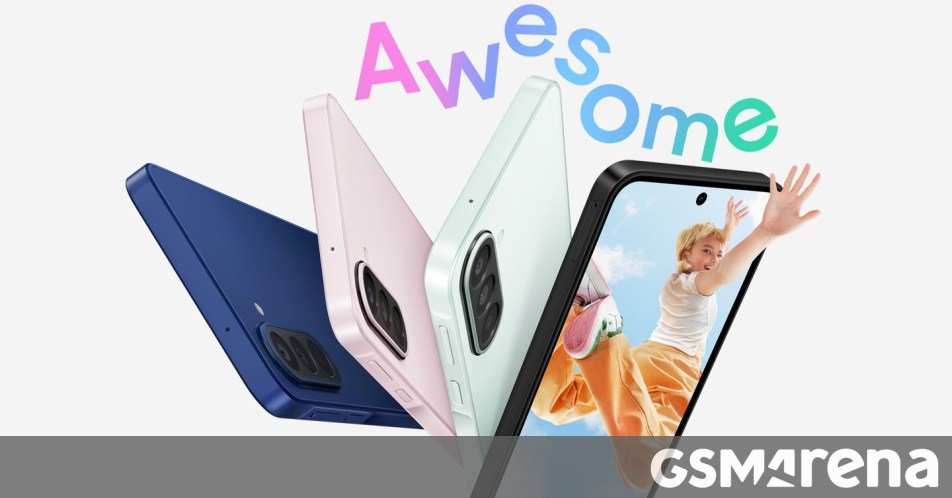
Samsung lists the Galaxy A27 in black, blue, light green, and pink, across the 128GB and 256GB storage trims. Official pricing was absent from the listing, though it should appear shortly. A recent leak pegs the starting price at €349 for the 6/128GB version, with the 8/256GB trim climbing to roughly €439 in the Eurozone. If those figures hold, the A27 lands squarely in mainstream mid-range territory, where its six-year software promise becomes its strongest argument against cheaper competitors with shorter lifespans.
Comments
Please log in or register to join the discussion