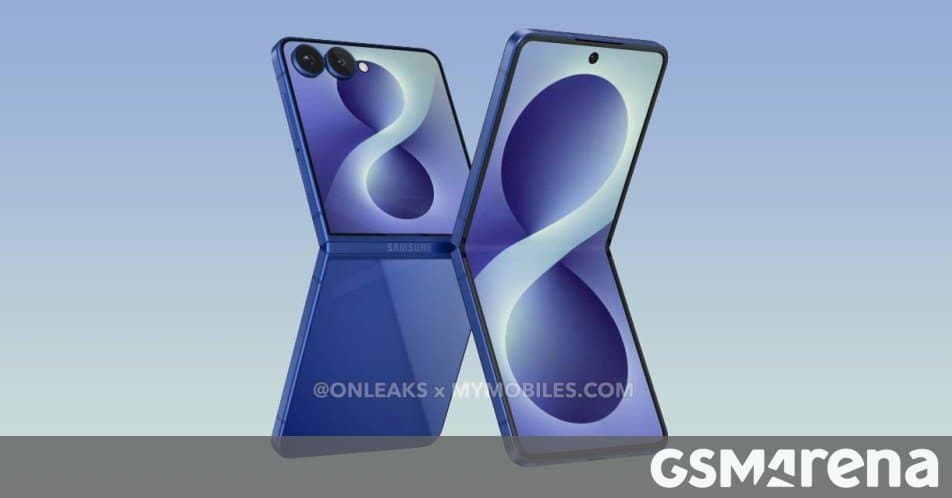
The US variant of Samsung's next clamshell foldable just passed through the FCC, and the filing confirms Wi-Fi 7, DisplayPort output, and a satellite band that hints at expanded non-terrestrial messaging. The hardware upgrades elsewhere look thin, but the connectivity story is more interesting than the spec sheet suggests.
Samsung's next clamshell foldable has surfaced in a regulatory filing, the most reliable kind of pre-launch confirmation you can get. The Galaxy Z Flip8 carrying model number SM-F776U has been certified by the FCC, and the documents fill in a few gaps about what the US version of the phone will offer when it ships.
The "U" suffix is the tell here. Samsung uses it for US-bound models, and it almost always signals a Qualcomm Snapdragon chipset rather than the company's in-house Exynos silicon. That tracks with what we already knew: phones sold in Europe and South Korea will run on the new Exynos 2600, while the rest of the world, the US included, gets a Snapdragon part. Which exact Snapdragon chip Samsung has chosen is still unconfirmed, but the regional split itself is now well established.
What the FCC filing confirms
The certification documents list a long stack of 5G bands: 1, 2, 3, 5, 7, 8, 12, 14, 20, 25, 26, 28, 29, 30, 38, 41, 48, 66, 70, 71, 77, and 78. That spread covers the low-band, mid-band, and C-band frequencies US carriers rely on, so the Flip8 should have no trouble roaming across Verizon, AT&T, and T-Mobile networks.
On the local connectivity side, the phone supports Wi-Fi 7, including the 6GHz band that the "be" designation requires. Wi-Fi 7 is the current ceiling for consumer wireless, and its headline trick is Multi-Link Operation, which lets a device send and receive data across multiple bands at once instead of locking onto a single channel. In practice that means lower latency and more consistent throughput on a compatible router, the kind of thing you notice on a video call or a cloud-gaming session rather than in a raw speed-test number. Bluetooth and NFC round out the short-range radios, and the filing confirms wireless charging, though it frustratingly lists no power rating.
One entry in the Additional Capabilities section is easy to overlook but worth flagging: DisplayPort. That points to video output over the USB-C port, the same mechanism Samsung DeX uses to drive an external monitor. For a phone you can fold into your pocket, the ability to plug into a desk display and run a desktop-style interface remains one of the more practical extras in the ecosystem.
The satellite angle
The most interesting line in the paperwork is NB-NTN B255. That acronym unpacks to NarrowBand Non-Terrestrial Network, and it describes a phone's ability to talk directly to satellites rather than ground-based cell towers, in this case on the B255 band. NarrowBand here means low-bandwidth, the kind of link suited to short text messages and emergency pings rather than streaming or browsing.
For context, Google's Pixel 10 series supports both B255 and B266, so Samsung listing B255 suggests the Flip8 could broaden the satellite messaging support that has been creeping into flagship phones over the past couple of generations. Apple kicked off the consumer version of this with Emergency SOS via satellite, and the industry has been steadily standardizing around the 3GPP non-terrestrial network specifications since. If you are in a dead zone with no terrestrial signal, a satellite link is the difference between sending for help and being stranded. Seeing it appear in an FCC filing is a good sign Samsung intends to ship it, though the company will still need carrier and regional agreements in place before the feature lights up everywhere.
Modest upgrades elsewhere
The connectivity story is the bright spot, because the rest of the rumored spec sheet reads conservatively. Samsung has reportedly developed a crease-free display for the Flip8, paired with a new hinge design, which would address the single most common complaint about every folding phone since the category began. Whether "crease-free" survives contact with reality is another matter; early skeptics in the comments are already pointing out that previous "reduced crease" claims still left a visible line down the middle of the panel.
Beyond the display and hinge, the leaks suggest Samsung is holding the line. The cameras, battery, and charging are all expected to carry over unchanged from the Flip7. There is no sign of Qi2 magnetic charging support, and no mention of a silicon-carbon battery, the higher-density cell chemistry that rivals have started using to fit more capacity into the same space. For buyers who measure each generation by camera and battery gains, this looks like a quiet year.
Where it fits in the lineup
The Flip8 lands inside a broader Galaxy foldable refresh that also includes the Z Fold8 and, reportedly, a wider Z Fold8 variant. Samsung apparently expects the Fold8 to outsell the Flip8 for the first time, a notable shift given the cheaper clamshell has traditionally been the volume seller. The Galaxy Watch9 and Watch Ultra 2 are tracking through certification on a similar timeline, which fits Samsung's usual pattern of launching watches alongside its summer foldables.
The ecosystem context matters as much as the hardware. Buying into a Galaxy foldable increasingly means buying into Samsung's wider stack: DeX for desktop output, Galaxy Watch and Buds pairing, and the One UI software layer that ties Samsung's services together on top of Android. The regional chipset split adds a wrinkle worth knowing about. A Flip8 bought in Europe runs Exynos 2600 silicon, while the US model runs Snapdragon, and historically those two paths have not always delivered identical battery life or thermal behavior. If you import across regions, that difference is real.
An FCC certification does not lock in a launch date, but it is one of the last regulatory steps before a phone reaches US shelves, and Samsung typically unveils its summer foldables within weeks of clearing it. The Flip8 may not rewrite the formula, but the filing makes clear the connectivity foundation, Wi-Fi 7, broad 5G coverage, and satellite messaging, is in place for whenever it arrives.
Comments
Please log in or register to join the discussion