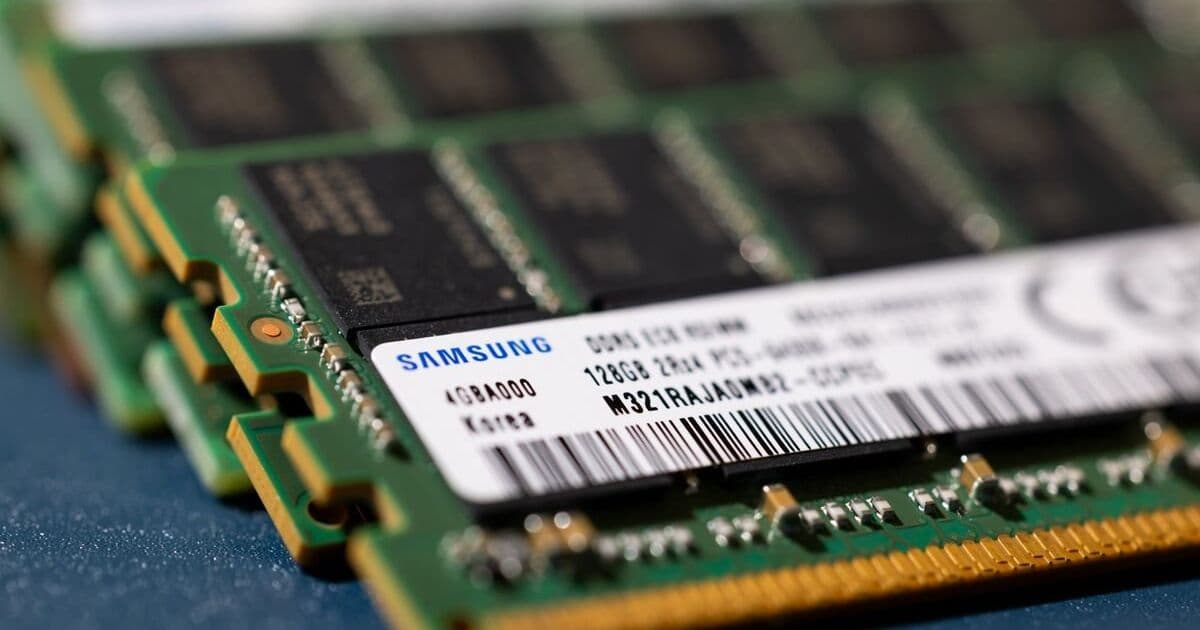
Samsung's plan to price HBM4 chips at $700 per unit, 30% higher than previous generation, sent shares to record highs as the company positions itself in the AI memory market.
Samsung Electronics Co. shares jumped to a fresh record high Thursday after local media reported that the firm is negotiating pricing for its next-generation HBM4 chips at approximately $700 per unit, representing a 30% increase over the previous generation.
The pricing strategy signals Samsung's aggressive positioning in the high-bandwidth memory market, which has become increasingly critical as AI workloads demand faster, more efficient memory solutions. Industry analysts note that the premium pricing reflects both the technical advancements in HBM4 and the growing market power of memory suppliers in the AI hardware ecosystem.
HBM (High Bandwidth Memory) has emerged as a crucial component in AI accelerators and GPUs, with demand surging as companies race to build more powerful AI systems. The memory technology offers significantly higher bandwidth compared to traditional DRAM, making it essential for training large language models and other AI applications.
Samsung's move comes as the company faces intense competition from SK Hynix and Micron in the premium memory segment. The reported pricing suggests Samsung believes customers will absorb the cost increase given the critical nature of HBM in AI infrastructure.
Market Response and Strategic Implications
The 5.4% surge in Samsung shares reflects investor confidence in the company's ability to capitalize on the AI boom through premium pricing. The stock's performance outpaced broader market gains, indicating strong sentiment around Samsung's memory strategy.
Industry experts suggest the pricing could set a new benchmark for the HBM market, potentially allowing competitors to follow suit with similar price increases. This would mark a significant shift from the memory market's historical pattern of price declines over successive generations.
However, some analysts caution that the high pricing could accelerate efforts by AI chip designers to reduce HBM dependency through architectural innovations. Companies like Nvidia and AMD have been exploring ways to optimize memory usage and potentially develop alternative memory solutions.
Technical Context and Market Dynamics
HBM4 represents the latest evolution in memory technology, promising improved bandwidth, power efficiency, and capacity compared to HBM3. The technology stacks multiple DRAM dies vertically, connected by through-silicon vias, enabling higher bandwidth while reducing power consumption and physical footprint.
The AI hardware market has created unprecedented demand for high-performance memory. Training large language models requires massive amounts of memory bandwidth, and HBM has become the preferred solution despite its higher cost compared to traditional memory architectures.
Samsung's pricing strategy also reflects the company's broader ambitions in the AI semiconductor market. The company has been investing heavily in AI-related technologies and recently announced plans to expand its AI chip production capacity.
Competitive Landscape
SK Hynix, currently the market leader in HBM supply, has maintained a technological edge but faces pressure from Samsung's aggressive pricing. Micron, while trailing in market share, has been investing heavily to close the gap and could respond with competitive pricing for its own HBM4 offerings.
The pricing dynamics could reshape the competitive landscape, potentially favoring suppliers who can deliver the best combination of performance, reliability, and cost. Customers may also accelerate diversification of their supply chains to mitigate risks associated with premium pricing.
Looking Ahead
As AI infrastructure continues to expand, the memory market's evolution will play a crucial role in determining the economics of AI development. Samsung's pricing strategy suggests the company sees sustained demand growth that can support premium pricing, but the long-term sustainability of this approach remains to be seen.
The success of HBM4 pricing will depend on several factors, including the pace of AI infrastructure growth, technological alternatives that may emerge, and the ability of memory suppliers to maintain their technological advantages. Industry observers will be watching closely to see if Samsung's bold pricing move pays off or if it triggers a broader market realignment.
For now, Samsung's record-high share price suggests investors are betting on the company's ability to capture value from the AI memory boom, even at premium price points that could reshape the economics of AI hardware development.
Comments
Please log in or register to join the discussion