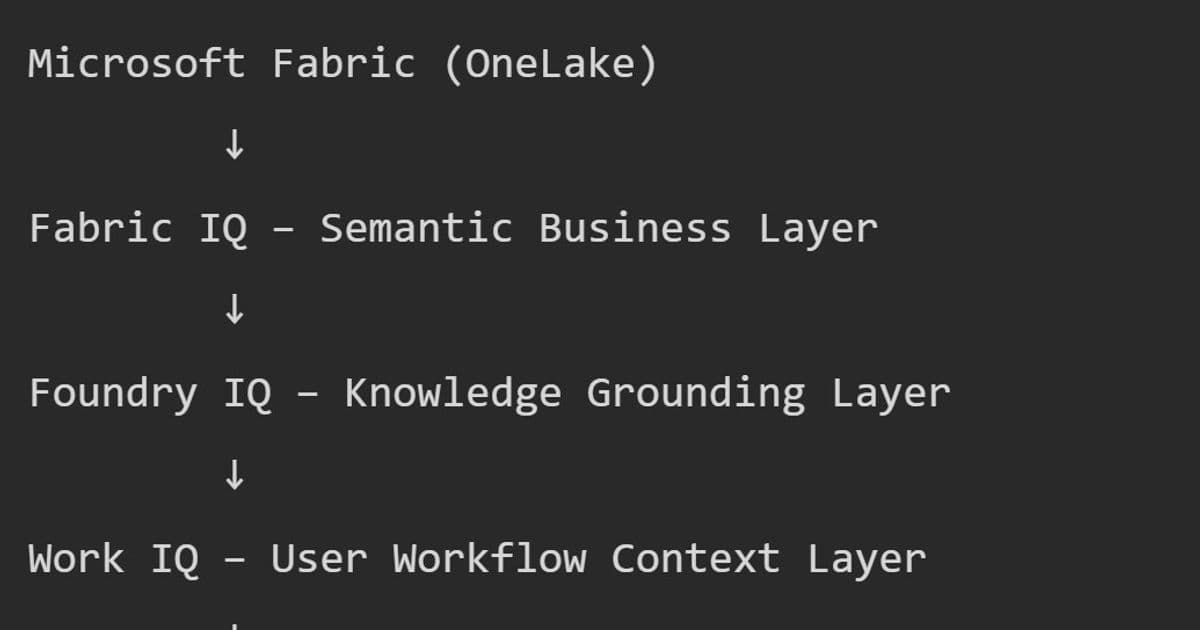
Microsoft and SAP have unveiled an integrated architecture that connects SAP's transactional data with Microsoft's AI and analytics platforms, enabling real-time, policy-aware AI decision-making across enterprise operations.
Microsoft and SAP have announced a strategic integration that connects SAP's transactional systems with Microsoft's AI and analytics platforms, creating a unified architecture for enterprise intelligence. This collaboration addresses a critical challenge in modern enterprises: the gap between operational data in SAP systems and the AI-driven insights needed for real-time decision-making.
The Intelligence Gap in Enterprise Systems
Enterprise SAP platforms like SAP ECC, SAP S/4HANA, and SAP BW serve as authoritative sources for financial accounting, treasury management, and regulatory compliance. However, these systems are optimized for transactional processing and deterministic reporting, not for the real-time inferencing and cross-domain contextual reasoning required by modern AI systems.
The separation between SAP operational data and analytical platforms creates fragmentation across three intelligence domains:
- Transactional business data - Core ERP operations and financial records
- Analytical semantic models - Business intelligence and reporting frameworks
- Organizational workflow signals - Collaboration patterns and decision contexts
This fragmentation limits AI systems' ability to generate role-aware, policy-aligned recommendations within operational decision processes.
SAP Business Data Cloud Meets Microsoft Fabric
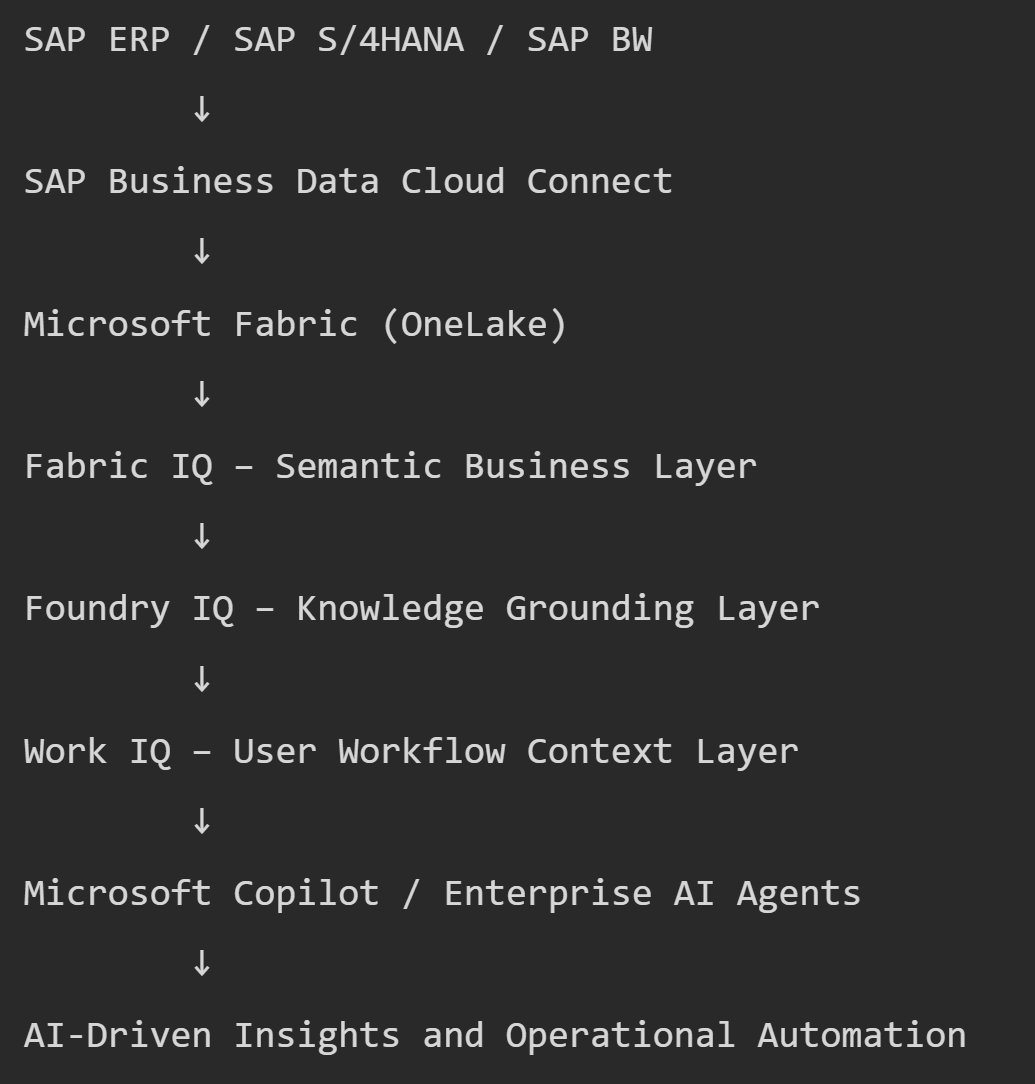
At the heart of this integration is the connection between SAP Business Data Cloud and Microsoft Fabric. This partnership introduces a unified data access model where SAP business data products can be exposed directly into Microsoft Fabric's OneLake environment through bi-directional, zero-copy sharing.
[news.sap.com]
Microsoft Fabric provides a SaaS-based unified analytics platform that consolidates data engineering, warehousing, analytics, and AI workloads within a single environment. Through SAP Data Cloud Connect, SAP datasets integrate directly into OneLake without requiring traditional ETL-driven staging layers.
This approach eliminates batch-oriented data extraction pipelines and reduces latency associated with data synchronization between transactional and analytical platforms. The integration supports bidirectional data exchange, allowing analytical outputs generated within Fabric to be made available to SAP systems for downstream operational processes.
[windowsforum.com]
Semantic Modeling: Bridging Data and Business Context
Operational ERP datasets are structurally complex and lack domain-aligned semantics, making them difficult for AI systems to consume directly. Fabric introduces a semantic modeling layer that standardizes structured enterprise datasets into business-aligned entities, relationships, and domain metrics.
This layer maps SAP transactional data into enterprise constructs such as financial exposure, liquidity position, or compliance thresholds. By propagating standardized semantic definitions across analytical tools and AI workloads, the semantic layer ensures consistent interpretation of ERP-originated data across departments.
Within financial services environments, this enables modeling of constructs like portfolio risk or regulatory exposure in forms that AI workloads can process without requiring interpretation of underlying transactional tables.
Foundry: Knowledge Grounding for AI Governance
AI systems in regulated enterprise environments must operate within defined governance and audit frameworks. Foundry introduces a controlled knowledge access layer that connects AI workloads to enterprise knowledge repositories, including:
- SAP process logic
- Financial reporting procedures
- Internal governance policies
- Regulatory documentation
Access to these knowledge sources is governed by identity-driven access control and policy enforcement mechanisms, ensuring AI outputs are grounded in approved enterprise content. This knowledge grounding layer enables AI workloads to retrieve contextual policy information relevant to operational decision scenarios while maintaining traceability between AI-generated outputs and source documentation.
Work Intelligence: Contextualizing Enterprise Decisions
Enterprise decision processes require contextual awareness of organizational roles and workflow dependencies. The Work Intelligence layer derives contextual signals from Microsoft 365 collaboration environments, including communication patterns, document interactions, and meeting engagement data.
These signals model organizational workflows and operational dependencies across business units. This contextual layer enables AI workloads to tailor analytical outputs based on user role and decision responsibility. For example, identical financial datasets may produce different recommendations for a portfolio manager, risk analyst, or compliance officer depending on operational context.
The Three-Layer Intelligence Architecture
The complete architecture follows a layered intelligence model:
- Fabric IQ Layer - Semantic modeling and data integration
- Foundry IQ Layer - Knowledge grounding and governance
- Work IQ Layer - Contextual intelligence and workflow awareness
This architecture avoids data duplication, preserves governance boundaries, and supports scalable AI adoption across enterprise financial environments.
Real-World Application in Financial Services
In financial services organizations, SAP environments manage general ledger processing, asset accounting, and risk calculations. Fabric consumes operational ERP datasets and applies semantic modeling to define enterprise financial indicators. AI workloads leverage structured data and governed knowledge sources to generate insights such as liquidity forecasts or compliance evaluations.
The Work Intelligence layer ensures these outputs are delivered within the operational context of specific roles and workflows, enabling automated reporting and decision support without disruption to existing SAP transactional environments.
Strategic Implications for Enterprise AI
This integration represents a significant evolution from traditional ERP-centric reporting toward AI-enabled enterprise intelligence. By facilitating governed access to SAP data, enabling semantic alignment of business models, supporting policy-driven knowledge retrieval, and incorporating contextual operational insights, this architecture allows enterprises to operationalize AI-driven financial decision-making within regulated environments while maintaining data integrity, governance, and compliance.
The collaboration between Microsoft and SAP addresses a fundamental challenge in enterprise AI adoption: how to leverage rich operational data within governed, policy-aware AI systems that can operate at the speed of modern business decisions.
[news.sap.com]
[windowsforum.com]
Comments
Please log in or register to join the discussion