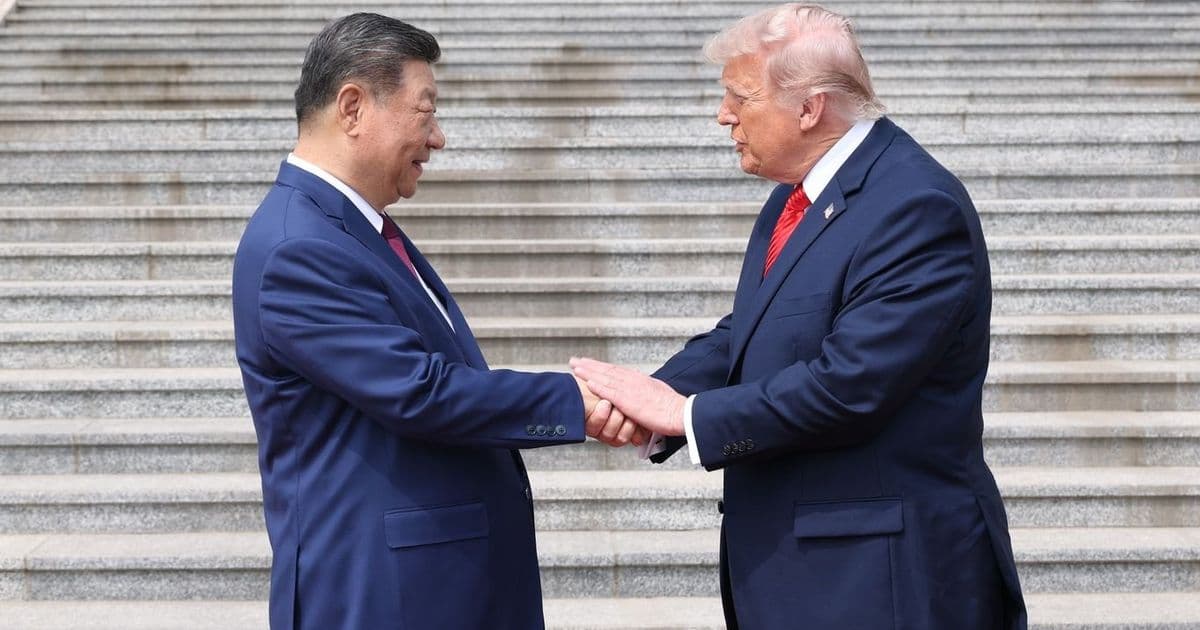
Trump advisers warn of potential Taiwan contingency within five years, raising concerns about global supply chain disruptions and market volatility in the tech sector.
Senior advisers to former President Donald Trump have privately expressed concerns that China may attempt to take control of Taiwan within the next five years, according to sources familiar with internal discussions. This assessment, shared among Trump's closest foreign policy confidants, suggests an accelerated timeline for potential cross-strait tensions that could have profound implications for global technology markets and supply chains.
The concerns come amid growing geopolitical friction between the U.S. and China, with Taiwan serving as a critical focal point. Taiwan accounts for approximately 60% of global semiconductor manufacturing capacity, with companies like TSMC (Taiwan Semiconductor Manufacturing Company) controlling over 90% of the advanced chip market. Any disruption to Taiwan's semiconductor industry would immediately impact global technology production, from smartphones to automotive systems.
From a market perspective, the potential conflict carries significant financial implications. Analysts estimate that a Taiwan contingency could trigger a 15-25% correction in global equity markets, with tech hardware and semiconductor sectors potentially experiencing declines exceeding 30%. The S&P 500 technology sector, currently valued at approximately $12 trillion, would face immediate pressure, while companies with significant Taiwan operations—including Apple, NVIDIA, and AMD—could see combined market capitalization reductions exceeding $500 billion.
Supply chain vulnerabilities would extend beyond semiconductors. Taiwan produces 70% of the world's printed circuit boards and 98% of advanced packaging for microchips. Companies like Foxconn, which assembles iPhones and other consumer electronics, have major manufacturing facilities in Taiwan that would be directly affected. Supply chain models suggest that even a brief disruption could create 6-12 month backlogs in consumer electronics production, potentially delaying product launches across multiple industries.
Strategic implications for tech companies include:
- Accelerated efforts to diversify manufacturing beyond Taiwan, with increased investment in facilities in the U.S., Japan, and Southeast Asia
- Rising R&D budgets for alternative chip technologies that could be manufactured outside Taiwan
- Potential reshoring of critical semiconductor fabrication capabilities to allied nations
The Trump administration's concerns align with recent assessments from U.S. intelligence agencies, which have also noted China's increasing military capabilities and its stated goal of "reunification" with Taiwan. However, the private discussions among Trump advisers suggest a more immediate sense of urgency than publicly stated positions.
Market analysts are closely monitoring developments, with some investment firms already stress-testing portfolios for Taiwan contingency scenarios. BlackRock, the world's largest asset manager with approximately $9 trillion in assets under management, has reportedly updated its geopolitical risk models to account for potential Taiwan-related market disruptions.
For the technology sector, the potential Taiwan situation represents both a significant risk and a catalyst for strategic transformation. Companies that proactively address supply chain vulnerabilities while maintaining market positioning could emerge stronger from any potential disruption, while those heavily dependent on Taiwan-based manufacturing face substantial operational and financial exposure.
The situation underscores the increasingly intertwined nature of geopolitical risk and technology market dynamics, with Taiwan's semiconductor capabilities serving as both an economic strength and a potential vulnerability in an era of great power competition.
Comments
Please log in or register to join the discussion