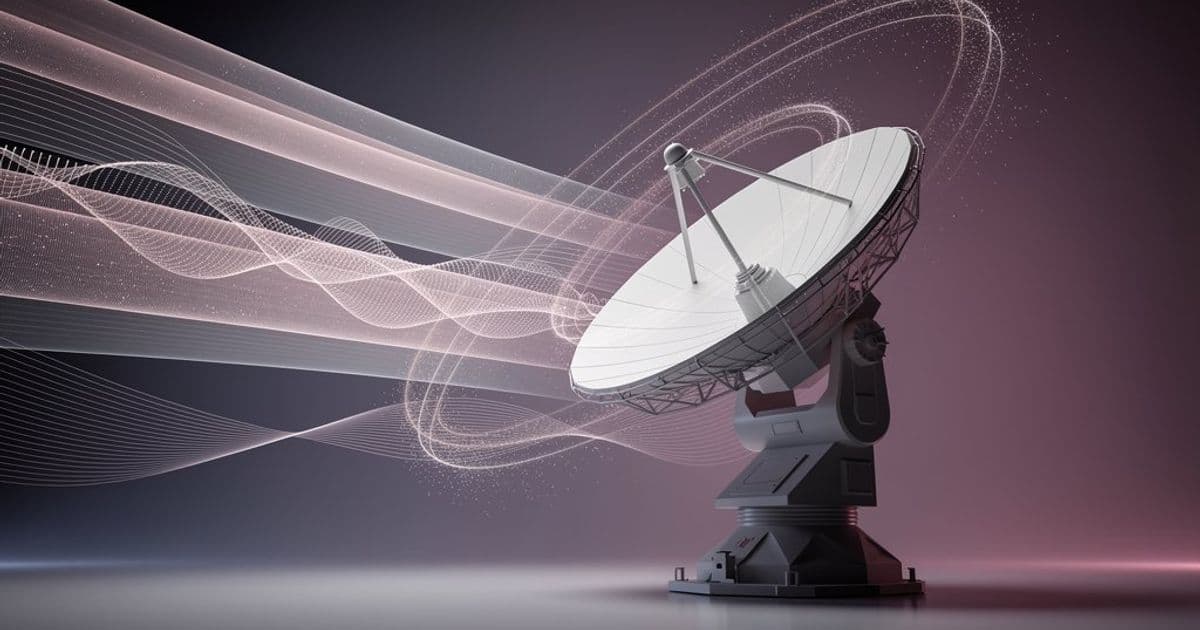
After analyzing 12 billion potential alien signals from UC Berkeley's SETI@home project, scientists have identified 100 candidates worth re-examining - revealing both technological breakthroughs and fundamental challenges in the search for extraterrestrial life.
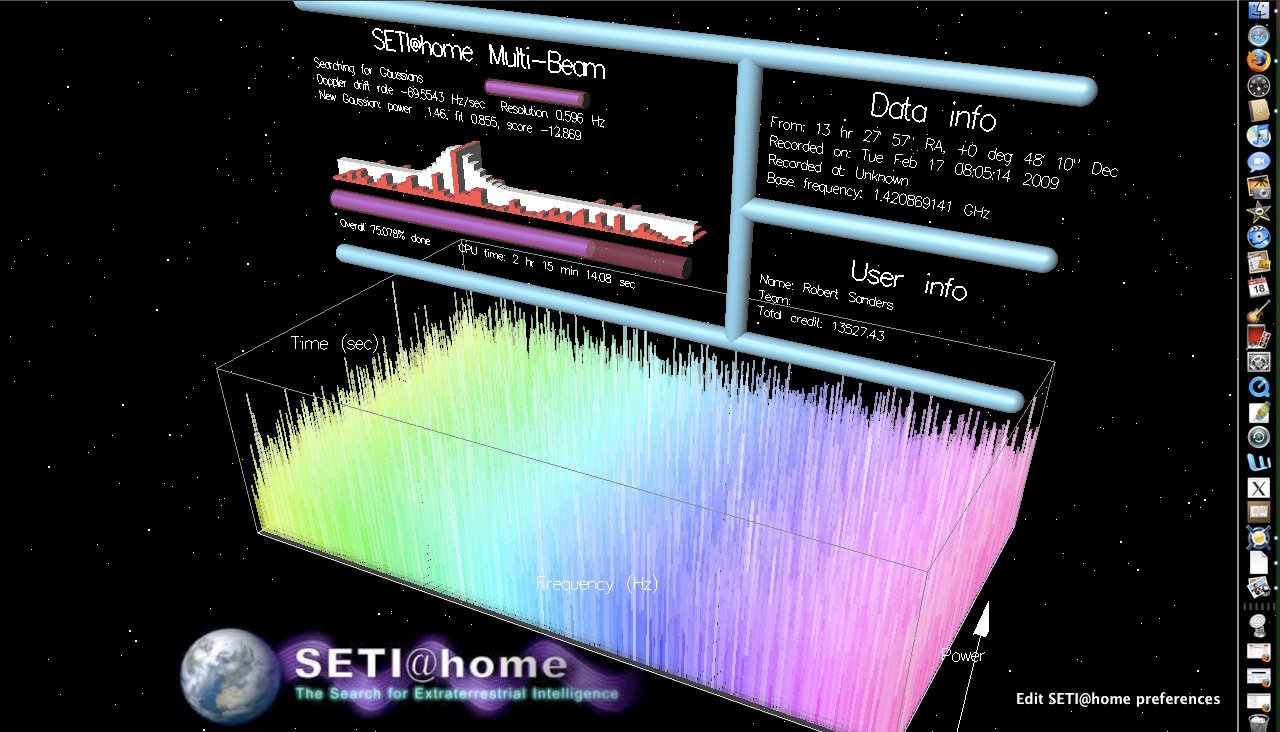
For over two decades, millions of personal computers became silent partners in humanity's most ambitious listening project. Between 1999 and 2020, SETI@home harnessed idle processing power from volunteers worldwide to analyze radio telescope data, creating what remains the most extensive narrow-band sky survey for technosignatures. The project's final analysis, detailed in two recent papers in The Astronomical Journal, reveals both the power and limitations of crowdsourced science in the search for extraterrestrial intelligence.
The Signal Hunt
The computational scale was staggering: 12 billion detections filtered through home computers, representing momentary energy spikes across cosmic frequencies. "We covered most stars in the Milky Way - billions upon billions," explains project co-founder David Anderson. The team's novel approach analyzed Doppler drift across tens of thousands of potential frequency shifts - a computational task multiplied by 10,000-fold compared to conventional methods. This brute-force technique was uniquely enabled by distributed computing.
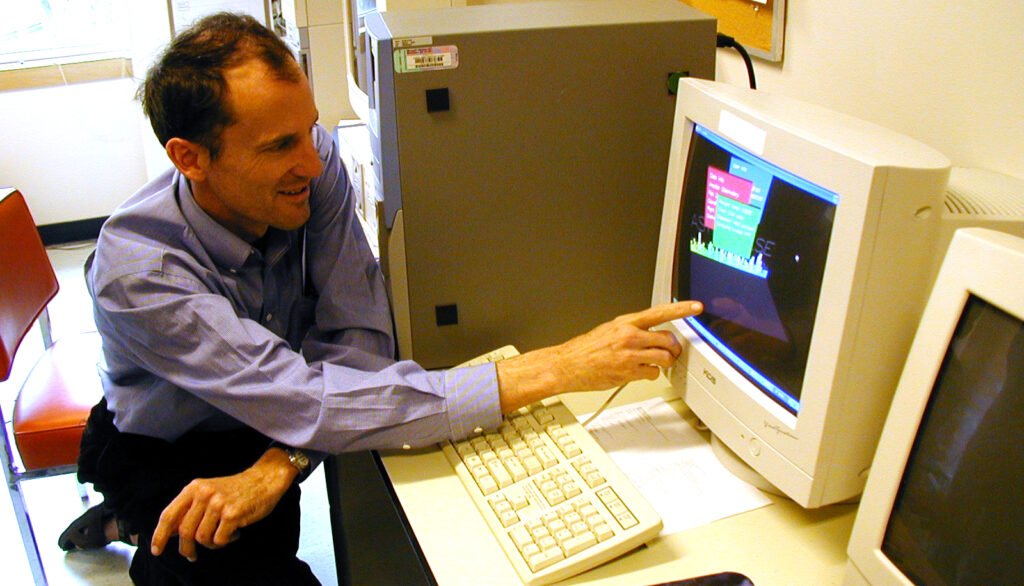 David Anderson discussing SETI@home in 2003 (Credit: Robert Sanders/UC Berkeley)
The Filtering Challenge
Radio frequency interference (RFI) emerged as the project's greatest adversary. Earthly signals from satellites, broadcasts, and even microwave ovens created overwhelming noise pollution. Astronomer Eric Korpela notes: "There's no way to fully investigate every possible signal - we must ask if our filtering excludes genuine signals." To quantify this risk, the team inserted 3,000 synthetic signals ("birdies") into their data pipeline before analysis. Their detection sensitivity became benchmarked against these known quantities - a calibration method now influencing contemporary SETI projects.
Narrowing the Field
The winnowing process required unprecedented computational resources:
- Initial 12 billion detections reduced to ~1 million candidates
- Machine learning algorithms identified clustered signals
- Manual review by astronomers narrowed candidates to 100
These remaining signals share unusual characteristics: consistent sky positions and frequencies across multiple observations, though none exhibit the persistent narrow-band beacon hypothesized for extraterrestrial transmitters.
 The Arecibo telescope provided SETI@home's raw data until its 2020 collapse (Credit: Mario Roberto Durán Ortiz/Creative Commons)
Technical Tradeoffs
The project revealed inherent tensions in SETI methodology:
- Commensal observing: Using telescope downtime proved efficient but prevented targeted observations
- Distributed computing: Enabled massive processing but created data transfer bottlenecks with 1990s internet speeds
- Algorithmic limitations: Early design choices prioritized processing efficiency over signal verification
"We made conscious compromises based on 1999 computing constraints," Korpela acknowledges. "There's potential we missed signals by narrow margins."
Legacy and Future
SETI@home pioneered distributed computing through the BOINC platform, now supporting projects from protein folding to gravitational wave detection. While no extraterrestrial signal was confirmed, the project established critical sensitivity benchmarks: Any civilization broadcasting narrow-band signals above specific power thresholds within the Milky Way would have been detected.
 The SETI@home logo symbolized public participation in cosmic exploration
Current efforts focus on re-observing the 100 candidates using China's FAST telescope - with eight times Arecibo's collecting area. Meanwhile, the team's RFI quantification methods and drift-rate analysis provide frameworks for projects like Breakthrough Listen.
"Our greatest lesson isn't about aliens," Anderson reflects. "It's that millions joined a shared quest to answer profound questions - that distributed curiosity remains our most powerful instrument."
Comments
Please log in or register to join the discussion