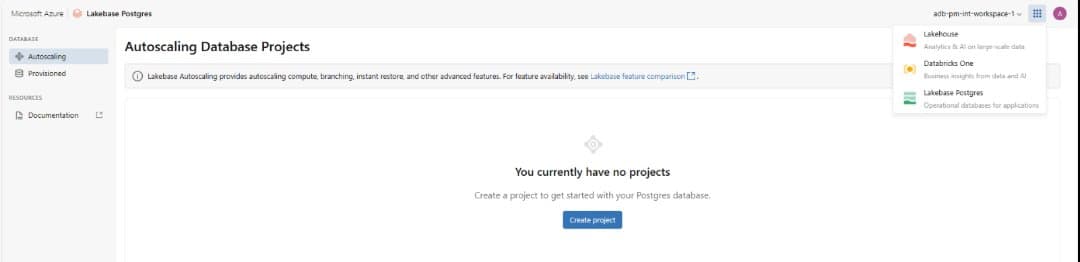
Microsoft's Azure Databricks Lakebase enters general availability, offering serverless Postgres-compatible database architecture that integrates natively with Databricks Data Intelligence Platform for real-time AI applications.
Microsoft has announced the general availability of Azure Databricks Lakebase, a serverless, Postgres-compatible database architecture that separates compute from storage and integrates natively with the Databricks Data Intelligence Platform on Azure. This new offering enables organizations to build and validate real-time and AI-driven applications directly on their lakehouse foundation without the traditional complexity of managing separate data systems.
Breaking Down Data Silos with Serverless Architecture
Modern applications increasingly rely on real-time data and AI agents that demand fast, reliable access to operational data without sacrificing governance, scale, or simplicity. Lakebase addresses this challenge by treating infrastructure as an on-demand service, automatically scaling with workload needs and scaling to zero when idle.
By decoupling compute from storage, Lakebase eliminates the traditional silos between operational databases and analytical systems. This architectural approach means organizations no longer need to maintain separate infrastructure for transactional workloads and analytics, reducing both complexity and cost.
Production-Ready Postgres Experience
The platform delivers a managed Postgres experience with predictable performance and built-in reliability features suitable for production applications. Teams can leverage familiar Postgres interfaces and tools while abstracting away infrastructure management, making it easier for developers to adopt without learning new paradigms.
Key production capabilities include:
- Automatic scaling based on workload demands
- Zero-cost idle periods through scale-to-zero functionality
- Built-in reliability features for production workloads
- Familiar Postgres compatibility for developer productivity
Advanced Data Management Features
Lakebase introduces instant branching and point-in-time recovery capabilities that transform how teams work with data. Organizations can create zero-copy branches of production data in seconds for testing, debugging, or experimentation. This feature enables safe development practices without impacting production systems.
The point-in-time recovery functionality allows teams to restore databases to precise moments in time, providing critical protection against errors or incidents. This capability is particularly valuable for AI applications where data integrity and reproducibility are essential.
Unified Governance Across the Data Platform
One of Lakebase's most significant advantages is its integration with Unity Catalog, providing unified governance across analytics, AI, and operational workloads. Operational data in Lakebase can be governed using the same policies that secure analytics and AI workloads, enabling consistent access control, auditing, and compliance across the entire platform.
This unified approach eliminates the governance gaps that often exist between operational and analytical systems, ensuring that data remains secure and compliant regardless of how it's being used.
Built for AI and Real-Time Applications
Lakebase is specifically designed to support AI-native patterns that are becoming increasingly common in modern applications. The platform enables:
- Real-time feature serving for machine learning models
- Agent memory for AI systems that need persistent, governed state
- Low-latency application state management
- Direct integration with lakehouse data for analytics and learning workflows
These capabilities allow AI agents to operate directly on governed, lake-backed data, reducing the complexity of pipeline synchronization or data duplication that typically plagues AI implementations.
New Application Scenarios Unlocked
On Azure Databricks, Lakebase unlocks several new scenarios that were previously difficult or impossible to implement efficiently:
Real-time applications built on lakehouse data: Organizations can now build applications that operate directly on their lakehouse foundation without the need for separate operational databases.
AI agents with persistent, governed memory: AI systems can maintain state and context while ensuring data remains secure and compliant.
Faster release cycles with safe, isolated database branches: Development teams can test changes in isolated environments without risking production data.
Simplified architectures with fewer moving parts: By consolidating operational and analytical workloads, organizations reduce the number of systems they need to manage and integrate.
Getting Started with Lakebase
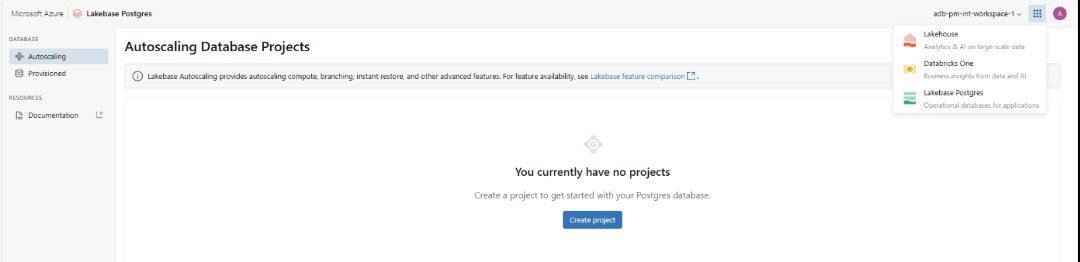
Lakebase is integrated into the Azure Databricks experience and can be provisioned directly within Azure Databricks workspaces. For existing Azure Databricks customers building intelligent, real-time applications, it offers a new foundation designed for the pace and complexity of modern data-driven systems.
The general availability announcement marks a significant milestone for organizations looking to modernize their data architectures. By providing a serverless, Postgres-compatible database that integrates seamlessly with the broader Databricks ecosystem, Microsoft is addressing the growing demand for unified data platforms that can support both traditional applications and emerging AI workloads.
As organizations continue to adopt AI and real-time analytics at scale, solutions like Lakebase that eliminate data silos and simplify infrastructure management will become increasingly critical to success.
Learn more about Azure Databricks Lakebase
Comments
Please log in or register to join the discussion