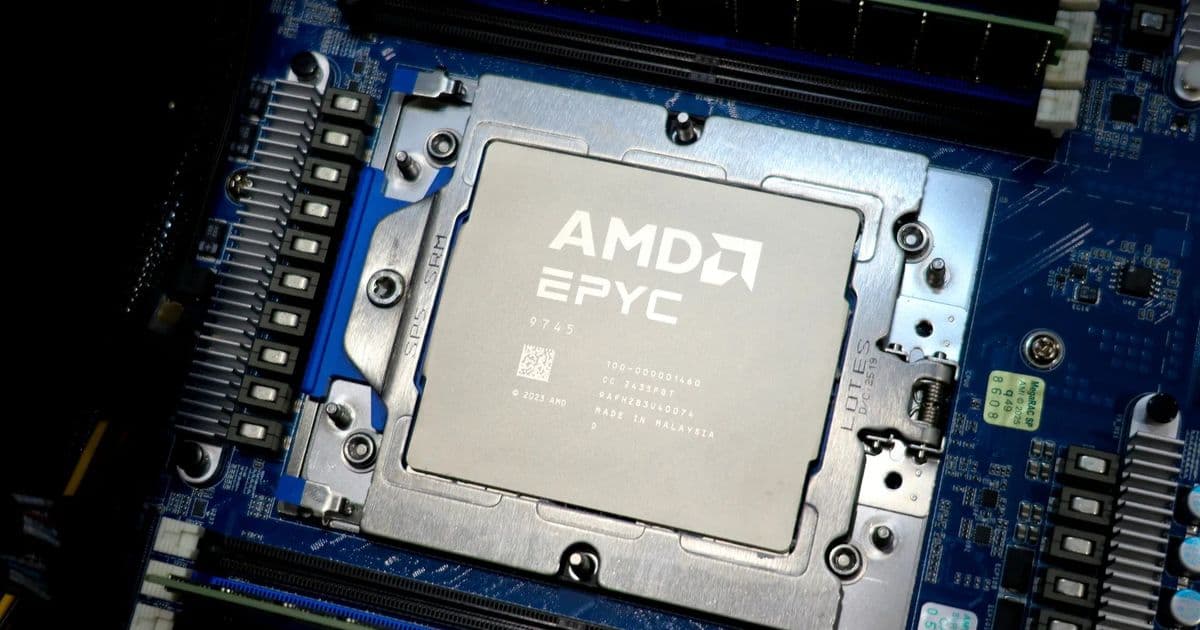
AMD's EPYC 9745 and EPYC 9755 both deliver 128 cores but take different architectural approaches - Zen 5C density cores with 400W TDP versus full-fat Zen 5 cores at 500W. This comprehensive benchmark comparison reveals the performance and power trade-offs for data center deployments.
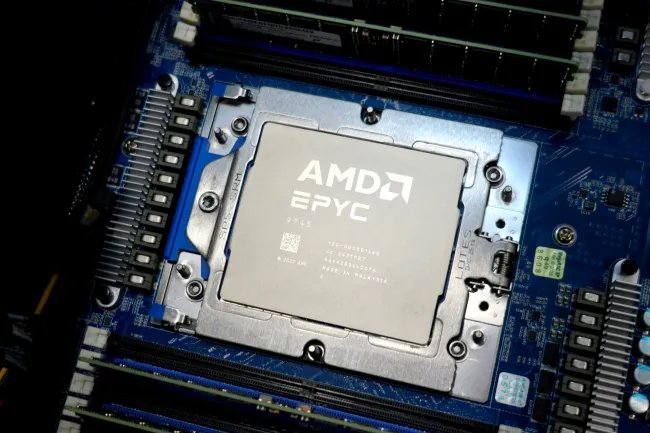
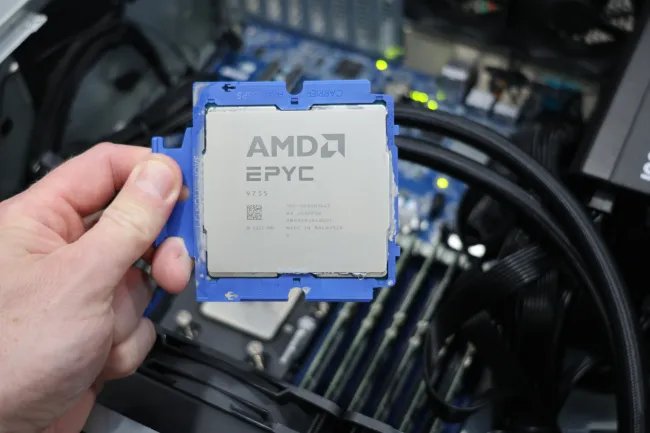
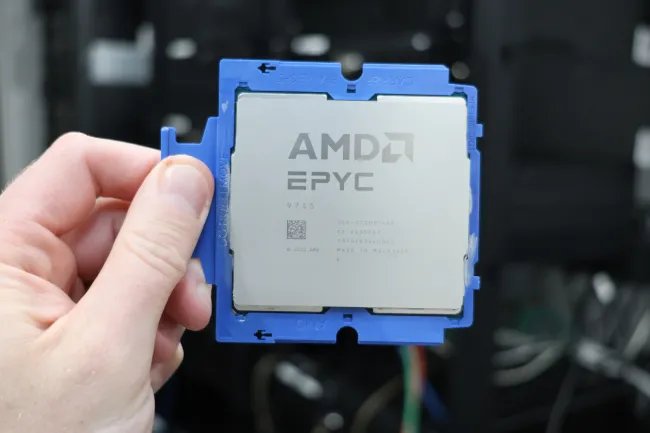
The AMD EPYC 9755 128-core Zen 5 server processor has been benchmarked extensively at Phoronix since the EPYC 9005 "Turin" launch as AMD's top-end Zen 5 server processor with "full fat" cores compared to the denser Zen 5C cores that extend up to the EPYC 9965 at 192 cores. For those eyeing the 128 core per socket sweet spot, there is also the EPYC 9745 that is made up of 128 Zen 5C cores that allows for a 400 Watt TDP compared to the 500 Watt EPYC 9755.
Today's benchmarking is comparing the EPYC 9745 and EPYC 9755 performance and power difference. For those on an AMD EPYC 9005 series server platform where the motherboard can only accommodate up to 400 Watt TDP CPUs rather than 500 Watt, or you are very focused on power/thermals, the EPYC 9745 is an interesting option for squeezing in 128 Zen 5C cores at a 400 Watt TDP. Via custom TDP (cTDP) tuning is even the ability to lower that down to 320 Watts for even lower power/thermal requirements.
Compared to the EPYC 9755 that is 128 Zen 5 cores with a 2.1GHz base clock, 4.1GHz all-core boost speed / max boost clock, and 512MB L3 cache, the EPYC 9745 is slightly reduced due to the Zen 5C cores and the 100 Watt lower TDP. The EPYC 9745 has a 2.4GHz base clock, 3.45GHz all core boost speed, and 3.7GHz maximum boost clock. With Zen 5C cores, the EPYC 9745 also has just half the L3 cache (256MB) as the EPYC 9755. But you have the same 128 cores / 256 threads and the same ISA with AVX-512 and the like while having a 400 Watt TDP or as low as 320 Watt cTDP.
At 320 Watt, the EPYC 9745 at its lowest cTDP isn't too far off from the AmpereOne A128-34X 128-core processor with a 275 Watt rated usage power. With that AmpereOne A128-32X at 275 Watts, that is clocking up to 3.4GHz compared to the EPYC 9745 hitting up to 3.7GHz. Unfortunately, I don't have any AmpereOne processors on-hand for comparison.
Current pricing at major Internet retailers have both the EPYC 9745 and EPYC 9755 listed for about $7200 USD. With similar pricing, the EPYC 9745 really comes down to those that are limited to a 400 Watt TDP limit of their platform and/or really trying to optimize on energy efficiency and lower thermal/power requirements.
In being curious about the 128 core Zen 5 vs. 128 core Zen 5C for performance and power, I benchmarked the following configurations using the Gigabyte MZ33-AR1 server:
- AMD EPYC 9755 (128 cores, Zen 5, 500 Watt TDP)
- AMD EPYC 9745 (128 cores, Zen 5C, 400 Watt TDP)
- AMD EPYC 9745 (128 cores, Zen 5C, 320 Watt cTDP)
With this single socket Gigabyte AMD EPYC 9005 server platform. This server was built around the SilverStone RM4A with SilverStone XE360-SP5 liquid cooling. From there more than 500 benchmarks were run on this Gigabyte MZ33-AR1 server build in comparing the 128-core EPYC Turin server performance between the EPYC 9745 with 128 dense cores and the EPYC 9755 with its 128 full-fat cores for looking at the performance as well as CPU power consumption based on the PowerCap/RAPL interface and then also the total DC power consumption as exposed via the USB interface on the Corsair HX1500i power supply.
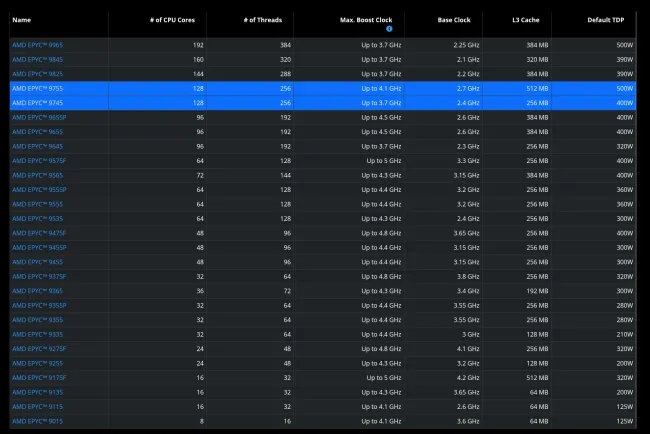
The key architectural differences between these processors come down to core density versus raw performance. The EPYC 9755's full-fat Zen 5 cores provide superior single-threaded performance and larger L3 cache, while the EPYC 9745's Zen 5C cores prioritize density and power efficiency. This creates interesting trade-offs depending on workload characteristics.
For memory-bound workloads that benefit from larger cache, the EPYC 9755's 512MB L3 cache provides a significant advantage over the EPYC 9745's 256MB. However, for highly parallel workloads that scale well across many cores, the Zen 5C architecture in the 9745 can deliver comparable throughput at lower power consumption.
The 320W cTDP mode on the EPYC 9745 is particularly interesting for power-constrained environments. At this setting, the processor delivers performance that competes favorably with other 128-core processors in the same power envelope, making it an attractive option for data centers with strict power budgets or cooling limitations.
When considering total cost of ownership, the similar pricing between the two processors means that power consumption and cooling requirements become critical factors in the decision. The EPYC 9745's lower TDP can translate to significant operational cost savings over time, especially in large-scale deployments where power and cooling infrastructure costs are substantial.
For organizations with existing server infrastructure limited to 400W TDP processors, the EPYC 9745 provides a path to upgrade to 128 cores without requiring platform upgrades. This can extend the useful life of existing hardware while delivering substantial performance improvements.
The benchmark results across more than 500 tests reveal that while the EPYC 9755 maintains a performance advantage in most scenarios, the EPYC 9745's performance-per-watt is often superior. This makes it particularly well-suited for cloud service providers and other environments where density and efficiency are prioritized over absolute peak performance.
For specific workload recommendations:
- Memory-intensive applications: EPYC 9755 with its larger cache and higher boost clocks
- Highly parallel, throughput-oriented workloads: EPYC 9745 can match performance at lower power
- Power-constrained environments: EPYC 9745 at 320W cTDP offers compelling efficiency
- Mixed workloads: EPYC 9755 provides better single-threaded performance for diverse workloads
Both processors represent AMD's continued leadership in the server CPU market, offering customers flexibility to optimize for their specific requirements whether that's raw performance, power efficiency, or a balance of both.
The comprehensive benchmark suite covered code compilation, AI workloads, HPC applications, database operations, and content creation tasks, providing a complete picture of how these processors perform across the diverse workloads found in modern data centers.
For organizations evaluating these processors, the decision ultimately comes down to workload characteristics and infrastructure constraints. The EPYC 9755 remains the performance leader, while the EPYC 9745 offers an efficient alternative for power-sensitive deployments without sacrificing core count.
Comments
Please log in or register to join the discussion