Analysis of the accelerating renewable energy adoption worldwide, with seven countries now generating nearly all electricity from clean sources, while examining technical challenges, economic factors, and counterarguments in the global shift away from fossil fuels.
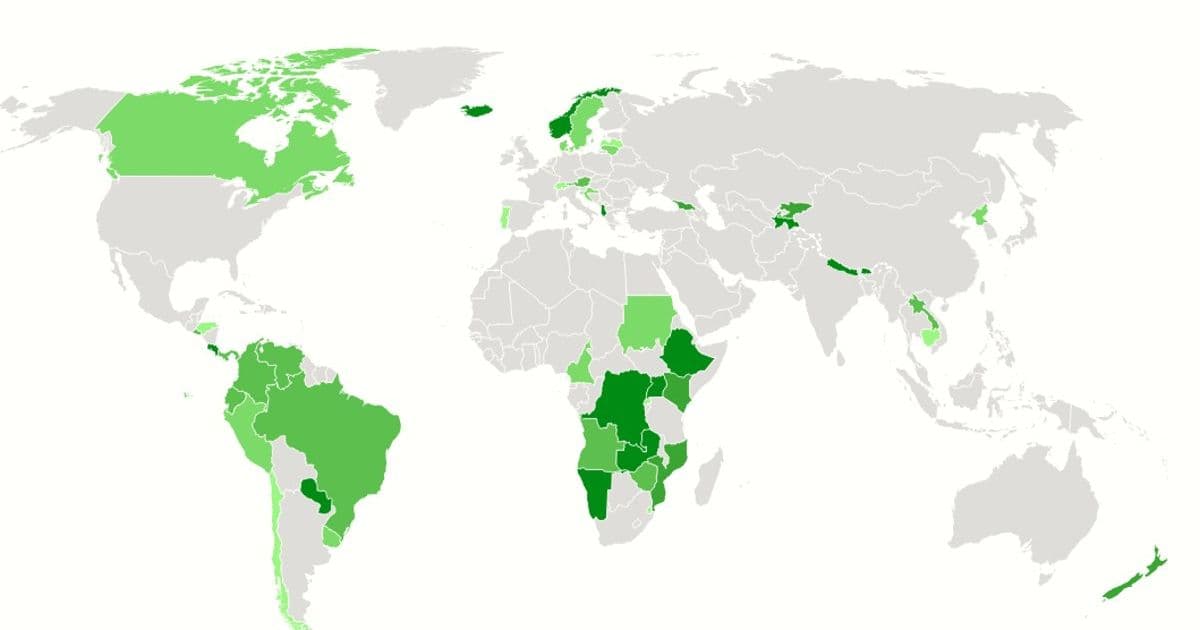
Recent data from the International Energy Agency (IEA) and International Renewable Energy Agency (IRENA) reveals a significant milestone in global energy production: seven countries now generate more than 99.7% of their electricity from renewable sources. Albania, Bhutan, Nepal, Paraguay, Iceland, Ethiopia, and the Democratic Republic of Congo have successfully transitioned to systems powered primarily by geothermal, hydro, solar, or wind energy.
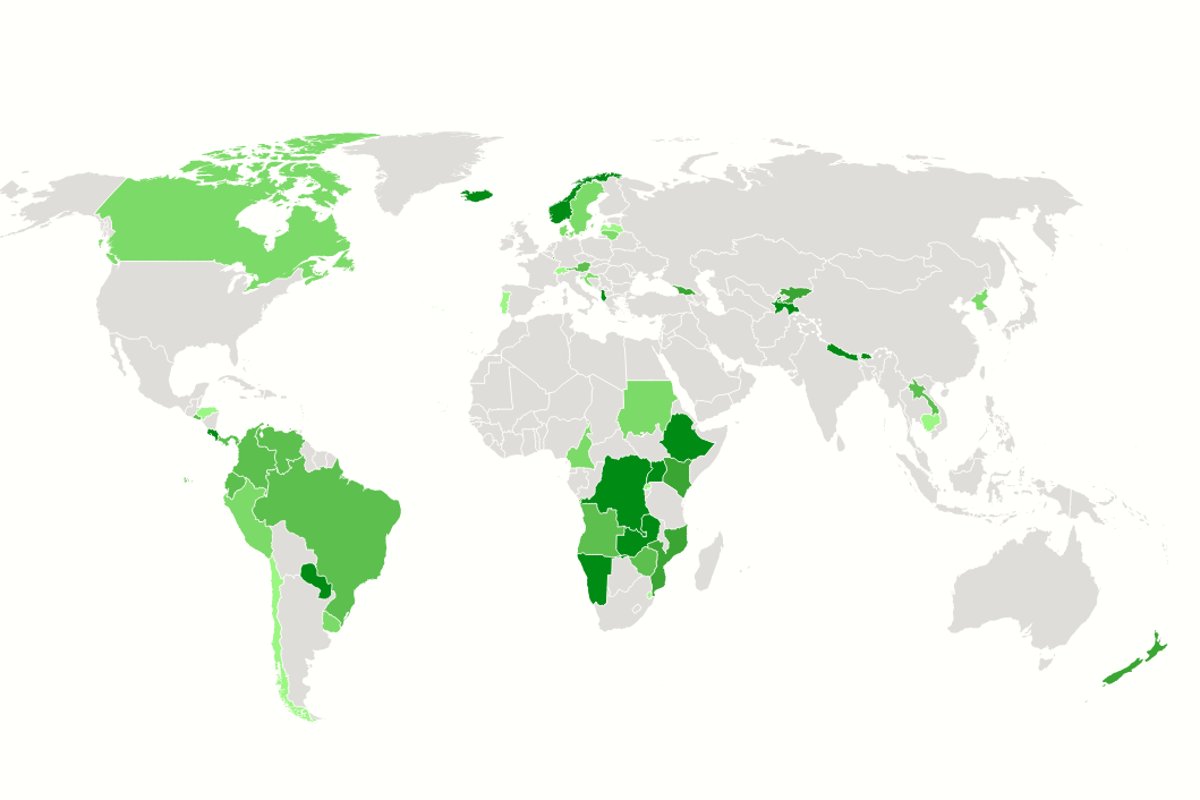
This achievement represents more than just statistical curiosity—it signals a tangible shift in how nations approach energy production and climate commitments. The data shows these countries aren't isolated cases but part of a broader pattern. An additional 40 countries generated at least 50% of their electricity from renewable technologies in 2021 and 2022, including 11 European nations. Scotland, for instance, generated the equivalent of 113% of its overall electricity consumption from renewables in 2022, with wind power dominating its generation mix.
"These record-breaking figures are a major milestone on Scotland's journey to net-zero, clearly demonstrating the enormous potential of our world-class renewable energy resources," noted Claire Mack, chief executive of Scottish Renewables.
The United Kingdom as a whole made substantial progress, with renewable sources accounting for 41.5% of electricity generation in 2022—a 10.5% increase from the previous year. Germany, while not yet reaching the 100% threshold, has demonstrated capability of operating entirely on renewable-generated electricity for short periods, suggesting the technical feasibility of such transitions even in industrialized economies.
Stanford University Professor Mark Jacobson, who compiled the renewable energy data, emphasizes that the solution to climate change doesn't necessarily require breakthrough technologies.
"We don't need miracle technologies," Professor Jacobson stated. "We need to stop emissions by electrifying everything and providing the electricity with Wind, Water and Solar (WWS), which includes onshore wind, solar photovoltaics, concentrated solar power, geothermal electricity, small hydroelectricity, and large hydroelectricity."
The economic case for renewables continues to strengthen. Researchers from the University of Exeter and University College London published a 2023 paper in the journal Nature Communications claiming that solar energy has reached an "irreversible tipping point." Their analysis found that technological and economic advances mean the transition to clean energy is not just reachable but inevitable.
"Due to technological trajectories set in motion by past policy, a global irreversible solar tipping point may have passed where solar energy gradually comes to dominate global electricity markets, without any further climate policies," the researchers wrote. "Solar energy is the most widely available energy resource on Earth, and its economic attractiveness is improving fast in a cycle of increasing investments."
The falling costs of solar installations, driven partly by the development of more efficient photovoltaic cells using perovskite materials, have significantly improved solar's economic competitiveness. The International Renewable Energy Agency reports that the global weighted-average levelized cost of electricity from newly commissioned utility-scale solar PV projects fell by 85% between 2010 and 2020.
Despite this progress, significant challenges remain. Energy storage limitations, grid infrastructure requirements, and the intermittency of renewable sources present technical hurdles to widespread adoption. The transition also faces political and economic resistance from established fossil fuel industries and concerns about job displacement in traditional energy sectors.
Some energy experts caution against over-reliance on current renewable technologies without addressing these fundamental challenges. They point out that while the seven countries achieving near-100% renewable electricity have succeeded, many rely heavily on hydropower—a resource that faces environmental concerns and vulnerability to climate change impacts like droughts.
"The achievements of these nations are impressive, but we must recognize that their circumstances differ significantly from those of industrialized economies with higher energy demands and more complex industrial bases," noted Dr. Elena Rodriguez, an energy systems analyst not affiliated with the study. "The question isn't whether renewables can work, but how to scale them appropriately while maintaining grid reliability and economic viability."
The global renewable energy transition also raises questions about equity and justice. While wealthy nations invest in green technologies, developing countries often lack the capital and infrastructure to make similar transitions, potentially exacerbating global inequalities.
As the world continues to grapple with climate change, the experiences of these seven countries offer valuable insights into the possibilities and challenges of renewable energy adoption. Their success demonstrates that 100% renewable electricity is technically achievable, but the path forward will require addressing storage, grid integration, economic, and political considerations to ensure a just and sustainable energy transition for all nations.
For more information on global renewable energy statistics, you can explore the International Energy Agency's renewable energy reports and the International Renewable Energy Agency's data portal. The Nature Communications paper on solar energy's tipping point provides additional technical analysis of these trends.
Comments
Please log in or register to join the discussion