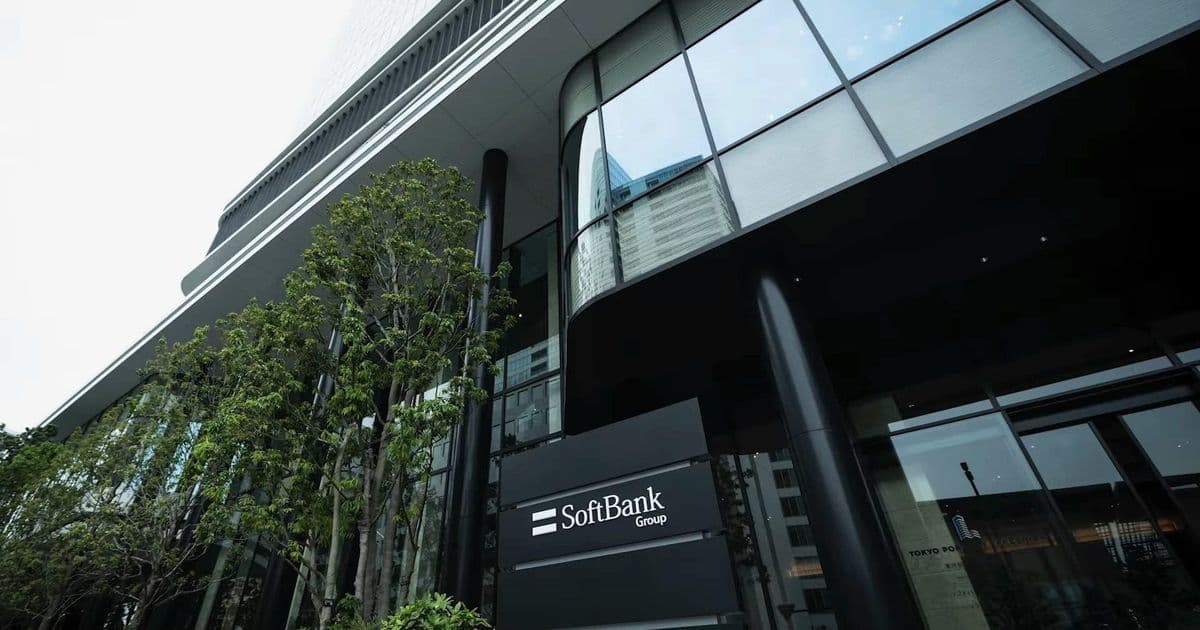
SoftBank will invest up to €75 billion to build five gigawatts of AI‑focused data‑center capacity in France, starting with a €45 billion, 3.1 GW phase in the Hauts‑de‑France region. The move leverages France’s low‑cost, nuclear‑dominated electricity supply, contrasting sharply with SoftBank’s Ohio plan that requires a $33 billion natural‑gas power plant. Partners include EDF and Schneider Electric, and the project is set to be formalised at the Choose France summit.
SoftBank’s French AI data‑center push
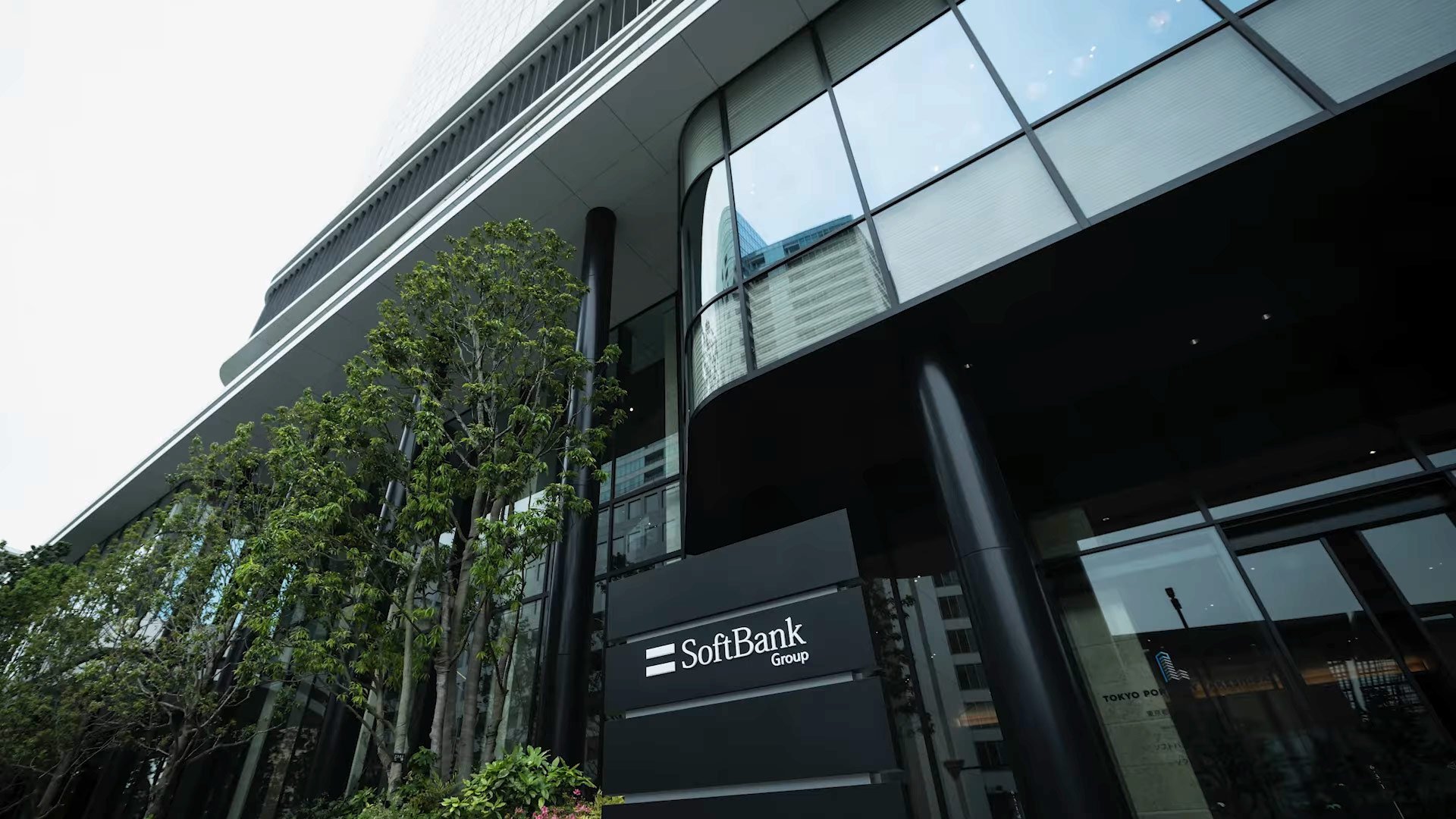 SoftBank Group announced a commitment of up to €75 billion (≈ $87 billion) to construct five gigawatts of AI‑focused data‑center capacity across France. The first tranche, a €45 billion (≈ $52 billion) Phase 1, will deliver 3.1 GW of compute power in the northern Hauts‑de‑France region by 2031, spread across three sites: Loon‑Plage (Dunkirk), Bosquel, and Bouchain.
The Japanese conglomerate will partner with state‑owned utility EDF and Schneider Electric, both of which bring deep expertise in large‑scale power management and data‑center infrastructure. The formal agreement is slated for the Choose France summit, where SoftBank CEO Masayoshi Son and French President Emmanuel Macron will sign the pact.
Technical specs and supply‑chain context
Power source advantage
France generates roughly 70 % of its electricity from nuclear reactors, making it the world’s largest net electricity exporter. Industrial electricity prices sit at under half the level of the United Kingdom, and the grid is already built to handle large, continuous loads. EDF’s involvement includes handing over the former Bouchain power‑plant site for conversion into a data‑center campus, effectively bypassing the need for on‑site generation.
In contrast, SoftBank’s 10 GW Ohio project must be powered by a new natural‑gas plant estimated at $33 billion and capable of delivering ≈ 9.2 GW. The U.S. build‑out faces strained transmission networks, local opposition to new fossil‑fuel facilities, and higher electricity tariffs. By plugging directly into France’s low‑carbon, high‑capacity nuclear fleet, SoftBank sidesteps those hurdles and can achieve a lower total cost of ownership for AI workloads.
Infrastructure design
- Site layout: Each French campus will feature a prefabricated enclosure produced by SoftBank’s own manufacturing line, while Schneider Electric supplies modular power distribution units (PDUs) that integrate directly with the grid.
- Cooling: The French sites will adopt water‑based evaporative cooling systems, leveraging the region’s moderate climate and existing industrial water infrastructure, similar to SoftBank’s approach in Japan.
- Energy storage: SoftBank plans to deploy lithium‑ion battery packs sourced from its Arm‑affiliated supply chain, providing up to 30 minutes of backup and smoothing short‑term grid fluctuations.
- Network connectivity: Proximity to the Port of Dunkirk enables high‑capacity fiber links to major European backbones, reducing latency for AI model training clusters that serve both European and global customers.
Market implications
Competitive positioning
With 3.1 GW of capacity secured, SoftBank will rank among the top three private AI‑infrastructure providers in Europe, alongside Microsoft’s Azure AI and Google Cloud’s European data‑center network. The low‑cost electricity base translates to per‑GPU power costs that are 20‑30 % lower than comparable U.S. sites, giving SoftBank a pricing edge for AI‑as‑a‑service contracts.
Impact on AI model training economics
Training large language models (LLMs) typically consumes 5‑10 MWh per petaflop‑day. At France’s industrial electricity price of ≈ €0.06/kWh, the energy cost for a 1 PF‑day run is roughly €300. By comparison, the same workload in the United Kingdom (≈ €0.12/kWh) would cost €600, while the Ohio natural‑gas plant is projected to charge ≈ $0.10/kWh (≈ €0.09/kWh). SoftBank’s French facilities therefore cut energy spend by ≈ 50 %, a decisive factor for customers with multi‑petaflop training pipelines.
Debt financing and broader strategy
SoftBank’s balance sheet carries over $130 billion of debt, and the firm secured a $40 billion bridge loan in March to fund its $30 billion OpenAI stake. The French investment, while sizable, is capped at €75 billion, with only the €45 billion Phase 1 currently firm. This staged approach limits immediate capital outflow while allowing SoftBank to gauge demand for AI compute in Europe.
Geopolitical and supply‑chain considerations
- Sovereign electricity: EDF’s “competitive, sovereign and low‑carbon electricity” narrative aligns with European policy goals for digital sovereignty, potentially easing regulatory approvals.
- Supply‑chain resilience: By locating a large portion of its AI compute in Europe, SoftBank reduces reliance on trans‑Atlantic logistics for server chassis, power modules, and cooling equipment, mitigating risks from recent semiconductor shortages.
- Carbon footprint: Leveraging nuclear power keeps the carbon intensity of AI workloads below 50 gCO₂/kWh, compared with ≈ 150 gCO₂/kWh for natural‑gas‑fueled U.S. sites, supporting ESG commitments for corporate customers.
Outlook
SoftBank’s French AI data‑center program illustrates how energy economics can dictate location strategy for next‑generation compute. If the Phase 1 rollout meets its 2025‑2026 commissioning targets, the company could achieve full 5 GW capacity by the early 2030s, positioning Europe as a low‑cost, low‑carbon hub for AI training. The success of this model may prompt other investors to prioritize regions with stable, inexpensive baseload power, potentially reshaping the global AI infrastructure map.
For further details on SoftBank’s partnership with EDF and Schneider Electric, see the official announcement on the SoftBank Group website.
Comments
Please log in or register to join the discussion