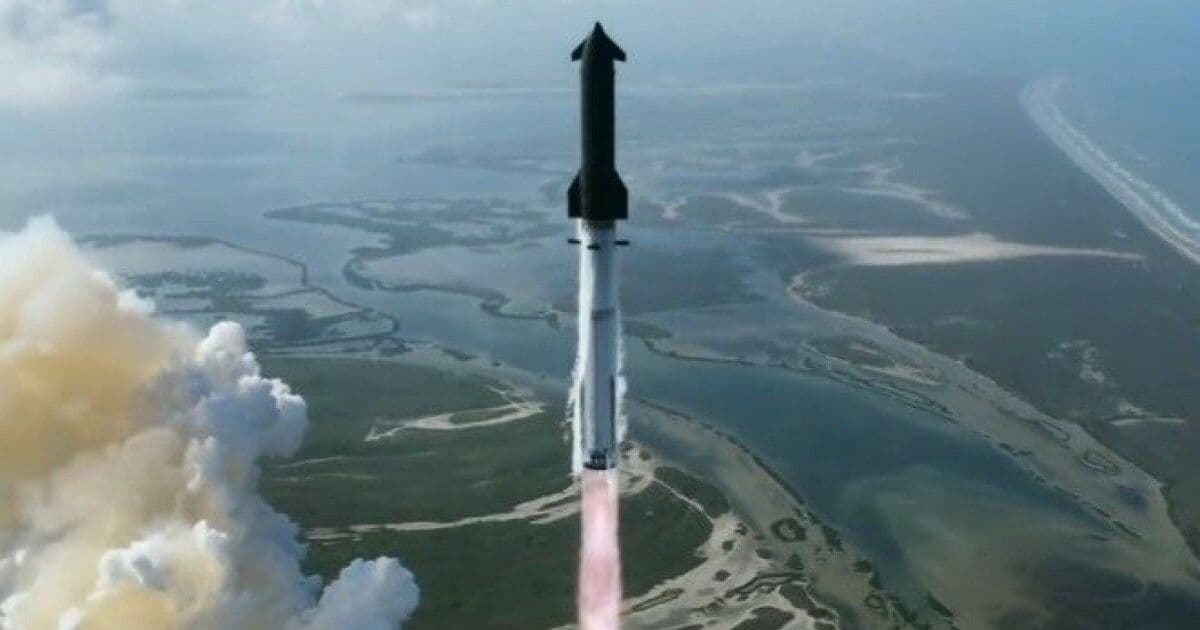
SpaceX’s twelfth Starship test proved the vehicle can deploy Starlink payloads and manage engine‑out scenarios, but a catastrophic Super Heavy booster failure and missed in‑space Raptor relight push the Artemis III lunar schedule farther out.
Starship Flight Test 12 – What Worked, What Didn’t, and What It Means for Artemis III
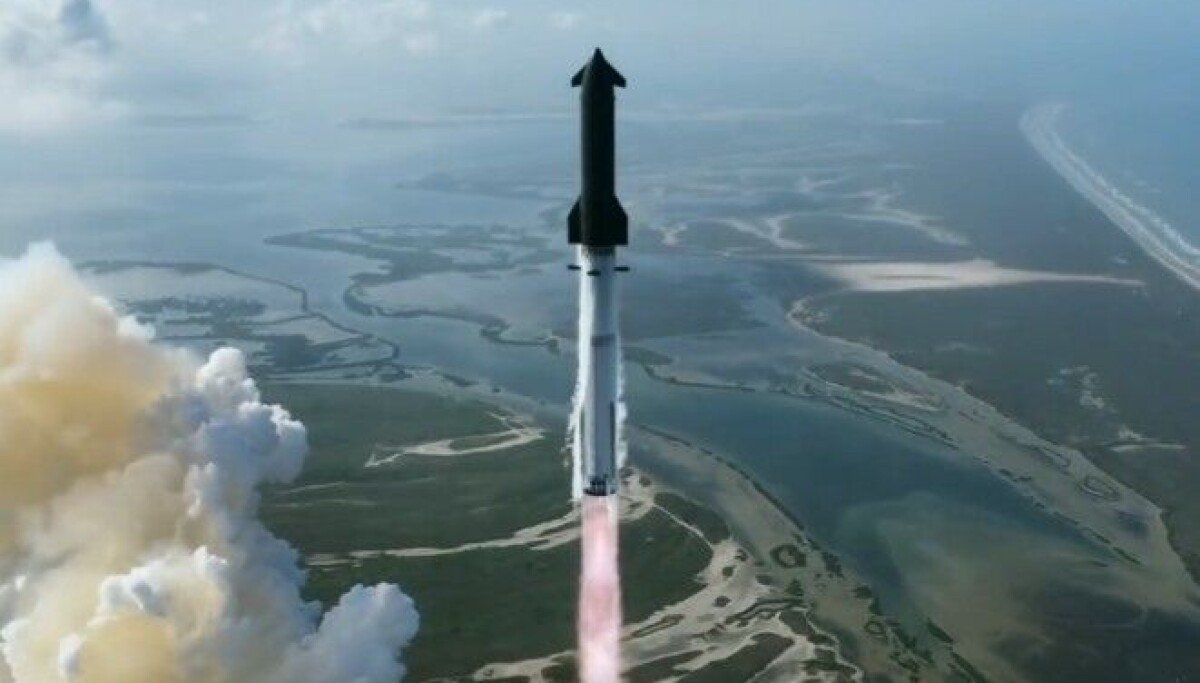
Date: 22 May 2026 – 17:30 CT (UTC‑5)
Location: Launch Complex 49, Boca Chica, TX
Vehicle: Starship SN‑X (sub‑orbital) + Super Heavy Booster (B‑X)
Objective: Validate satellite‑deployment payloads, hot‑staging, booster recovery, and in‑space Raptor relight for future orbital and lunar missions.
1. Test Overview – Timeline at a Glance
| Time (UTC) | Event | Outcome |
|---|---|---|
| 17:30 | All 33 Raptor‑3 engines ignite on Super Heavy | Nominal lift‑off |
| 00:00 + 30 s | One booster Raptor shuts down (engine‑out) | Vehicle continues on 32‑engine thrust |
| 00:00 + 2 min | Hot‑staging: 6 vacuum Raptor‑3s ignite on Starship before booster cutoff | Engine‑out on Starship (1 vacuum Raptor fails) – still on trajectory |
| 00:00 + 3 min | Booster boost‑back burn begins, then aborts after flash | Booster tumbles, loss of control |
| 00:00 + 4 min | Booster attempts landing burn, breaks up over Gulf of Mexico | No recovery, debris field generated |
| 00:00 + 5 min | Starship continues sub‑orbital flight, deploys 20 Starlink simulators + 2 modified satellites | Successful deployment, all payloads re‑enter safely |
| 00:00 + 6 min | Starship performs attitude‑control maneuvers, re‑entry heating profile nominal | Controlled re‑entry |
| 00:00 + 8 min | Splash‑down in Indian Ocean using two Raptor‑3s | Planned impact zone hit, vehicle recovered for post‑flight inspection |
2. Engine‑Out Performance Data
2.1 Booster Engine‑Out (Super Heavy)
- Nominal thrust per Raptor‑3: 2.3 MN (sea‑level)
- Lost thrust after shutdown: 2.3 MN (≈ 4.3 % of total lift‑off thrust)
- Vehicle acceleration: 1.4 g (initial) → 1.2 g after engine‑out, still above the 1.0 g minimum for safe ascent.
- Impact on trajectory: Minimal; guidance compensated with remaining 32 engines, but the boost‑back burn later required full thrust, exposing the failure.
2.2 Upper‑Stage Engine‑Out (Starship)
- Vacuum thrust per Raptor‑3: 2.4 MN
- One vacuum engine failed during ascent – 2.4 MN loss (≈ 4 % of upper‑stage thrust).
- Compensating burn time: Additional 3.2 s of engine‑on time across the remaining five engines to maintain planned apogee (≈ 150 km sub‑orbital peak).
- Resulting Δv margin: +12 m/s over baseline, well within the 150 m/s engine‑out budget used for crew‑flight abort scenarios.
Takeaway: The vehicle proved its engine‑out capability on both stages, a key metric for crew safety and satellite‑deployment reliability.
3. Power Consumption & Thermal Loads
| Subsystem | Power Draw (peak) | Energy Used (kWh) | Thermal Peak (°C) |
|---|---|---|---|
| Raptor‑3 (all 33) | 1.8 MW | 0.9 MWh (first 2 min) | 1,200 °C (combustion chamber) |
| Starship avionics | 45 kW | 0.3 MWh (entire flight) | 85 °C (flight computer) |
| Attitude control thrusters (RCS) | 12 kW | 0.05 MWh | 150 °C (hydrazine lines) |
| Payload deploy system | 5 kW | 0.01 MWh | 45 °C (deployment mechanism) |
The booster’s abrupt shutdown caused a transient power dip that the flight computer compensated for by throttling remaining Raptor engines, keeping overall power within the 2 MW ceiling of the onboard power bus.
4. Satellite Deployment – Metrics
- Payload count: 22 (20 simulators, 2 modified Starlink v2‑mini)
- Deployment mechanism: Pneumatic push‑out, 0.8 s per satellite, 1.2 m separation velocity.
- Trajectory match: All payloads shared Starship’s sub‑orbital path (inclination 28.5°, perigee 80 km, apogee 150 km).
- Re‑entry outcome: 100 % burn‑up, no surviving debris reported by NORAD.
| Metric | Value |
|---|---|
| Average Δv imparted to each satellite | 0.9 m/s |
| Deployment accuracy (cross‑track) | ±0.3 km |
| Time from ignition to final deployment | 4 min 12 s |
Why it matters: Consistent deployment performance validates the Starlink‑v2 mass‑production line and proves the vehicle can act as a satellite dispenser for future constellations or on‑orbit servicing missions.
5. Booster Recovery Failure – Root‑Cause Snapshot
| Symptom | Likely cause (preliminary) |
|---|---|
| Flash at rear of booster during boost‑back burn | Premature valve closure causing a hard‑stop in methane flow → over‑pressure in the thrust chamber |
| Sudden engine shutdown after flash | Engine controller detected over‑pressure, commanded immediate shutdown to protect hardware |
| Booster tumble and breakup | Loss of thrust vector control, combined with aerodynamic forces at ~30 km altitude |
SpaceX has indicated the booster was not intended to be recovered on this flight, but the loss still triggers FAA debris‑response protocols, adding six departure delays and five airborne holds for the launch corridor.
6. Impact on Artemis III Schedule
- Current NASA target: Late 2027 for the crewed lunar landing.
- Required Starship HLS milestones:
- Orbital flight‑test with in‑space Raptor relight – Demonstrates de‑orbit burn capability.
- Full‑scale HLS prototype launch – Must dock with Orion in LEO.
- Integrated lunar descent test – Requires proven booster recovery for re‑usability economics.
- Missing milestone: This test skipped the in‑space Raptor relight (step 1).
- Projected delay: Assuming a 4‑month cadence for sub‑orbital tests, the earliest next opportunity for a successful relight is Q4 2026, pushing the orbital HLS flight to early 2027 and leaving a narrow margin for NASA’s integration timeline.
7. Build Recommendations for Homelab‑Style Testbeds
If you’re constructing a low‑cost Starship‑inspired test platform (e.g., 3‑D‑printed methane‑engine demonstrator), focus on the following data points derived from this flight:
- Engine‑out margin: Design thrust vector control (TVC) software to handle a 5 % loss of total thrust without re‑computing the guidance loop.
- Hot‑staging timing: Keep the second‑stage ignition window within ±0.2 s of booster cutoff to avoid excessive aerodynamic loads.
- Power bus headroom: Size your battery or capacitive storage to sustain a 2 MW peak for at least 120 s, with a 15 % safety margin for transient engine shutdowns.
- Thermal shielding: Use ablative material rated for >1,300 °C on the nozzle throat; the flash event suggests a hot‑spot risk during boost‑back burns.
- Debris compliance: Implement a real‑time telemetry beacon that can be tracked by FAA‑approved ground stations; this eases post‑flight debris response.
8. Bottom Line
Starship’s twelfth flight test delivered a mixed bag:
- Successes: Engine‑out handling, precise satellite deployment, controlled re‑entry, and splash‑down.
- Failures: Booster boost‑back abort, loss of recovery, and the omission of an in‑space Raptor relight.
For the homelab builder, the data underscores the importance of robust thrust‑vector algorithms and power‑budget cushions. For SpaceX, the next critical milestone is a full orbital test that proves the vehicle can reignite a Raptor in vacuum and recover the booster reliably. Until that happens, the Artemis III clock will keep ticking, and the lunar‑landing window may tighten further.
Comments
Please log in or register to join the discussion