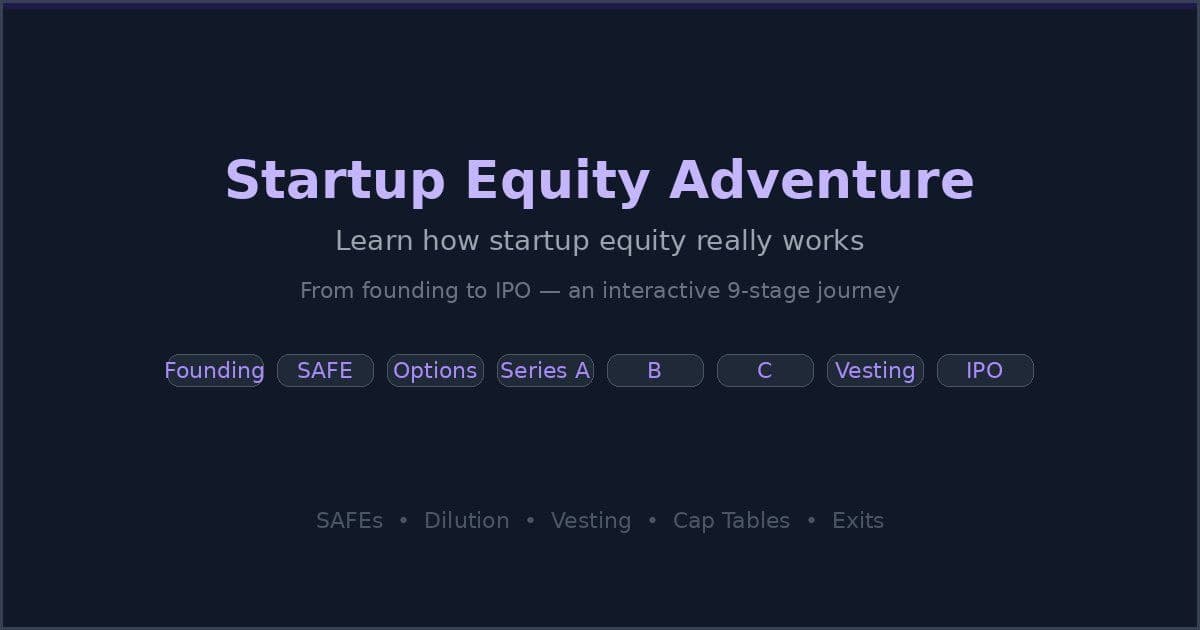
A new interactive game helps founders understand the complex world of startup equity, funding rounds, and dilution through a simulated journey from napkin idea to IPO.
The world of startup financing can be a maze of confusing terms, complex calculations, and counterintuitive concepts. For many founders, understanding how equity works, how funding rounds dilute ownership, and what employee stock options actually mean in real dollars remains one of the biggest challenges in building a company.
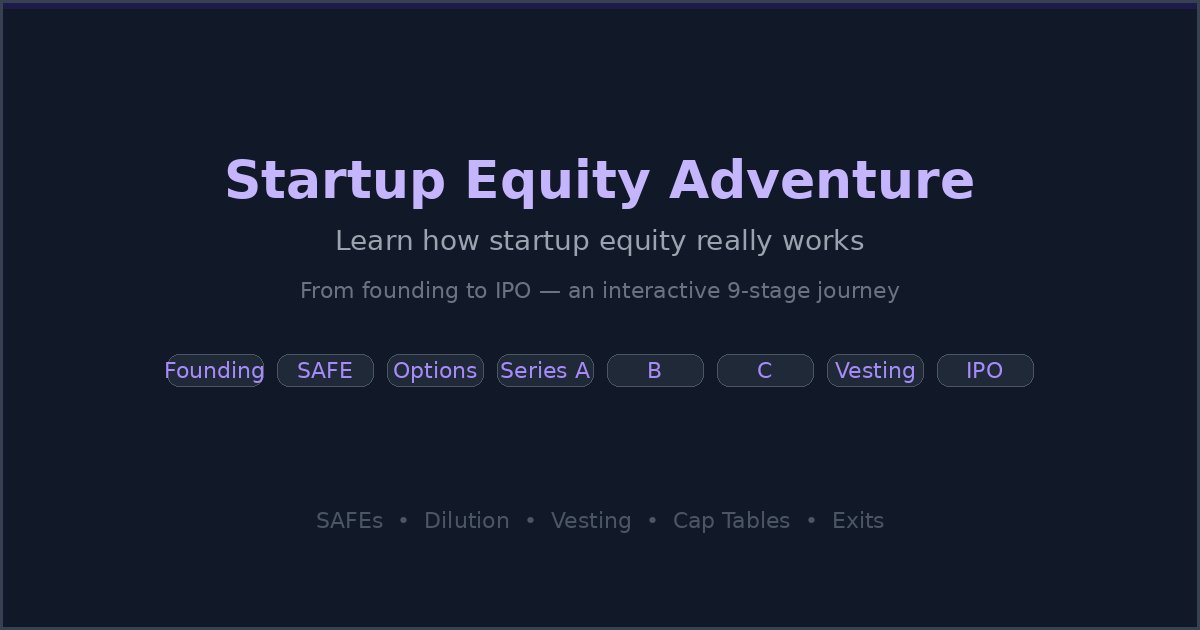
Enter Startup Equity Adventure, an interactive educational tool designed to take founders through the complete lifecycle of a startup's financial journey. From the initial napkin idea all the way to an IPO, this game provides hands-on experience with the mechanics that determine who owns what in a growing company.
The game begins by asking players to name their startup and establish themselves as the lead founder. From there, participants navigate through nine stages that mirror the real progression of a startup, making decisions that affect their ownership stake and learning the mathematical relationships between different funding instruments and corporate structures.
What makes this game particularly valuable is its focus on the practical aspects of startup financing that often get overlooked in the excitement of building a product. Players learn about:
- How founding shares work and why the initial structure matters
- The differences between SAFEs (Simple Agreements for Future Equity) and convertible notes
- How option pools are created and why 409A valuations impact their pricing
- The real impact of Series A, B, and C funding rounds on founder dilution
- The mechanics of vesting cliffs and exercise windows for employee options
- What happens to equity during an IPO and how waterfall analyses work
- The mathematics behind statements like "I own 10%" and what that actually means
Most US startups incorporate as Delaware C-Corporations, and this game uses that structure as its foundation, helping players understand the implications of this choice. By working through the game, founders gain an intuitive understanding of concepts that are often explained only through dense legal documents and spreadsheets.
The game draws on concepts from David Weekly's "An Introduction to Stock & Options," a comprehensive resource that has educated many founders on the intricacies of startup equity. For those who want to dive deeper after playing the game, Weekly's full PDF provides a more thorough exploration of these mechanics.
For founders looking to apply these concepts to real-world situations, the game references excellent resources from Y Combinator, including their Guide to Seed Fundraising, How to Plan an Early Stage Startup's Finances, Standard Deal Documents, and the YC Startup Library. These resources complement the game's interactive approach with practical, field-tested knowledge.
The importance of understanding these concepts cannot be overstated. Misunderstandings about equity have derailed many promising startups, leading to conflicts between founders, misaligned incentives with employees, and poorly structured funding rounds that leave founders with less control than anticipated.
By providing a safe environment to experiment with different scenarios and see their outcomes, Startup Equity Adventure helps founders develop the financial literacy needed to navigate the complex world of startup financing. The game's creators, Ilia Baranov with Claude, have focused on making these often-intimidating concepts accessible through interactive learning.
For anyone considering starting a company or joining an early-stage startup, understanding the financial implications of decisions is just as important as understanding product development or market fit. Startup Equity Adventure offers a practical way to build this knowledge before facing these decisions in high-stakes real-world situations.
Comments
Please log in or register to join the discussion