A fake Asus ROG Strix RTX 4090 submitted to Northwest Repair featured laser-etched counterfeit GPU die and VRAM chips, mimicking genuine markings so precisely that only microscopic inspection revealed the fraud. The scam exploited AI boom-induced market desperation, highlighting evolving counterfeit techniques that bypass conventional visual checks and underscore risks in the secondary GPU market.
A recent repair case has exposed a new tier of GPU counterfeiting where fraudsters employed semiconductor-grade techniques to create a near-indistinguishable fake RTX 4090. Submitted to Northwest Repair after an eBay purchase, the ASUS ROG Strix model appeared visually flawless—complete with correct Nvidia branding, proper thermal compound application, and no obvious rework signs like flux residue or baking marks. However, under microscopic examination, critical tells emerged: the GDDR6X memory chips showed uniform 15-20μm surface removal consistent with mechanical shaving, and the GPU die exhibited identical treatment. Both components had been laser-etched with counterfeit markings matching the genuine AD102-300-A1 part number and logos, erasing all traces of their original identity.
 This level of precision suggests factory-level capabilities rather than individual workshop efforts. The scammers likely sourced defective or lower-tier GPUs, stripped their original markings via controlled abrasion, and reapplied authentic-looking identifiers using laser engraving—a process requiring micron-scale alignment to avoid damaging underlying structures. Notably, the fake card’s PCB bore subtle ultrasonic cleaning streaks and slightly darkened underfill epoxy (indicating non-Nvidia certified material), but these were insufficient to trigger suspicion without disassembly. The deception succeeded because standard authenticity checks—visual inspection, part number verification, and basic power-on tests—relied on surface-level cues the counterfeit perfectly replicated.
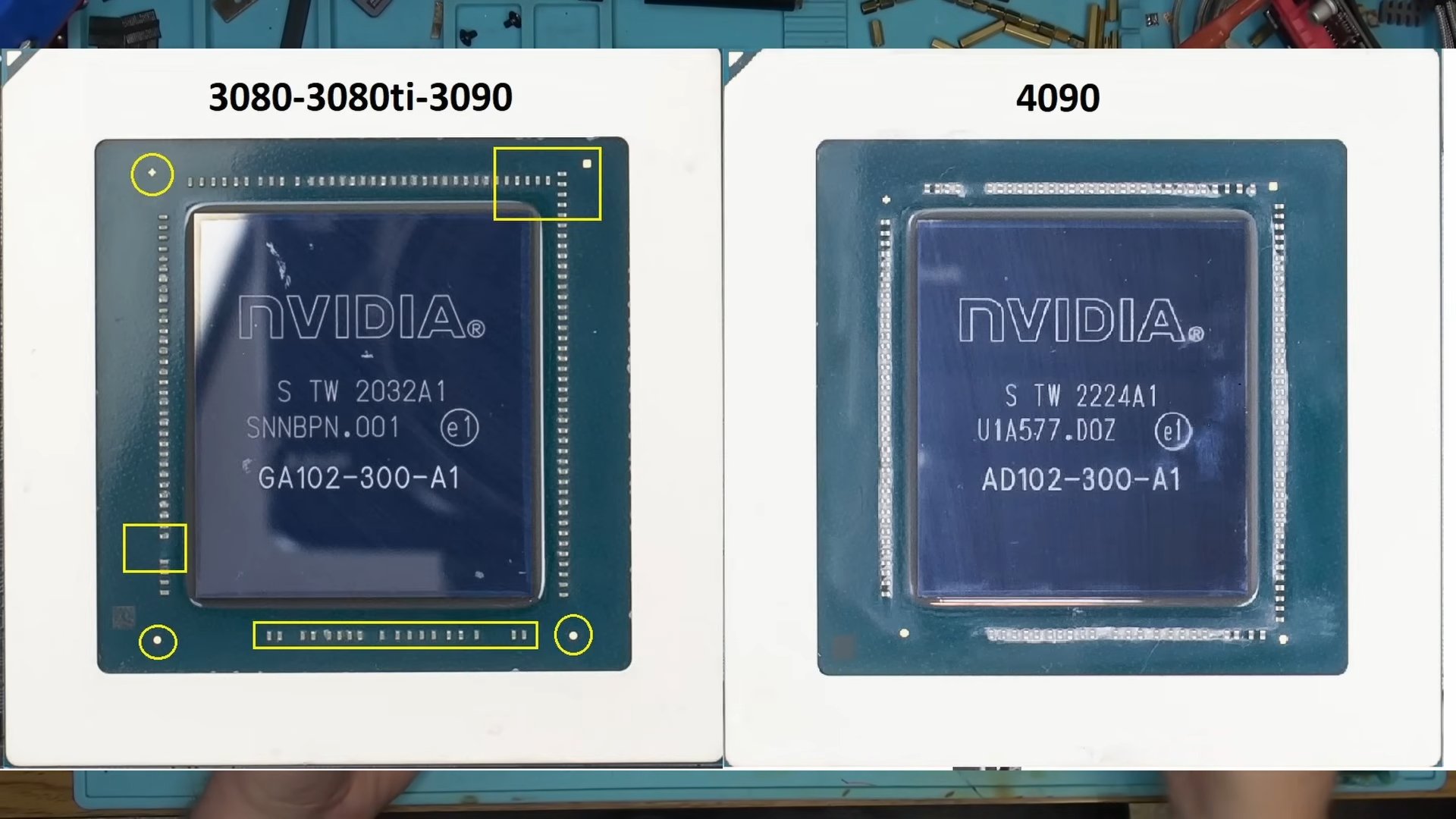
The breakthrough came from architectural knowledge: Ada Lovelace-based RTX 4090s feature a distinct MLCC (multi-layer ceramic capacitor) arrangement around the GPU die compared to earlier Turing architectures. When Northwest Repair placed a genuine RTX 3080 core beside the fake 4090’s die, the MLCC pattern mismatch became immediately apparent—a detail requiring both component-level access and specific product knowledge to detect. This underscores a growing challenge in hardware verification: as counterfeiters replicate external markings with increasing accuracy, authentication must shift toward microscopic structural analysis or advanced techniques like X-ray fluorescence to confirm material composition.
 Market context amplifies the scam’s significance. Ongoing AI-driven demand has strained enterprise GPU supplies, pushing cost-conscious buyers toward secondary markets where deals like the purported "Amazon pallet" offer (later debunked) seem attractive. Simultaneously, illicit operations converting gaming GPUs for AI workloads—often involving VRAM upgrades or BIOS modifications—may share supply chains or expertise with counterfeit rings. The repair host noted this wasn’t an isolated incident but indicative of scalable fraud: "This is the best scam I’ve ever seen," stating the operation’s sophistication implies access to semiconductor manufacturing adjacent tools.
For consumers, the case reinforces that purchasing high-value GPUs secondhand requires vigilance beyond visual checks. Recommended precautions include: demanding seller-provided benchmark logs (though these can be faked), using tools like GPU-Z to cross-reference sensor-reported specifications against known genuine values, and considering escrow services for transactions. From an industry perspective, such incidents may accelerate adoption of hardware-based anti-counterfeiting measures—like Nvidia’s secure boot signatures or physical unclonable functions (PUFs)—in future consumer GPUs, though implementing these cost-effectively remains challenging.
 As AI infrastructure demand continues to strain GPU availability, the incentive for sophisticated counterfeiting will likely grow. This case serves as a stark reminder that in markets where scarcity meets urgency, verification protocols must evolve alongside counterfeiting techniques—moving from trust in visible markings to validation of intrinsic physical properties.
Comments
Please log in or register to join the discussion