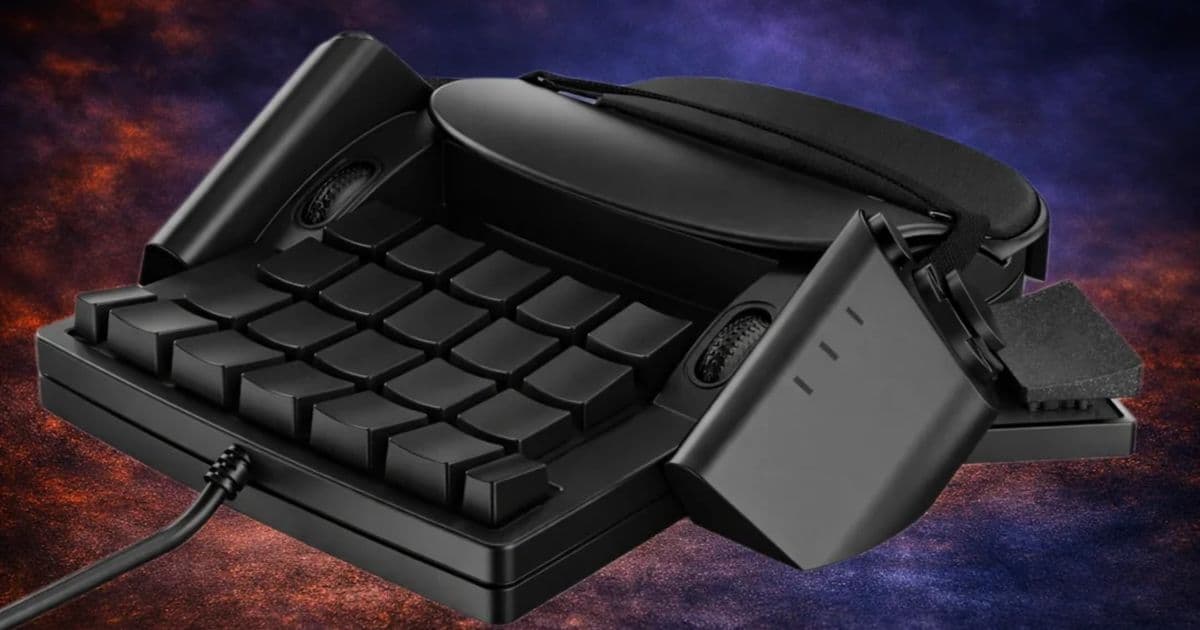
A Redditor has prototyped a revolutionary single-handed gaming controller that combines keyboard and mouse functionality, addressing accessibility needs for gamers with limb limitations. The ERCHAM MK1 features 28 programmable keys, optical sensors, and ambidextrous design, with potential to disrupt the gaming peripheral market.
The ERCHAM MK1 represents a significant innovation in gaming accessibility, combining keyboard and mouse functionality into a single-handed controller designed specifically for gamers with limited use of one hand. Created by u/Adventurous_Tie_9031 (Joe) after losing their right arm in an accident, this prototype addresses a critical gap in the gaming hardware market.
Technical Specifications and Design
The ERCHAM MK1 draws inspiration from gaming peripherals like the Razer Tartarus but significantly expands functionality by integrating mouse controls directly into the device. At its core, the controller features an optical sensor that enables precise mouse movements without requiring a separate mouse device. This optical tracking system likely utilizes similar technology to what's found in high-end gaming mice, providing the accuracy and responsiveness competitive gamers demand.
The controller's centerpiece is a fully programmable 28-key keypad, allowing users to assign specific functions to each key. This programmability is essential for adapting to different games and user preferences. For comparison, traditional gaming keyboards typically offer 100-110 keys, while compact gaming keyboards often have around 60-65 keys. The 28-key layout provides a substantial subset of functions accessible with a single hand.
Perhaps most innovative is the controller's ambidextrous design, featuring joysticks or thumb-controlled D-pads plus clickable scroll wheels on either side. This configuration allows for left- and right-handed use without requiring any modifications, a significant advantage over most specialized gaming peripherals. The inclusion of scroll wheels suggests the controller is designed for complex games requiring multiple input methods, such as MMOs or strategy games.
Market Context and Accessibility Needs
The gaming industry has historically overlooked accessibility needs, with most peripherals designed for two-handed use. This creates significant barriers for gamers with disabilities, amputees, those with nerve injuries, RSI sufferers, stroke survivors, and anyone struggling with traditional input methods. The ERCHAM MK1 specifically targets these underserved markets, potentially opening gaming to millions who have been excluded by conventional hardware limitations.
Traditional gaming setups typically require separate keyboard and mouse devices, both of which are designed for two-handed operation. Even gaming consoles with controllers generally require two hands for optimal functionality. This creates a significant accessibility gap that the ERCHAM MK1 aims to address.
The controller's nomination for the Entrepreneur of Impact competition highlights both the innovation and social impact potential of this device. With over a million views on Reddit, the project has demonstrated significant market interest, suggesting a substantial untapped demand for accessible gaming solutions.
Manufacturing and Production Considerations
Transitioning from prototype to production presents several challenges for the ERCHAM MK1. Manufacturing specialized gaming peripherals requires careful consideration of several factors:
Component Sourcing: The optical sensor, programmable keys, and scroll wheels require specialized components that may have supply chain constraints. The current global semiconductor shortage could impact production timelines.
Firmware Development: The controller requires sophisticated firmware to handle key programming, optical sensor calibration, and input mapping. This represents a significant technical hurdle beyond the physical hardware design.
Quality Control: Gaming peripherals must meet strict reliability and performance standards. Ensuring consistent quality across production runs will be essential for market acceptance.
Regulatory Compliance: The device must meet various regional standards for electronic devices, including safety certifications and electromagnetic compatibility requirements.
Despite these challenges, the potential market for accessibility-focused gaming hardware remains underserved. Most major peripheral manufacturers focus on performance enhancements for able-bodied users rather than accessibility solutions. This creates an opportunity for specialized manufacturers like the ERCHAM MK1 team.
Industry Impact and Future Prospects
Should the ERCHAM MK1 reach full production, it could influence the broader gaming hardware market in several ways:
Accessibility Mainstreaming: Success in this niche could encourage larger manufacturers to develop more accessibility-focused products, potentially leading to industry-wide design improvements.
New Market Segments: The device could create a new category of gaming peripherals specifically designed for accessibility, potentially spawning competitors and innovation in this space.
Cross-Platform Applications: While initially focused on gaming, similar input devices could find applications in professional settings, particularly for users with accessibility needs in fields like design, programming, or data analysis.
The creator's plan to use potential competition winnings to accelerate development indicates awareness of these manufacturing challenges. Even without winning the top prize, the project appears committed to moving forward with production, suggesting confidence in both the market demand and technical feasibility.
Competitive Landscape
The ERCHAM MK1 enters a market with several potential competitors, though none offering exactly the same combination of features:
Single-Handed Keyboards: Devices like the Matias Half-Keyboard or the Ploopy single-handed keyboard exist but lack integrated mouse functionality.
Gaming Keypads: Products like the Razer Tartarus Pro offer programmable keys but require a separate mouse, limiting true single-handed operation.
Controller-Keyboard Hybrids: Some devices attempt to merge controller and keyboard functionality but typically compromise on both input methods.
Eye-Tracking and Voice Control: Alternative input methods exist but often lack the precision and responsiveness demanded by serious gamers.
The ERCHAM MK1's advantage lies in its integration of multiple input methods into a single, ambidextrous device that doesn't compromise on functionality. This comprehensive approach addresses the core needs of its target market more effectively than existing solutions.
Community Response and Development Roadmap
The Reddit community's enthusiastic response to the ERCHAM MK1, with over a million views on the original post, indicates strong market interest. This community engagement could translate into a dedicated user base willing to provide feedback and support further development.
The nomination for the Entrepreneur of Impact competition represents both validation and potential funding opportunity. Should the project win, the creator plans to use the proceeds to accelerate development and move toward production faster. However, the commitment to manufacturing regardless of competition outcome demonstrates dedication to bringing the product to market.
Future development will likely focus on refining the prototype based on user feedback, establishing manufacturing partnerships, and developing the necessary firmware and software ecosystem. The controller's success will depend on balancing innovation with practical considerations like cost, durability, and ease of use.

Conclusion
The ERCHAM MK1 represents not just an innovative gaming peripheral, but a potential catalyst for greater accessibility in gaming and computing. By combining keyboard and mouse functionality in a single-handed, ambidextrous design, the device addresses a critical gap in the market for users with limited hand function.
As the project moves from prototype to potential production, it faces significant technical and manufacturing challenges. However, the demonstrated market interest and social impact potential suggest strong prospects for success. Should the ERCHAM MK1 reach full production, it could not only provide a valuable tool for gamers with accessibility needs but also encourage the broader industry to consider accessibility as a core design principle rather than an afterthought.
The story of the ERCHAM MK1 also highlights the power of community-driven innovation, demonstrating how individual creators can identify and address underserved markets that larger companies may overlook. As gaming continues to grow as a mainstream form of entertainment and social connection, devices like the ERCHAM MK1 will play an increasingly important role in ensuring this medium remains accessible to all.
Comments
Please log in or register to join the discussion