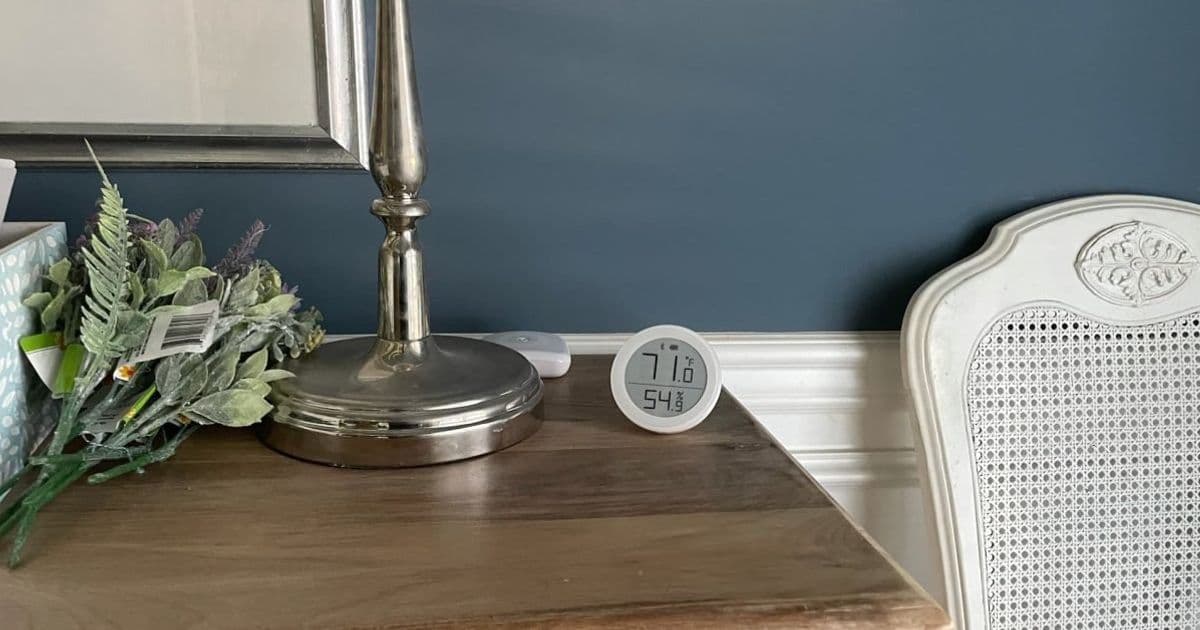
The updated Qingping thermometer brings Thread support to Apple Home, pairing a Swiss-made sensor with an E-ink display that avoids the glowing-screen fatigue of most smart home devices.
The smart home sensor market is crowded with plastic rectangles that look identical on a bookshelf. The Qingping thermometer takes a different approach, using E-ink technology borrowed from devices like the Amazon Kindle to create a HomeKit-compatible sensor that actually looks good in a living space. After retesting the updated Thread model, it remains one of the most visually distinctive temperature sensors available for Apple Home users.
Why Individual Room Sensors Matter
Most homes rely on a single thermostat, typically placed in a hallway, to gauge the temperature of the entire house. This approach fails when rooms have different sun exposure, insulation quality, or occupancy patterns. A recent experience illustrates the problem: forgetting to set an upstairs Nest back to Eco mode revealed a shocking temperature difference in a child's room compared to the hallway reading.
Localized temperature sensors solve this by providing granular data for individual spaces. When paired with smart plugs and fans, they can trigger cooling or heating actions only where needed, rather than cycling the entire HVAC system. The Qingping thermometer fills this role effectively for Apple Home users, especially with its Thread connectivity.
Design and E-ink Display
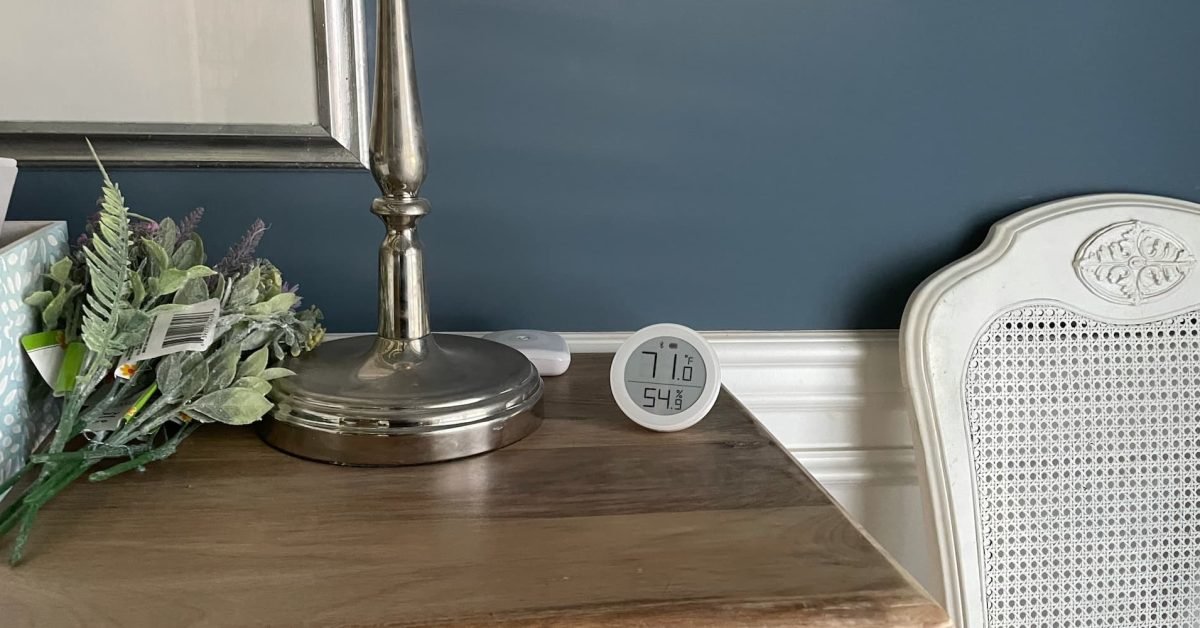
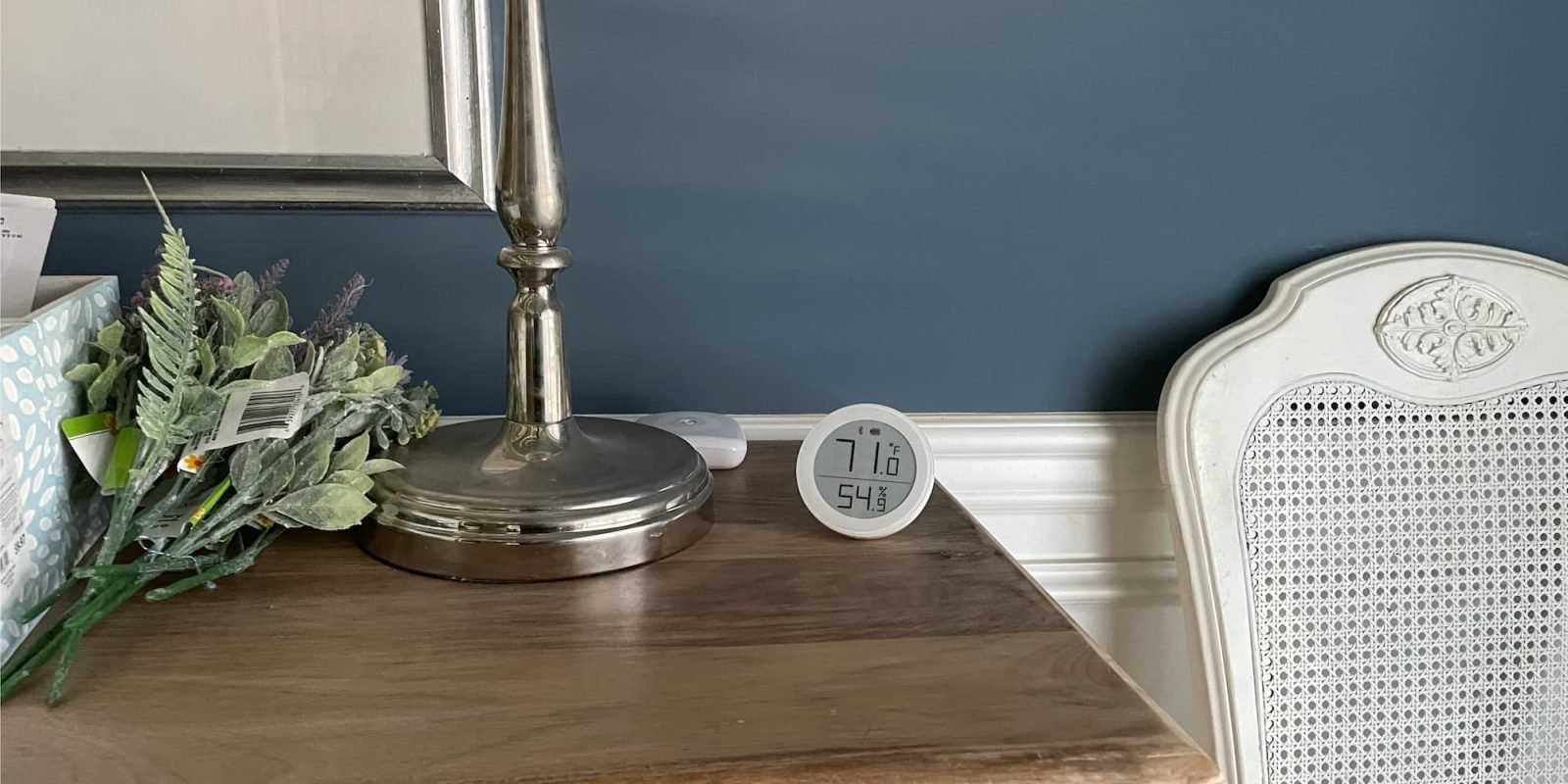
The Qingping thermometer stands out from typical smart home sensors with its E-ink display. Unlike LCD or LED screens that emit light and contribute to screen fatigue, E-ink reflects ambient light, making it readable from almost any viewing angle without glare. The display blends naturally into a bookshelf or end table, appearing more like a decorative item than a piece of technology.
Under the hood, the device contains a Swiss-made sensor for accurate real-time temperature and humidity measurements. A physical button on the back toggles the display between Celsius and Fahrenheit, providing flexibility for different preferences. The sensor can stand on a flat surface, mount on a wall using the included magnetic sticker, or attach directly to any iron surface, offering versatile placement options.
Power comes from a single coin battery, and the low-power E-ink screen allows Qingping to claim an eight-month battery life. This eliminates the need for frequent recharging or wired power connections, making placement even more flexible.
Adding to HomeKit via Thread
The primary reason to consider the updated Qingping model is its Thread support. The older Bluetooth-only version worked adequately but often lagged when pulling data remotely through a HomePod or Apple TV. Thread, a low-power mesh networking protocol, addresses these connectivity issues directly.
As long as you have a HomePod mini or an Apple TV serving as a Thread border router, the sensor connects instantly and reliably to Apple Home. Qingping states that the device sends updated temperature and humidity data to your hub every 10 minutes. Once you scan the Apple Home QR code, you can monitor climate conditions from that room remotely through the Home app.
For users who want historical data, the companion Qingping+ app allows exporting 30 days of temperature and humidity records. This can be useful for tracking patterns over time or identifying rooms with consistent temperature problems.
Automation Possibilities
The real power of the Qingping thermometer comes from its ability to trigger other HomeKit devices. Setting up automations that turn on a smart plug connected to a fan when the temperature exceeds a certain threshold is a practical example of mixing vendors within Apple Home. A room that consistently runs hot can automatically get cooling assistance without manual intervention.
Humidity tracking opens additional automation possibilities. Basements that tend toward dampness can trigger dehumidifiers, while nurseries can maintain optimal humidity levels for infant comfort. The combination of accurate sensing and Thread reliability makes these automations dependable enough for daily use.
Platform Considerations
It is important to note that this specific model is heavily tailored toward Apple users. The Thread connectivity and HomeKit integration are its primary strengths. While the Qingping+ app provides additional functionality, the core value proposition centers on Apple Home compatibility. Users invested in Google Home or Amazon Alexa ecosystems may want to look at alternatives with native support for their preferred platforms.
Thread itself is a platform-agnostic protocol, but the implementation here prioritizes Apple's HomeKit architecture. This means the sensor works best within the Apple ecosystem, where HomePod minis and Apple TVs serve as Thread border routers.
Wrap Up
The smart home would benefit from more manufacturers embracing E-ink displays. They provide excellent readability, consume minimal power, and avoid the visual clutter of glowing screens throughout a home. The Qingping thermometer demonstrates how this technology can elevate a simple sensor into something that enhances rather than detracts from room aesthetics.
For Apple Home users seeking a temperature and humidity sensor with reliable Thread connectivity and an elegant design, the Qingping digital thermometer is an excellent option. It combines accurate Swiss sensing with the convenience of mesh networking and the visual appeal of E-ink technology.
You can purchase the Thread version of the Qingping digital thermometer directly on Amazon.
Comments
Please log in or register to join the discussion