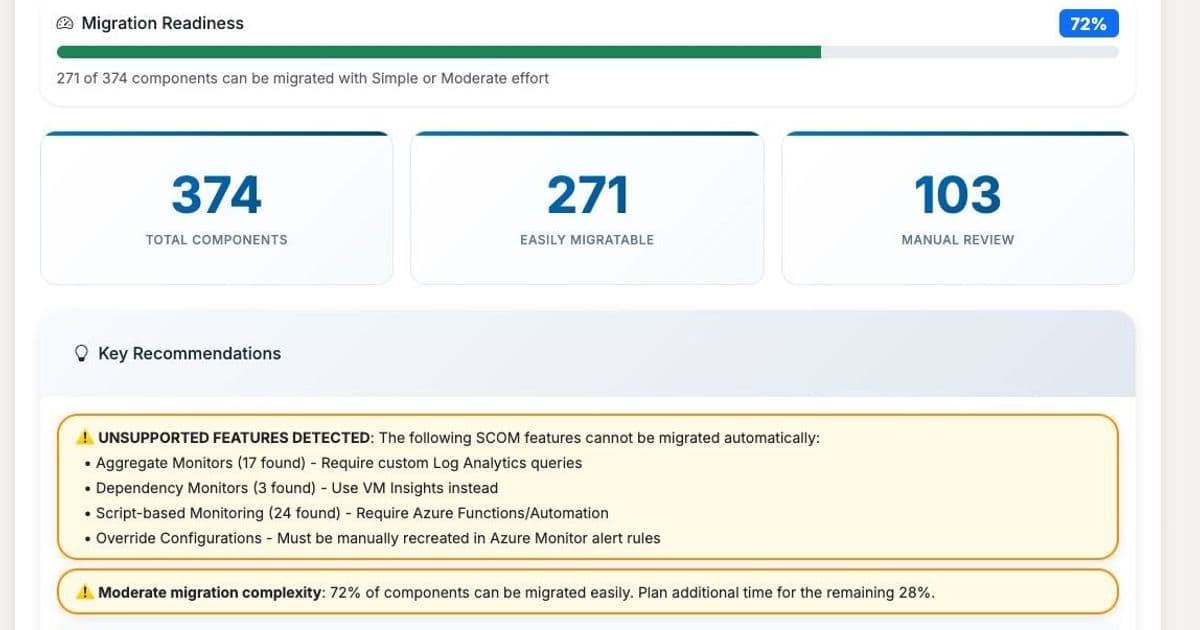
A new community tool accelerates migration from System Center Operations Manager to Azure Monitor by automating analysis of Management Packs and generating deployable ARM templates.
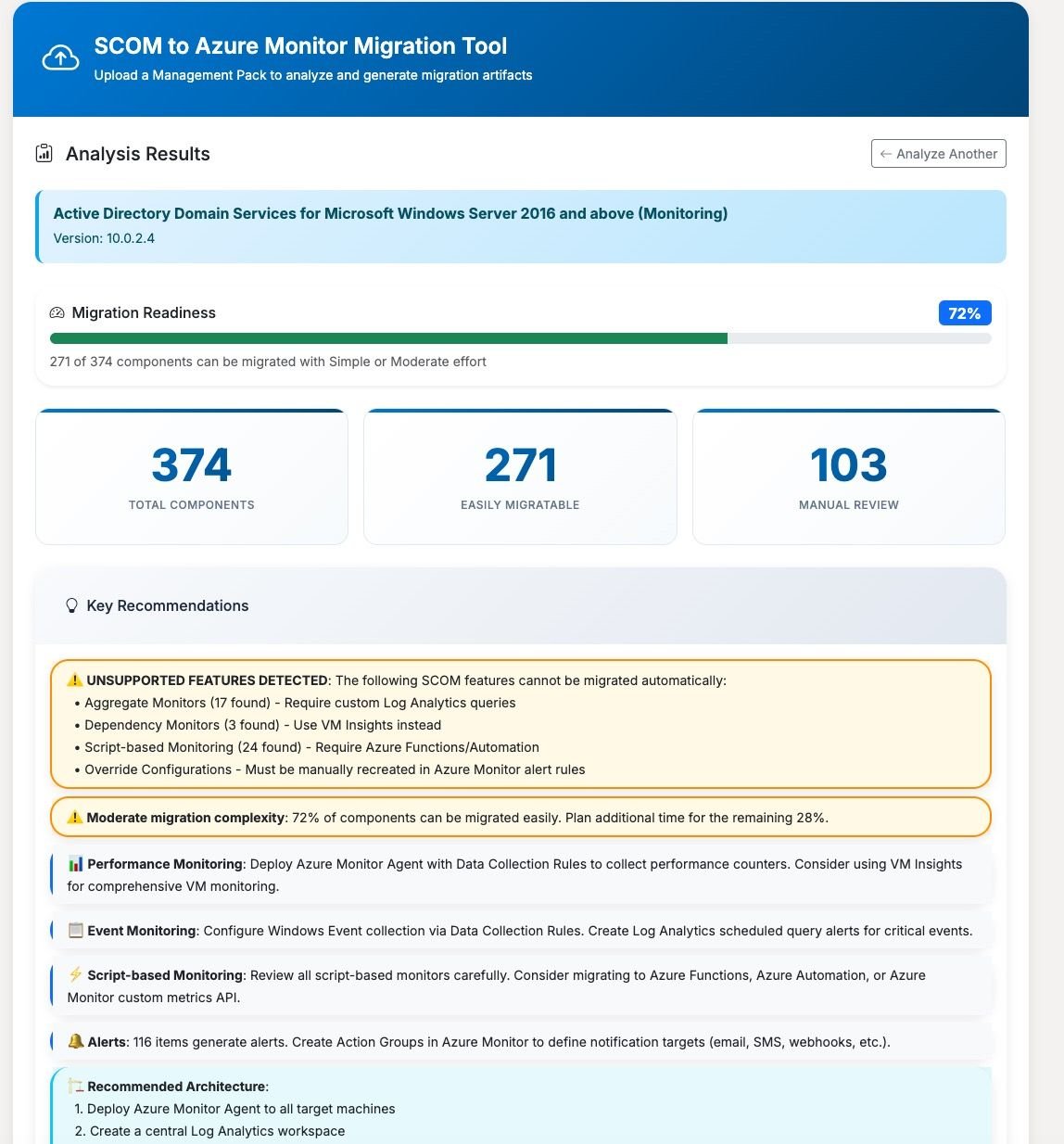
Modern monitoring strategies increasingly prioritize cloud-native platforms that scale with dynamic infrastructure. Azure Monitor has emerged as the foundation for organizations consolidating telemetry, alerts, and dashboards across hybrid environments. Yet many enterprises remain tethered to System Center Operations Manager (SCOM) due to significant investments in Management Packs—complex artifacts encoding years of monitoring logic. Migrating these custom rules, performance thresholds, and discovery mechanisms presents substantial operational challenges.
Platform Paradigm Shift: SCOM vs. Azure Monitor
SCOM operates through tightly coupled Management Packs that bundle monitoring logic with discovery rules. Azure Monitor decouples these functions: Log Analytics ingests logs, Data Collection Rules (DCRs) standardize telemetry gathering, and Kusto Query Language (KQL) enables flexible alerting. This architectural divergence complicates lift-and-shift migrations. Where SCOM monitors often rely on stateful agents and proprietary workflows, Azure Monitor favors stateless queries against centralized logs. Pricing models differ significantly too—SCOM licensing contrasts with Azure Monitor's consumption-based costs for data ingestion and retention.
Automated Migration Pipeline
A community-developed tool now bridges this gap by analyzing SCOM Management Packs and generating Azure-native artifacts. The processor ingests exported Management Pack XMLs and categorizes components:
- Auto-Migrated Elements (70-85% of typical packs):
Converts performance counters to DCRs, translates event rules to log filters, and maps monitors to scheduled query alerts - Manual Intervention Required:
Flags script-dependent probes, multi-source correlations, and SCOM-specific workflows
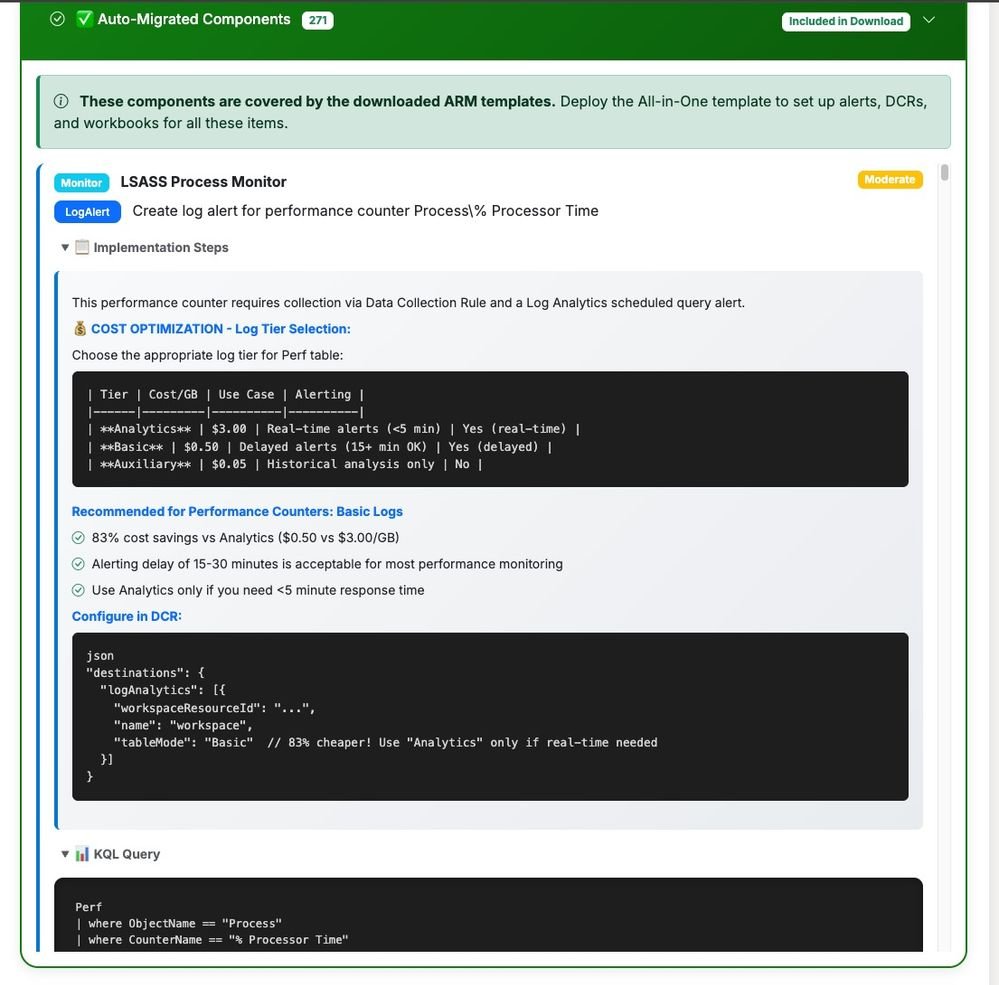 Tool output categorizing auto-migrated vs. manual components
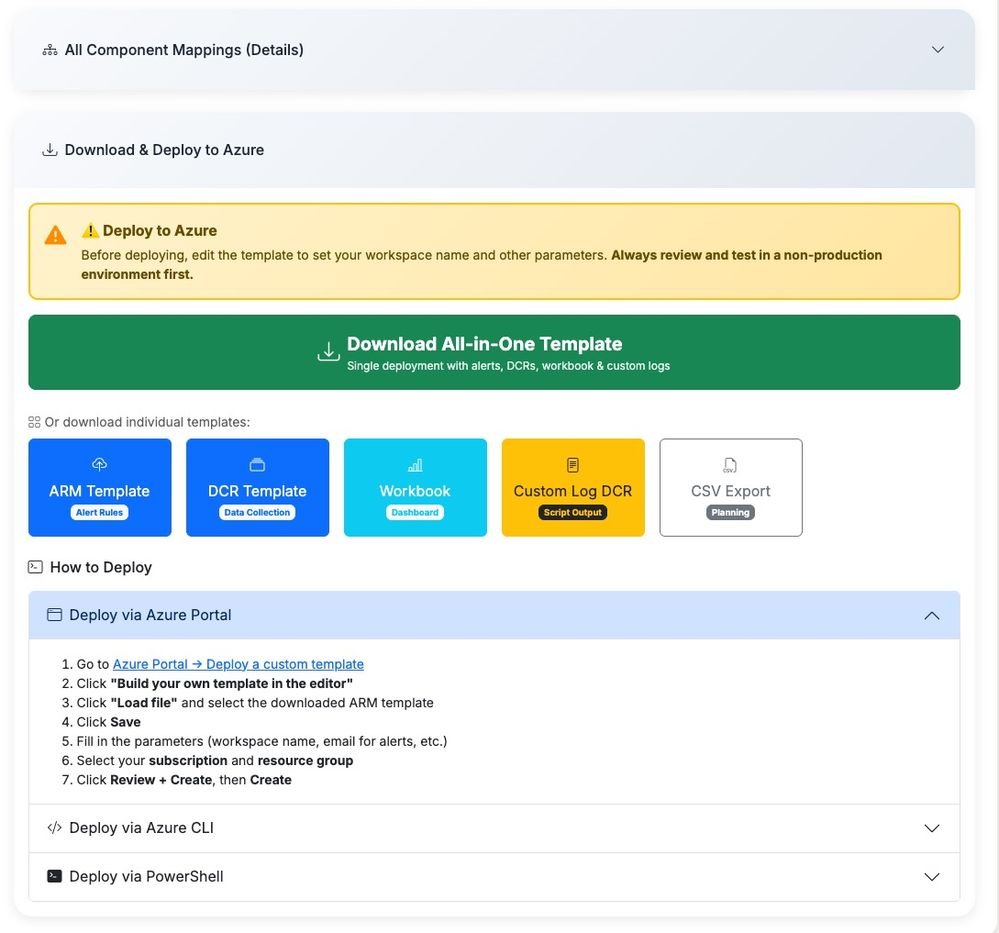
The tool outputs infrastructure-as-code bundles including:
- ARM templates deploying Log Analytics, Action Groups, and Alert Rules
- Data Collection Rules for Windows Events/performance counters
- Prebuilt KQL queries replicating original SCOM logic
- Monitoring dashboards via Azure Workbooks
For example, migrating Active Directory monitoring packs typically automates 120+ components while flagging 15-20 for review. The unified ARM template deploys all resources—including configurable workspace connections and notification settings—via single-command deployment.
Strategic Migration Impact
This automation delivers three business advantages:
- Effort Reduction: Eliminates weeks of manual ARM authoring by generating production-ready templates. Teams shift focus from syntax to validation.
- Pattern Standardization: Enforces consistent alerting (Scheduled Query Rules) and data collection (DCRs) across migrated workloads.
- Accelerated Value: Prebuilt Workbooks provide immediate operational visibility post-migration, displaying performance trends and service health.
 Generated Azure Monitor Workbook showing migrated AD monitoring
Critical considerations remain:
- Validation Mandatory: As a community tool, outputs require testing in staging environments. Complex script logic may need KQL rewrites.
- Cost Analysis: Review Log Analytics ingestion volumes against SCOM licensing costs. Use Azure Pricing Calculator for comparisons.
- Hybrid Scenarios: Agents can report simultaneously to SCOM and Azure Monitor during transition via Azure Monitor Agent.
The SCOM to Azure Monitor Migration Tool exemplifies how community innovation accelerates cloud transitions. While not replacing thorough planning, it reduces migration timelines from months to weeks—making Azure Monitor adoption feasible for entrenched SCOM estates.
Comments
Please log in or register to join the discussion