The sequel to one of mobile gaming's most downloaded titles introduces a stomp move, bubblegum shield, and three distinct game modes, launching February 26 on the App Store.
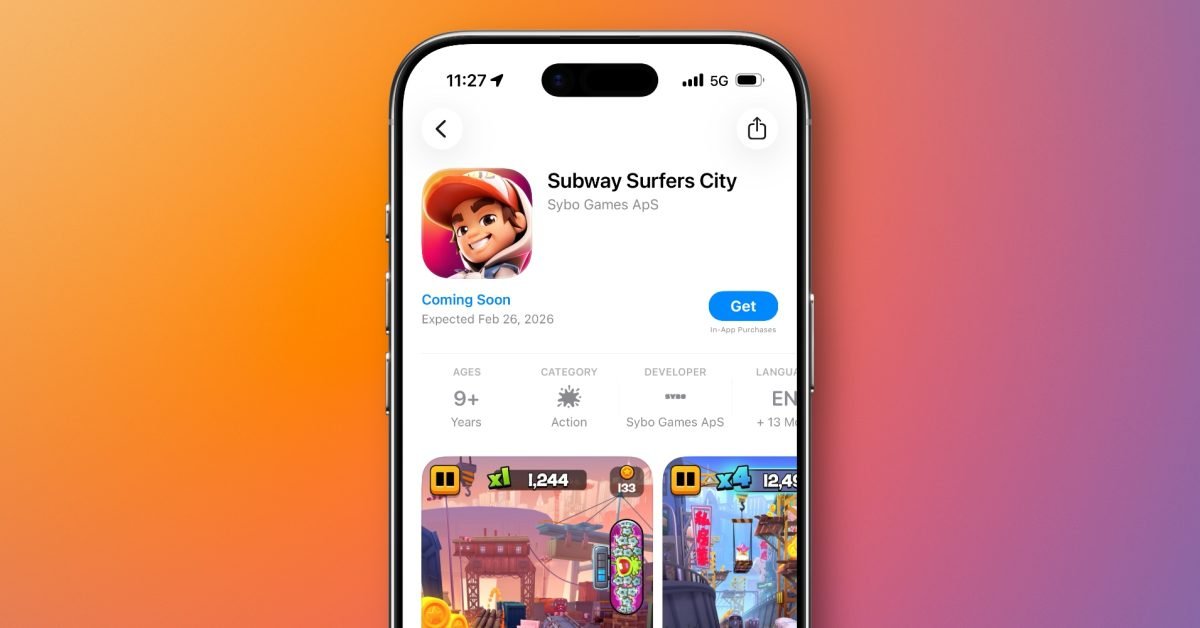
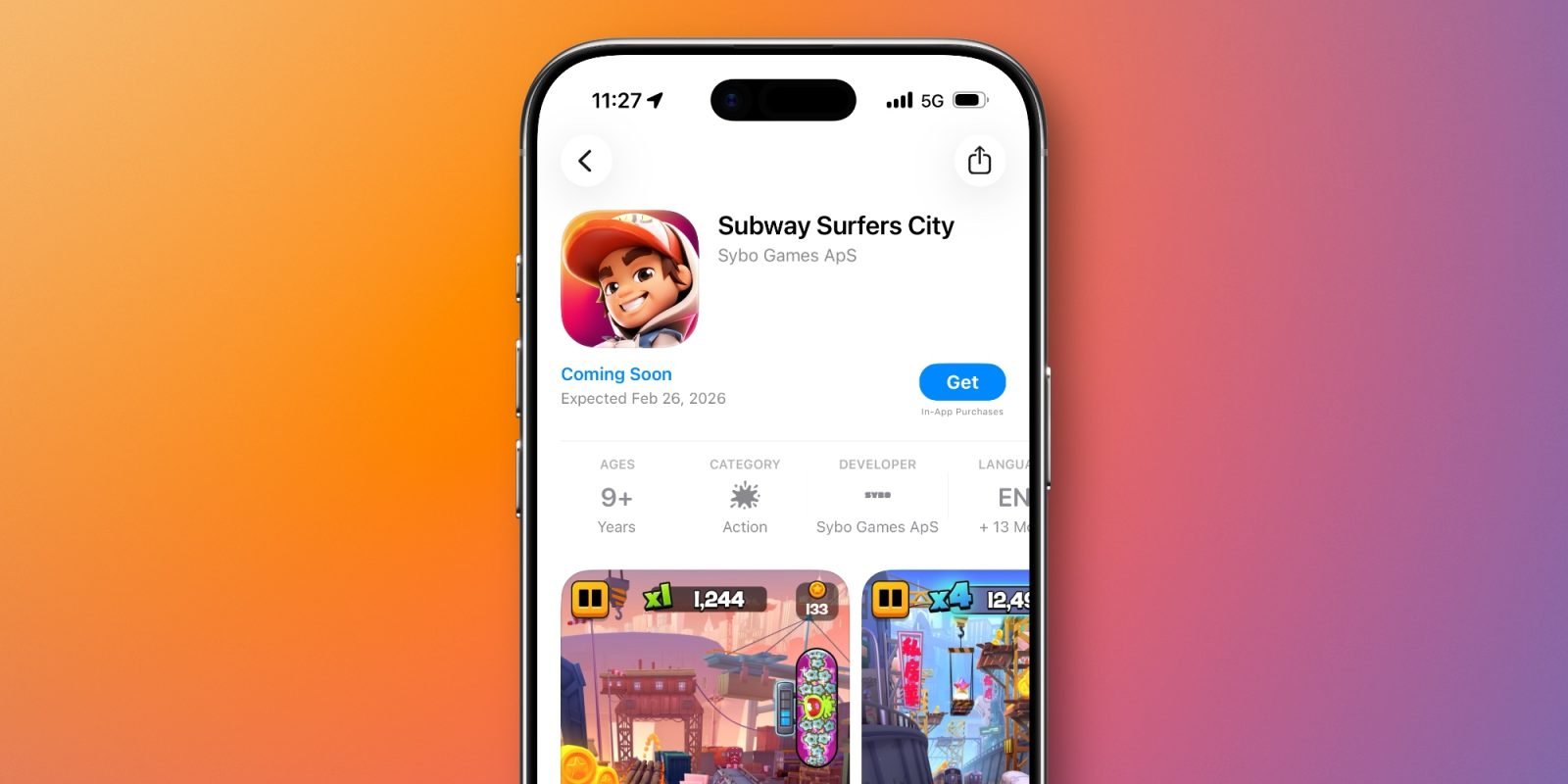
The mobile gaming landscape has a new heavyweight contender arriving next month. SYBO Games has officially announced that Subway Surfers City, the long-anticipated sequel to the franchise that has amassed over 4.5 billion lifetime downloads, will launch on the iOS App Store on February 26, 2026. For developers and players alike, this release represents more than just another endless runner—it's a case study in evolving a proven formula while introducing mechanics that could influence future mobile game design.
A Legacy Built on Scale
To understand the significance of this sequel, we need to contextualize the original's success. Subway Surfers isn't just a popular game; it's a cultural phenomenon in mobile gaming. With 100 to 150 million monthly active players, it has maintained engagement levels that most games can only dream of. This longevity provides a massive existing user base for the sequel, but it also creates a challenge: how do you evolve a game without alienating the core audience that has been running through virtual subways for over a decade?
The answer appears to be a careful balance of familiarity and innovation. The core endless runner mechanic remains intact, but SYBO is introducing what they call "never-before-seen gameplay mechanics" that fundamentally alter how players approach each run.
New Mechanics: Technical Implementation and Design Philosophy
The two headline additions—the stomp move and the bubblegum shield—represent interesting design choices that could have broader implications for touch-based control schemes in mobile games.
The Stomp Move
The stomp move appears to be a context-sensitive ability that allows players to "uncover hidden advantages." From a technical perspective, this likely involves collision detection beyond the standard jump-and-slide mechanics. In traditional endless runners, player interaction is typically limited to two axes: vertical (jumping over obstacles) and horizontal (switching lanes). The stomp adds a third dimension of interaction—downward force application.
This could be implemented through:
- Gesture recognition: A downward swipe or tap-and-hold gesture
- Contextual triggers: Automatic activation when approaching specific obstacles
- Combo systems: Linking stomps to existing jump/slide sequences
The design challenge here is ensuring the stomp doesn't feel like a gimmick. If it only reveals cosmetic elements, players will ignore it. If it provides significant advantages, it could unbalance the game's difficulty curve. The most likely implementation is a hybrid approach where stomping reveals temporary power-ups or shortcuts that reward skillful timing without making the game trivial.
The Bubblegum Shield
The "bouncy bubblegum shield" that "uplevels jump abilities" suggests a temporary buff system that modifies core movement physics. This is particularly interesting from a game physics perspective. Traditional endless runners use fixed jump arcs and gravity constants. A shield that modifies jump abilities implies dynamic physics adjustment—potentially increasing jump height, reducing gravity, or adding bounce properties to the player character.
For developers studying this implementation, the technical considerations include:
- State management: Tracking shield duration and effect magnitude
- Physics integration: Modifying Unity's (or whatever engine they're using) rigidbody properties in real-time
- Visual feedback: Ensuring players understand the modified physics through animation and UI cues
Three New Game Modes: Expanding the Gameplay Loop
Perhaps more significant than individual mechanics are the three distinct game modes, which fundamentally change how players engage with the game. This represents a shift from a single-mode experience to a multi-mode suite, similar to how games like Rocket League or Valorant offer different ways to play the same core mechanics.
Classic Endless Mode
This is the traditional Subway Surfers experience—fast-paced, score-chasing, procedurally generated runs. The key addition here is "new paths" discovery, suggesting that the sequel might feature more dynamic level generation or branching pathways within runs. For players who've mastered the original, this adds replayability by making each run potentially unique in terms of layout, not just obstacle placement.
From a technical standpoint, procedural generation in endless runners is notoriously difficult to balance. Too much randomness can make the game feel unfair; too little makes it predictable. The mention of "discovering new paths" suggests SYBO might be using seeded generation or modular level chunks that combine in novel ways, giving experienced players new challenges even after thousands of runs.
City Tour Mode
This finite game mode represents a significant departure from the infinite loop concept. "Progressing through levels with distinct goals" implies a structured campaign with objectives beyond just survival and score. The mention of "exploring districts to find hidden stars and complete missions" suggests a metroidvania-lite approach within an endless runner framework.
This is technically ambitious. It requires:
- Level design tools that support both linear progression and open exploration
- Objective tracking systems that can handle multiple mission types simultaneously
- Save state management for progress across finite levels
For mobile developers, this mode demonstrates how to add depth without increasing complexity. By offering a structured alternative to the endless mode, SYBO caters to players who prefer clear goals and completion metrics over pure score-chasing.
Events Mode
The rotation of "finite runs and trials" suggests a live-service approach to content delivery. This is where modern mobile gaming has evolved—games as platforms rather than static products. Events allow developers to:
- Test new mechanics in controlled environments
- Create urgency through limited-time challenges
- Gather player data on specific scenarios
From a development perspective, this requires robust backend infrastructure for content rotation, player tracking, and reward distribution. It also creates a continuous development cycle where new content must be created regularly to maintain engagement.
Cross-Platform Considerations and Apple Arcade
The announcement mentions an "exclusive version called Subway Surfers+ for subscribers to Apple Arcade or Apple One." This is worth examining for developers considering platform-specific versions.
Apple Arcade represents a different monetization model—subscription-based, ad-free, premium experiences. For a game like Subway Surfers, which traditionally relies on in-app purchases and ads, creating an Arcade version requires:
- Removing all monetization systems (ads, IAPs, currency)
- Adjusting progression systems to work without premium shortcuts
- Ensuring feature parity while potentially adding exclusive content
This split development path creates interesting challenges. The core gameplay must remain identical across versions to maintain competitive integrity, but the progression and reward structures need complete rethinking. For developers studying this, it's a case study in how to adapt a free-to-play game to a premium subscription model without breaking the core experience.
Technical Requirements and Development Implications
While specific technical details aren't in the announcement, we can infer several requirements based on the described features:
Performance Considerations
With three distinct game modes, each potentially requiring different rendering and logic pipelines, the game needs efficient resource management. Mobile devices have limited RAM and CPU, so SYBO likely implemented:
- Object pooling for obstacles and collectibles
- Dynamic loading between modes to keep memory footprint low
- Optimized shaders for the visual effects (bubblegum shield, stomp effects)
Control Scheme Adaptation
The new mechanics require intuitive touch controls. Traditional endless runners use simple taps and swipes, but adding stomp and shield activation needs careful UI/UX design. The likely approach is:
- Contextual touch zones: Different screen areas trigger different actions
- Gesture combinations: Swipe directions combined with taps
- Accessibility options: Alternative control schemes for players with motor impairments
Backend Infrastructure
For the events mode and potential cross-platform features, SYBO needs robust backend services:
- Player data synchronization across devices
- Event scheduling and rotation systems
- Anti-cheat mechanisms for competitive elements
Broader Implications for Mobile Game Development
Subway Surfers City illustrates several trends that mobile developers should watch:
Mechanical Evolution: Successful franchises are moving beyond simple iterations to meaningful mechanic additions that change how players interact with the game.
Mode Diversification: Single-mode games are becoming less common. Players expect variety in how they engage with the same core mechanics.
Platform-Specific Versions: The Apple Arcade edition shows how successful developers are leveraging platform-specific opportunities while maintaining core gameplay integrity.
Live-Service Elements: Even single-player games are adopting live-service models with events and rotating content to maintain long-term engagement.
What Developers Should Watch For
When Subway Surfers City launches, pay attention to:
- How the new mechanics are tutorialized for existing players
- The balance between modes—will one become dominant?
- Performance across device generations—does it run smoothly on older iPhones?
- Monetization strategy—how does the free version differ from the Arcade version?
- Community reception to the new mechanics versus the classic experience
Conclusion
Subway Surfers City represents more than just another sequel. It's a laboratory for testing how established mobile game franchises can evolve without losing their identity. The combination of new mechanics, multiple game modes, and platform-specific versions creates a complex development challenge that SYBO has been working on for years.
For players, February 26 offers a chance to experience a fresh take on a familiar formula. For developers, it provides a case study in franchise evolution, mechanical innovation, and platform strategy. The success or failure of these new features will likely influence how other established mobile games approach their own sequels and updates.
The game launches February 26, 2026, on the iOS App Store. Pre-orders are available now. For those interested in the Apple Arcade version, it will be included in the subscription service at launch.
Subway Surfers is available on the App Store. The sequel, Subway Surfers City, can be pre-saved here. For more information about SYBO Games and their development approach, visit their official website.
Comments
Please log in or register to join the discussion