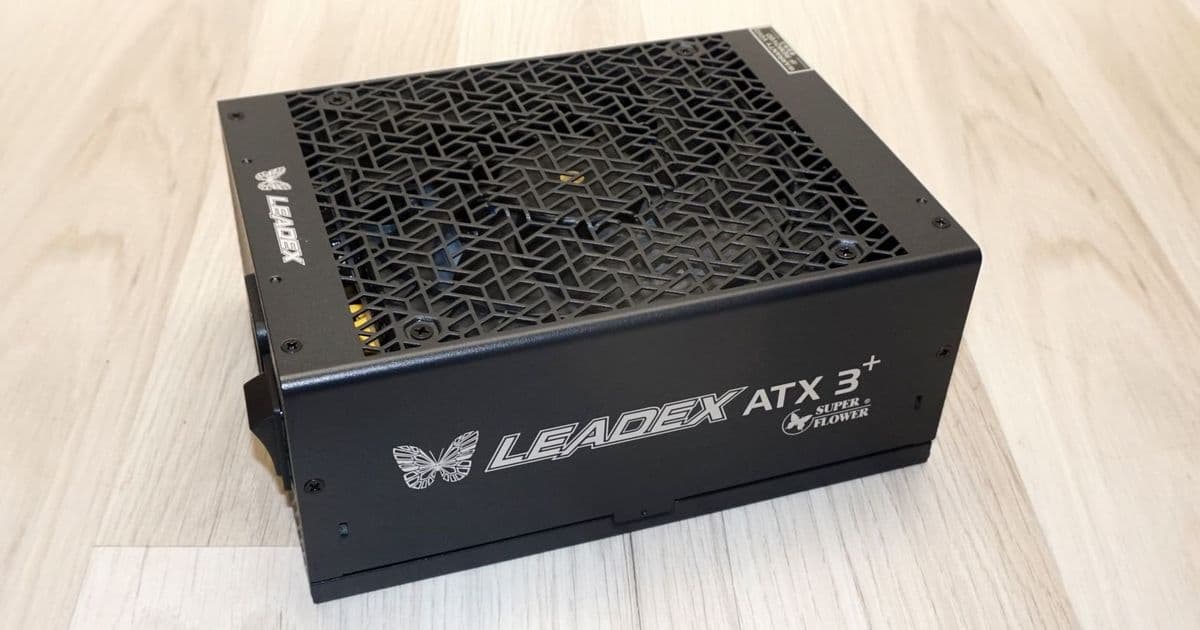
The Leadex 2800W is the most powerful retail PSU on the market, delivering 94.5 % efficiency at 230 V input, reference‑class voltage regulation, and a component set that rivals server‑grade designs. Its size, 200‑240 V input requirement, and loud fan at full load limit it to extreme workstations and multi‑GPU rigs.
Super Flower Leadex 2800W ATX 3.1 Review – Unmatched Power, Efficiency, and Build Quality
Announcement
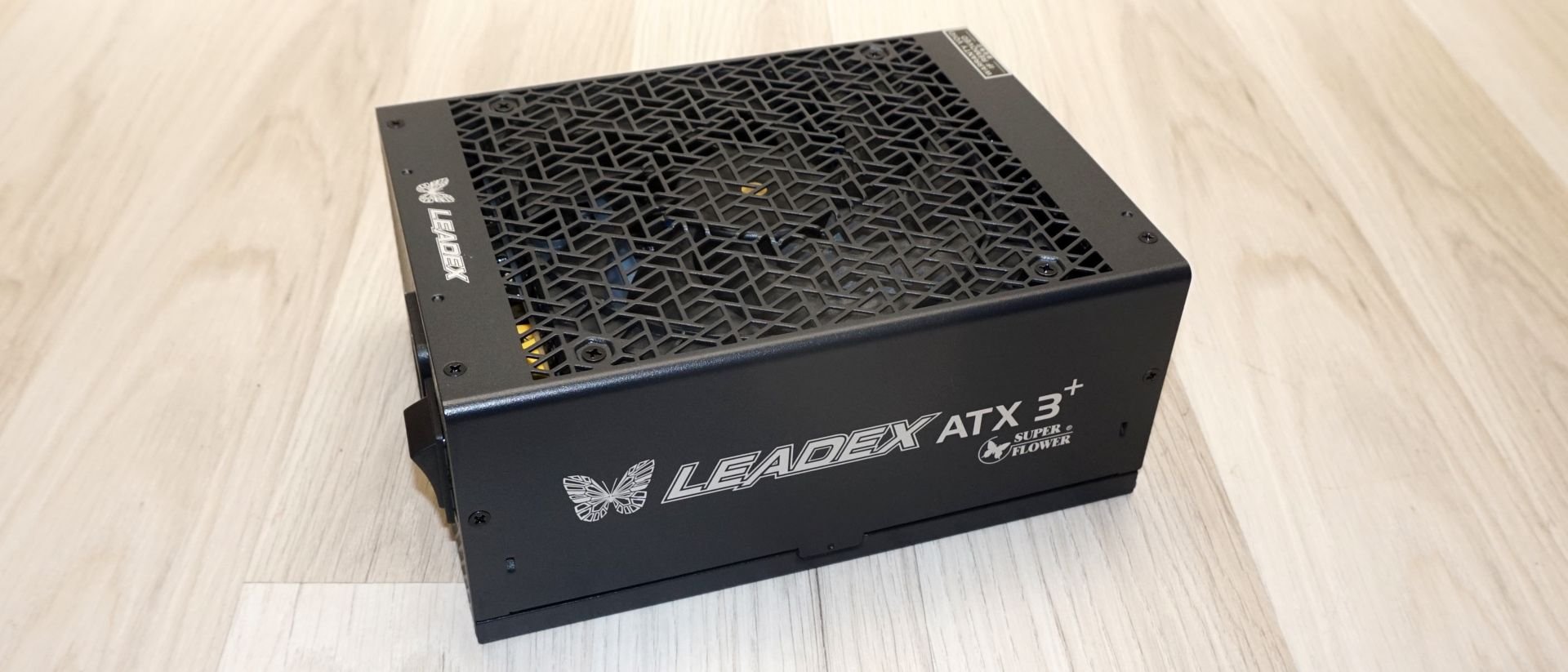
Super Flower has launched the Leadex 2800W, an ATX 3.1‑compliant power supply that pushes the retail envelope to 2.8 kW continuous output. Certified by Cybenetics at the Titanium level, the unit targets extreme workstations, AI training rigs, and multi‑GPU gaming platforms that exceed the capacity of conventional 1200‑1500 W PSUs. At an MSRP of $1,000 (street price around $800) it sits in a niche where raw wattage, clean power, and engineering pedigree outweigh cost considerations.
Technical specifications
| Specification | Value |
|---|---|
| Maximum output | 2800 W (continuous) |
| Input voltage | 200‑240 VAC, 50‑60 Hz |
| Efficiency (230 V) | 94.5 % (typical) |
| Certification | Cybenetics Titanium |
| Form factor | ATX 3.1, 200 mm length |
| Rail distribution | 12 V @ 233.3 A, 3.3 V @ 20 A, 5 V @ 20 A, 5 Vsb @ 2.5 A, –12 V @ 0.5 A |
| Connector count | 4 × 12V‑2×6, 6 × 6+2 PCIe, 1 × EPS‑12V, 1 × EPS‑8‑pin, 6 × SATA, 16 × Molex |
| Fan | 140 mm fluid‑dynamic bearing, 3000 RPM max, no zero‑RPM mode |
| Capacitors | Rubycon & Nippon Chemi‑Con electrolytic, Nippon Chemi‑Con solid‑state |
| MOSFETs | Infineon 60R070F7 (primary) and 014N04LS (secondary) |
| Price | $800 (street) |
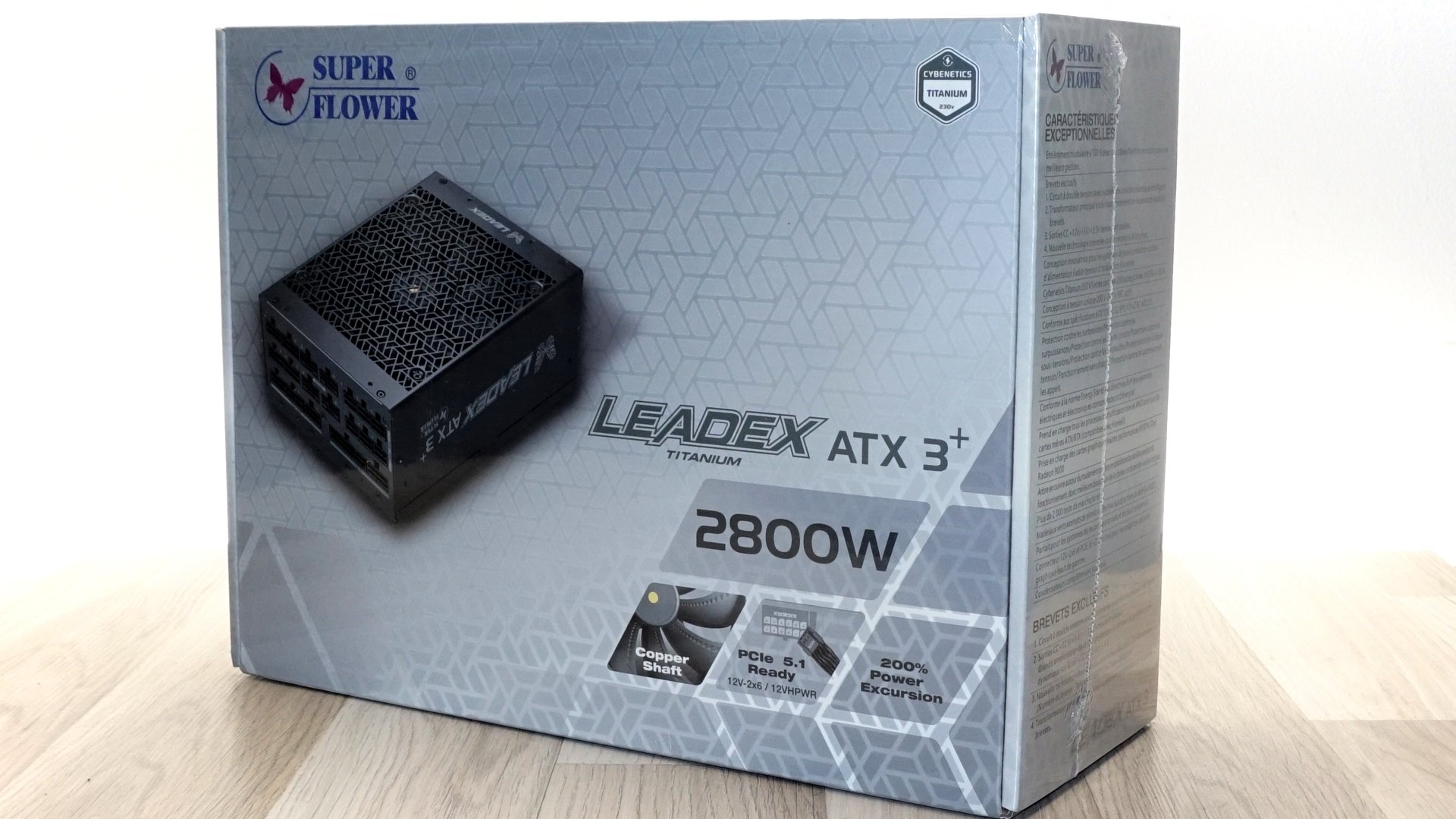
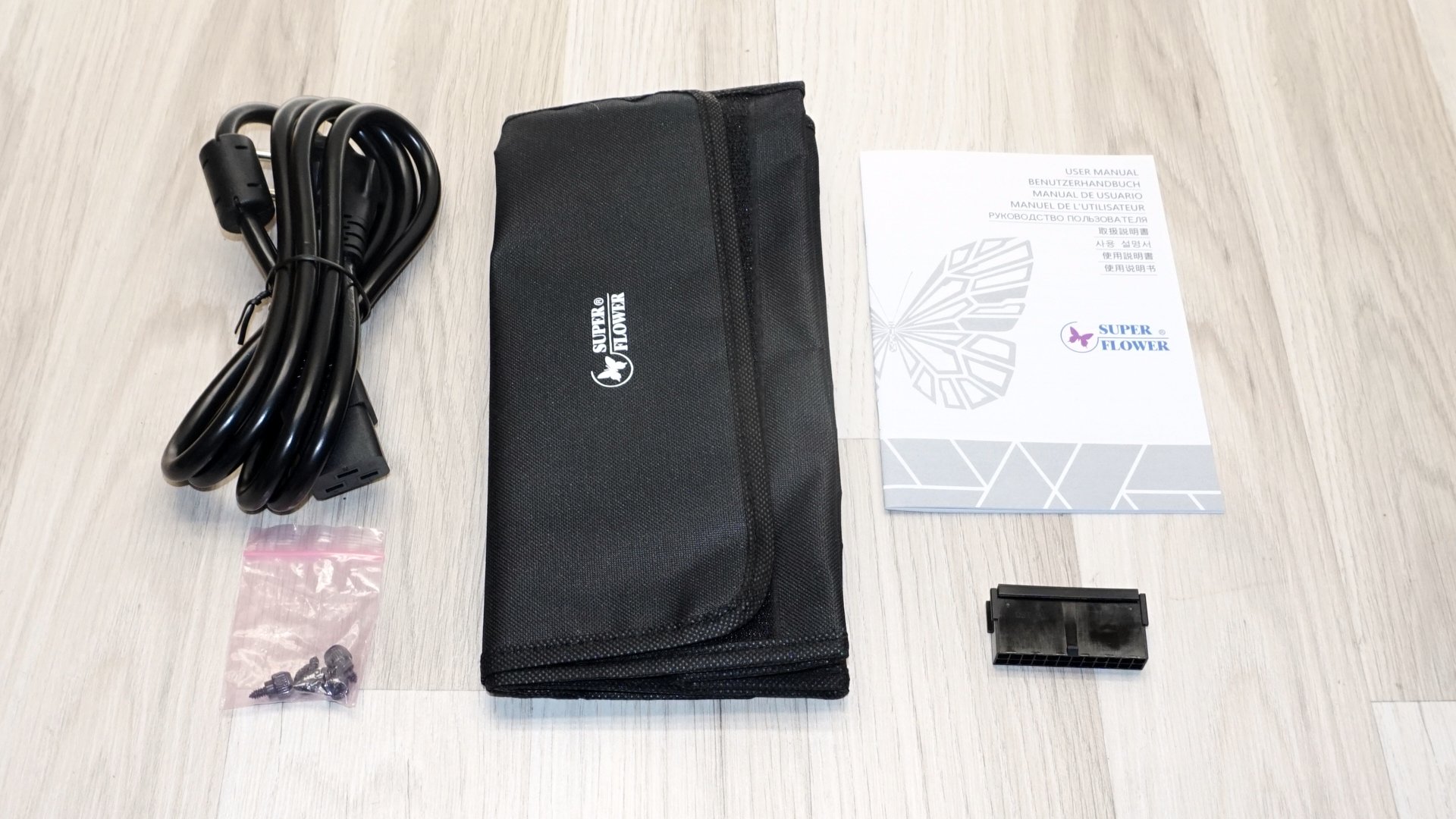
The unit ships in a sturdy box with a fabric pouch, foam end caps, and a minimal accessory set that includes a NEMA C20 power cord, mounting thumbscrews, a cable‑storage bag, and a jump‑start testing adapter.
Design and component choices
- Topology – The Leadex uses a bridgeless APFC stage followed by an LLC resonant converter. This architecture reduces switching losses and enables the 94 %‑plus efficiency across the 20‑100 % load range. The resonant converter also keeps the MOSFETs in a zero‑voltage‑switching condition, which is why the unit can sustain high output without excessive heat.
- Power devices – Eight Infineon 60R070F7 MOSFETs handle the primary bridge, while sixteen 014N04LS devices provide dual‑synchronous‑rectification on the 12 V rail. The choice of Infineon parts reflects a focus on low on‑resistance and high thermal tolerance, essential for a 2800 W design.
- Filtering – Input filtering comprises eight Y‑caps, four X‑caps, and two inductors, delivering a clean AC feed to the rectifier. Down‑stream, the 12 V rail uses sixteen low‑ESR solid‑state caps, and the 3.3 V/5 V rails are powered by separate DC‑DC converters on dedicated daughterboards, ensuring tight regulation regardless of 12 V load.
- Cooling – A single 140 mm fluid‑dynamic bearing fan runs at all times. Below ~1000 W the fan stays under 1000 RPM and is effectively silent; above 1500 W the speed climbs to 3000 RPM, producing noticeable noise. The lack of a zero‑RPM mode is a trade‑off for consistent airflow in a chassis with limited heatsink surface.
Test methodology
Testing was performed with a calibrated electronic load capable of drawing 2700 W, a Rigol DS5042M oscilloscope, an Extech power analyzer, and a custom hot‑box to simulate 45 °C ambient temperature. All measurements were taken at 230 VAC input unless otherwise noted.
Cold‑test results (25 °C ambient)
- Efficiency – 94.5 % at 50 % load, 93.8 % at 100 % load. The curve stays within ±0.5 % of the peak across the 20‑80 % range.
- Voltage regulation – 12 V rail stayed within ±0.8 % from 20 % to 100 % load; 5 V within ±0.5 %; 3.3 V within ±0.4 %.
- Ripple – 12 V ripple measured 28 mV peak‑to‑peak, 5 V at 22 mV, 3.3 V at 20 mV, comfortably below ATX limits.
- Acoustics – Fan noise <30 dBA up to 1000 W, rising to ~55 dBA at full load.
Hot‑test results (45 °C ambient)
- Efficiency – 93.8 % at 50 % load, a 0.7 % drop from cold conditions, which is typical for high‑power units.
- Thermal behavior – Internal temperatures peaked at 78 °C on the primary MOSFETs, well under the 150 °C protection threshold.
- Acoustics – Fan reached maximum speed at ~80 % load; noise level measured 60 dBA at 1500 W, confirming the expected loudness at extreme output.
Market implications
The Leadex 2800W fills a gap that has existed since the introduction of 1500 W server PSUs. Its ATX 3.1 compliance means it can power the latest PCIe 5.0 GPUs, which can draw up to 600 W each under boost. A dual‑GPU workstation with two RTX 4090‑class cards, a high‑end CPU, and multiple NVMe drives can approach 2000 W, a regime where most consumer PSUs would struggle to maintain efficiency or voltage stability.
Because the unit requires a 200‑240 V feed, it is only practical for markets with 240 V mains (Europe, Asia) or for US users willing to install a dedicated NEMA 6‑15/6‑20 circuit. The 200 mm length also forces the use of full‑tower or workstation cases that provide clearance for the rear fan and the extensive connector array.
From a supply‑chain perspective, the Leadex demonstrates Super Flower’s ability to source premium Japanese capacitors, high‑performance Infineon MOSFETs, and custom‑designed daughterboards in low volumes. The price point reflects the limited production run and the lack of economies of scale that larger OEMs enjoy. As AI workloads and multi‑GPU rendering become more common in boutique workstations, demand for such ultra‑high‑power units could rise, prompting other manufacturers to explore similar power levels.
Bottom line
The Super Flower Leadex 2800W is a purpose‑built, reference‑class PSU that delivers 94 %+ efficiency, sub‑1 % voltage deviation, and a component roster that rivals server‑grade hardware. Its size, 200‑240 V input requirement, and audible fan at full load keep it firmly in the extreme‑build niche, but for anyone needing a clean, stable 2.8 kW rail, it is currently the only retail option that meets those demands.
Pros – Outstanding efficiency, premium Japanese capacitors, massive connector set, rock‑solid voltage regulation. Cons – Requires 200‑240 V mains, loud fan above 1500 W, very high price, no zero‑RPM mode.
For most enthusiasts, the broader Leadex lineup (1200 W, 1500 W, 2000 W) offers a more practical power‑to‑size ratio. For the handful of builds that truly need 2800 W, the Leadex stands alone.
Related resources
- Cybenetics Titanium certification details
- ATX 3.1 specification (PDF)
- Super Flower official product page
Comments
Please log in or register to join the discussion