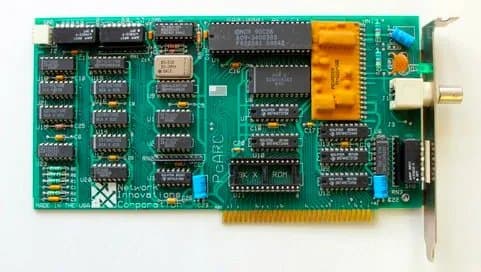
The Linux kernel maintainers will remove ARCnet support for legacy ISA and PCMCIA adapters in the upcoming 7.2 release, trimming about 5 KB of code and reducing maintenance load while keeping core ARCnet drivers for embedded and industrial use.
Linux to Drop ARCnet ISA and PCMCIA Drivers in Kernel 7.2
The mainline kernel tree is set to lose the last remnants of ARCnet support for ISA and PCMCIA adapters. A patch series submitted to net‑next this week removes roughly 5.2 k lines of driver code, documentation, and module‑parameter handling that have been dormant for years. The change is slated for inclusion in the Linux 7.2 development cycle, which is expected to merge in early Q3 2026.
Technical background
ARCnet (Attached Resource Computer NETwork) was introduced in the early 1980s as a low‑cost, token‑passing alternative to Ethernet. It saw extensive use in industrial control, building automation, and early PC networking. The Linux kernel has carried three families of ARCnet drivers since the 2.0 series:
| Driver family | Bus type | Files removed in 7.2 | Approx. lines |
|---|---|---|---|
arcnet (core) |
PCI, USB, etc. | none – retained | ~12 k |
arcnet_isa |
ISA | drivers/net/arcnet/arcnet_isa.c and related Makefile entries |
2.8 k |
arcnet_pcmcia |
PCMCIA | drivers/net/arcnet/arcnet_pcmcia.c and docs |
2.4 k |
The core ARCnet stack (net/arcnet/) stays intact because manufacturers still ship PCI‑based ARCnet cards for niche automation gear. What is being excised are the two legacy bus adapters that have not seen a new hardware revision since the early 2000s.
Patch details
Ethan Nelson‑Moore, a long‑time kernel maintainer, summarized the rationale in the patch description:
"While ARCnet is still used in industrial environments, and cards are still manufactured, it is unlikely anyone is still using it with ISA and PCMCIA cards. Reduce future maintenance burden by removing all ISA and PCMCIA ARCnet drivers and documentation related to them."
The commit also updates the remaining ARCnet documentation (Documentation/networking/arcnet.rst) to reflect current module‑loading practices, replaces an obsolete reference to /etc/rc.inet1 with the modern ifconfig command, and clarifies the parameter list for the arcnet core module.
The full patch series can be reviewed on the kernel mailing list archive: https://lore.kernel.org/netdev/20260525-arcnet-drop.patch.
Market and supply‑chain implications
Removing ISA and PCMCIA drivers does not affect the commercial availability of ARCnet hardware; the impact is limited to software maintenance. However, the decision signals a broader trend in the kernel community:
- Code‑size reduction – The removal of legacy drivers contributes to the 138 k line reduction achieved in the 7.1 release, which included the stripping of ISDN, ham‑radio, and other obsolete networking stacks.
- Maintenance focus – By cutting the ISA/PCMCIA code path, developers can allocate testing resources to the actively shipped PCI and USB ARCnet drivers, which still see modest volume in embedded automation OEMs.
- Supply‑chain clarity – System integrators building Linux‑based controllers for factories can now rely on a kernel that no longer contains dead‑code for hardware that is no longer produced. This reduces the risk of kernel configuration errors when building custom images for devices that only need the PCI ARCnet driver.
For organizations that still depend on ISA or PCMCIA ARCnet cards—primarily legacy plant floor equipment—the practical options are:
- Stay on an LTS branch such as 6.6 or 6.8, which still contains the drivers.
- Back‑port the drivers from the 6.x tree into a custom kernel.
- Migrate to a supported bus (PCIe or USB) by replacing the old adapters; many vendors offer drop‑in replacements that present the same MAC address format.
Outlook
The kernel’s pruning of obsolete bus drivers aligns with the ongoing effort to keep the source tree lean while preserving functionality that matters to current users. ARCnet’s core remains alive for the niche markets that still rely on its deterministic latency, but the ISA and PCMCIA front ends are finally being retired.
Stakeholders should audit their hardware inventories before the 7.2 release candidate appears. Those with legacy ISA/PCMCIA ARCnet cards will need to either lock to an older LTS kernel or plan a hardware refresh. The broader Linux community can expect similar clean‑ups in the next cycle, targeting other legacy bus families such as EISA and older PCI‑to‑PCI bridges.
For further reading, see the official Linux kernel release notes for 7.2 and the ARCnet driver documentation linked above.
Comments
Please log in or register to join the discussion