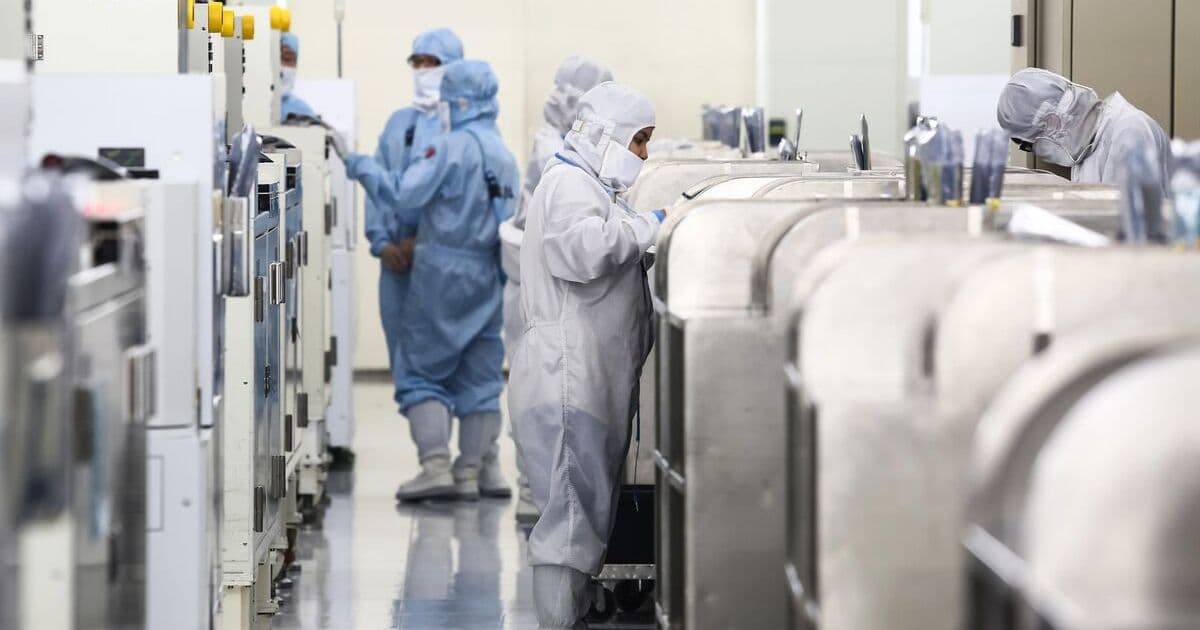
Taiwan's semiconductor industry confronts unprecedented supply chain vulnerabilities as geopolitical tensions in the Middle East threaten access to critical materials like LNG, helium, and sulfur, potentially disrupting global chip production.
Taiwan's semiconductor industry, the backbone of global technology manufacturing, faces an emerging crisis as geopolitical tensions in the Middle East create critical supply chain vulnerabilities. According to a recent Bloomberg report, the island nation relies on the Middle East for 37% of its liquefied natural gas (LNG) and significant portions of essential materials like helium and sulfur—resources that are now at risk amid escalating conflict involving Iran.
This supply chain exposure represents a fundamental weakness in the global semiconductor ecosystem. Taiwan produces approximately 90% of the world's most advanced chips, making it indispensable to everything from smartphones to artificial intelligence systems. The concentration of such critical manufacturing capacity in a single geographic location, combined with dependencies on politically unstable regions for essential inputs, creates a perfect storm of vulnerability.
The Material Dependencies That Could Cripple Chip Production
The specific materials at risk highlight the complexity of modern semiconductor manufacturing. Helium, used in cooling systems and as a carrier gas in lithography processes, has few substitutes and limited global sources. Sulfur is crucial for sulfuric acid, which is used in wafer cleaning and other manufacturing steps. LNG provides the energy needed to power the massive fabrication facilities that operate 24/7.
These aren't minor supply chain inconveniences—they represent potential showstoppers for chip production. Unlike software or even many hardware components, semiconductor manufacturing requires precise materials in exact specifications. A disruption in helium supply, for instance, could force fabrication plants to shut down entirely, as alternative cooling methods may not provide the necessary precision or efficiency.
The Iran Conflict's Ripple Effects
The current Iran war creates multiple pathways for supply disruption. Direct military action could target shipping routes through the Strait of Hormuz, a critical passage for energy and material transport. Even without direct attacks, the conflict creates economic uncertainty that can disrupt trade relationships and pricing structures. Countries may impose sanctions or export restrictions that further complicate the already fragile supply chains.
What makes this particularly concerning is that Taiwan's chip manufacturers have limited alternatives for these Middle Eastern supplies. While the country has been working to diversify its energy sources and material suppliers, such transitions take years and require massive infrastructure investments. The current crisis could hit before these mitigation strategies are in place.
Global Technology at Risk
The implications extend far beyond Taiwan's borders. A significant disruption to Taiwanese chip production would cascade through global supply chains, affecting everything from automotive manufacturing to consumer electronics to cloud computing infrastructure. Companies that have built their business models around just-in-time semiconductor delivery would face immediate production halts.
This vulnerability has been building for years as the semiconductor industry consolidated in Taiwan due to its expertise, infrastructure, and cost advantages. However, the current geopolitical moment reveals the hidden costs of this concentration. The industry's efficiency gains have come at the expense of resilience, creating a system that works beautifully until it doesn't.
What This Means for the Future
The crisis highlights the urgent need for supply chain diversification in the semiconductor industry. This could mean encouraging chip manufacturing in other regions, developing alternative materials and processes that reduce dependency on geopolitically sensitive resources, or building strategic reserves of critical materials.
Some companies are already taking steps in this direction. The CHIPS Act in the United States aims to boost domestic semiconductor manufacturing, though building new fabrication capacity takes years and billions of dollars. Similarly, the European Union has announced initiatives to strengthen its semiconductor capabilities.
However, these efforts may come too late to address the immediate risks posed by the current Middle East tensions. The semiconductor industry finds itself in a classic bind: the very concentration that made it efficient and cost-effective has also made it fragile in the face of geopolitical shocks.
The situation serves as a stark reminder that in our interconnected global economy, vulnerabilities in one region can quickly become vulnerabilities everywhere. As the Iran conflict continues to unfold, the world's technology sector will be watching nervously to see whether Taiwan's critical supply chains can weather the storm—or whether we're about to experience a semiconductor shortage that makes previous disruptions look minor by comparison.
For now, the best hope may be diplomatic resolution of the Middle East tensions before they trigger a crisis that could set back global technology development by years. But as history has shown, relying on hope in matters of critical supply chains is rarely a sound strategy.
Comments
Please log in or register to join the discussion