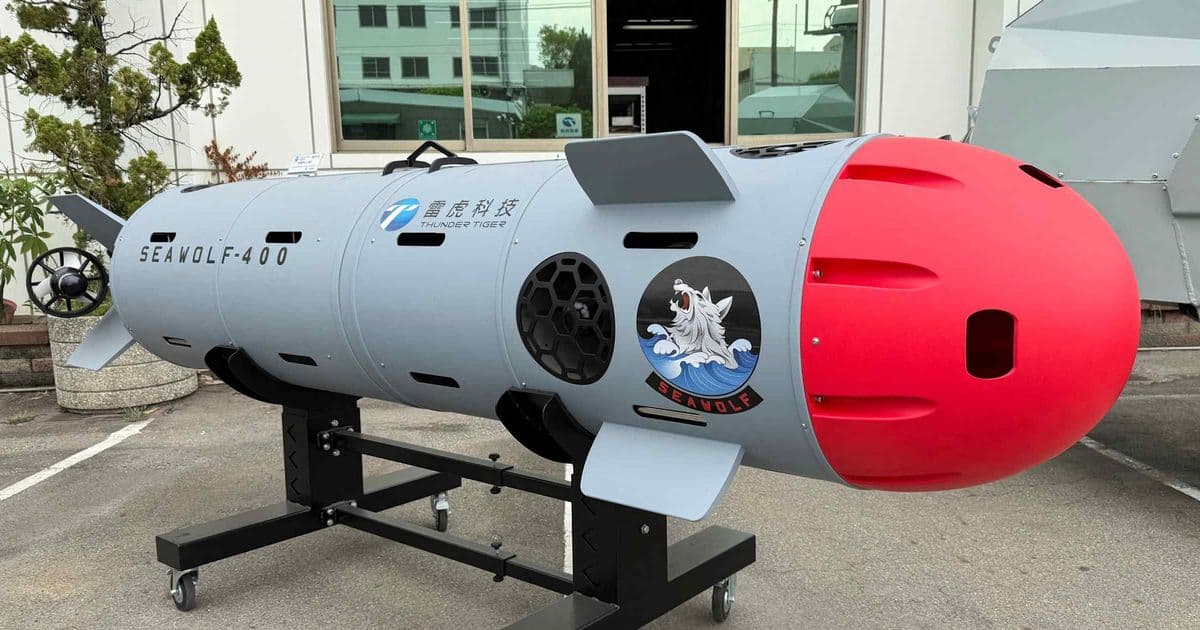
Taiwan's opposition-led legislature stripped domestic drone production from the government's flagship defense budget, leaving Taichung manufacturers that had built capacity around state demand without their anchor customer. The freeze arrives just as Taiwanese drone exports to Europe surged 40-fold and US buyers scrambled to replace Chinese components, raising the stakes for an industry caught between geopolitical tailwinds and a domestic procurement vacuum.
Taiwan's emerging drone sector has lost its most important customer before it ever placed the order. The island's opposition-led legislature has removed domestic production programs from the government's flagship defense budget, stalling procurement that manufacturers in Taichung had treated as the foundation for capital investment, hiring, and capacity expansion.
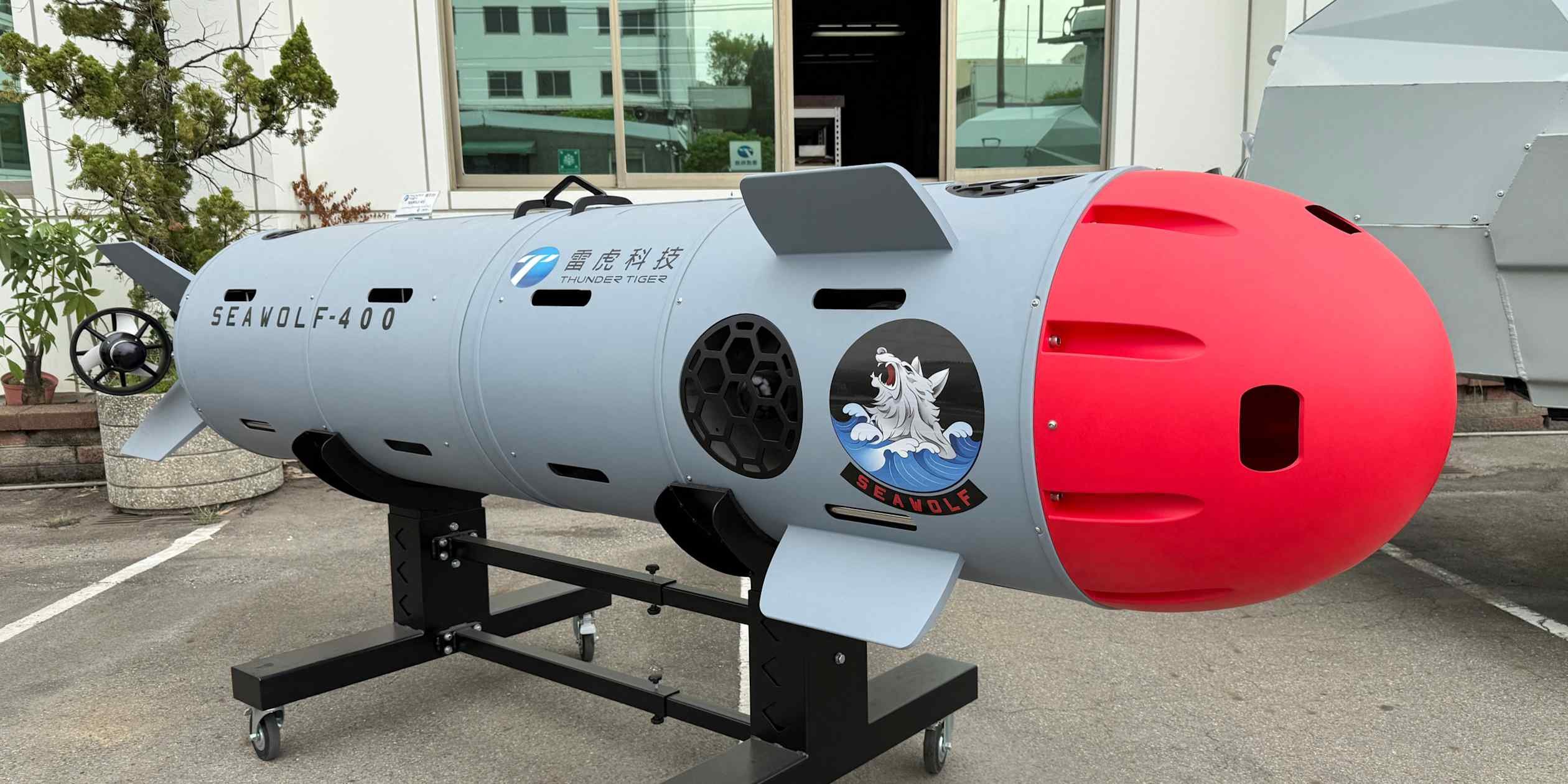
The cut lands on an industry that was building for scale. Companies clustered around Taichung, including firms like Thunder Tiger, had read government signals as a commitment to a sustained domestic order book. That book was meant to do what early-stage defense manufacturing always needs: convert political intent into predictable revenue, the kind that justifies tooling up factories and qualifying supply chains. Without confirmed state demand, those investment cases weaken considerably.
The financial logic that just broke
Defense manufacturing runs on volume commitments. Drone production in particular carries high fixed costs at the outset, certification, autonomous navigation software, secure communications hardware, and supply chains deliberately scrubbed of Chinese components. Those costs amortize only across guaranteed units. A domestic procurement program functions as the baseload that lets a manufacturer price competitively for export and reinvest margins into the next generation of systems.
Remove that baseload and the math inverts. Firms face the same fixed costs spread across a smaller, less certain order count. Smaller producers, the ones most dependent on a single anchor buyer, are the most exposed. Several had been counting on government support specifically to bridge the gap between prototype demonstrations and serial production.
The timing sharpens the damage. Taiwanese drone exports to Europe have soared roughly 40-fold as the war in Ukraine reshaped demand for attritable, low-cost aerial systems. That external pull validated the technology and the manufacturing base. What it did not do was replace the steady cash flow a domestic defense contract provides. Export orders are real but lumpy and competitive, while a government procurement line is the kind of recurring revenue lenders and equity investors actually underwrite.
Why the supply chain angle matters more than the headline
The broader market context is a global reordering of who builds drones and from what parts. US drone makers are racing to construct supply chains independent of China as Washington tightens restrictions on Chinese-origin components. Taiwan sits in a useful position here: a manufacturing economy with the electronics depth to supply non-Chinese parts and finished systems to allied buyers.
That is precisely why the budget cut carries strategic weight beyond Taipei. Experts warn that stalled domestic procurement could impede cooperation with US partners. Cooperation in this sector is not abstract diplomacy. It means qualified suppliers, shared component standards, and the volume needed to make a trusted, China-free drone supply chain commercially viable. A Taiwanese industry starved of its home market is a less reliable node in that emerging network, and a less attractive partner for joint development with Japan, which had been planting early seeds of drone cooperation with Taiwanese firms.
Iran and Ukraine have demonstrated, in the most concrete terms, that cheap drones at scale reshape the economics of conflict. A single loitering munition costing a few thousand dollars can threaten platforms worth millions. That asymmetry is the entire investment thesis for a domestic drone industry, and it is the argument lawmakers backing the programs have made directly.
What changes from here
The immediate effect is a freeze on capacity decisions. Manufacturers that had planned to expand will hold, and the hiring and tooling that would have followed go on pause. Capital that might have flowed into Taichung's drone cluster now waits for political resolution.
The medium-term risk is structural. Industries that miss their window for scale often cede it permanently. If Taiwanese firms cannot convert the current export momentum and allied interest into durable production volume, competitors in the United States, Europe, and elsewhere will build the capacity instead, and the trusted-supplier relationships will form around them. The opposition's position, articulated by the incoming KMT leadership, is that a defense buildup cannot by itself guarantee security, a framing that treats the spending as discretionary rather than as industrial policy.
For the companies on the factory floor in Taichung, the distinction is academic. They built around an expected order that has not arrived, in a market where the external demand is finally real. The question now is whether the domestic procurement returns in time to anchor an industry that the rest of the world is suddenly eager to buy from.
Comments
Please log in or register to join the discussion