
A free technical book dissects the code behind Atari's Tempest and Jeff Minter's Tempest 2000, offering unprecedented insight into classic arcade game development.
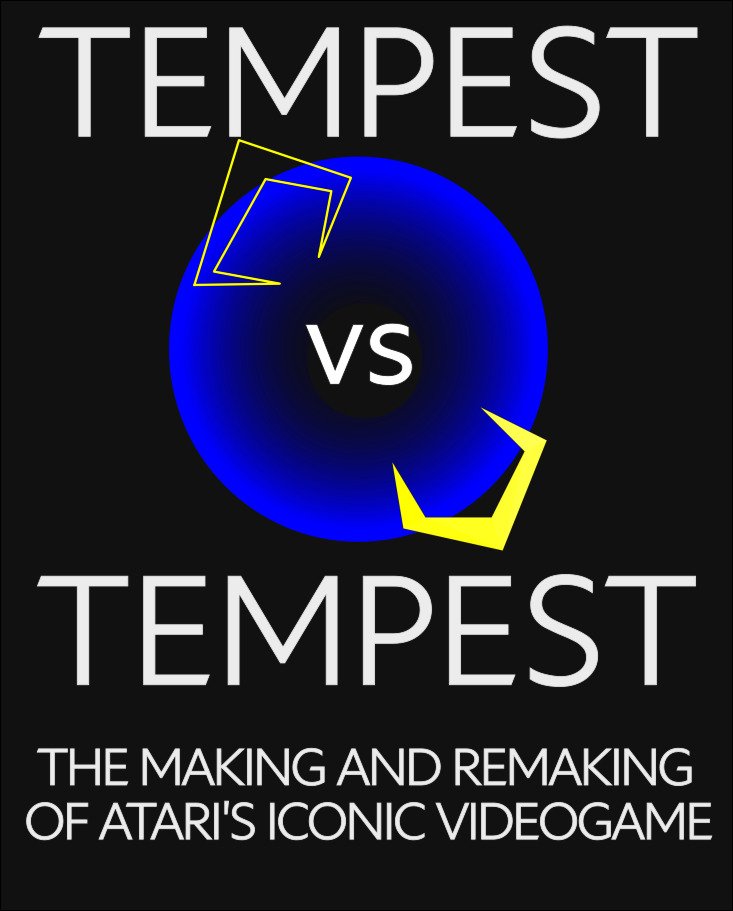
The recently released "Tempest vs Tempest" represents a fascinating deep dive into the code and craft behind two of arcade gaming's most influential titles. This comprehensive book explores Dave Theurer's original "Tempest" (1981) and Jeff Minter's "Tempest 2000" (1994), breaking down how these games function at the code level.
What makes this project particularly valuable is its meticulous examination of the actual assembly source code. For "Tempest," the book analyzes the 6502 assembler code that powered the original arcade cabinet, while for "Tempest 2000," it dissects the 68K Motorola implementation. This level of technical detail offers a rare glimpse into how classic arcade games were constructed before the era of game engines and high-level development tools.
The author has structured the book as a collection of focused chapters, each examining specific aspects of the games. This approach makes the complex technical content more digestible while still maintaining depth. The recommendation to use a dual-page view in a PDF reader underscores the book's design to present code alongside commentary, facilitating a better understanding of how specific game mechanics translate to actual implementation.
The availability of this book as a free download (with an optional donation option) reflects the growing trend of knowledge sharing within the retro computing and game preservation communities. The project demonstrates how detailed technical documentation can preserve important aspects of computing history that might otherwise be lost to time.
For those interested in exploring further, the book's GitHub repository offers additional insights into its creation process. This transparency allows readers to understand not just what the book contains, but how it was developed—a valuable learning opportunity in itself.
The author has also produced similar works, including "IRIDIS ALPHA THEORY," which examines the mechanics of Iridis Alpha with the same level of detail, and "psychedelia syndrome," which explores Jeff Minter's Psychedelia. These works collectively represent a significant contribution to understanding classic arcade game development.
The significance of projects like "Tempest vs Tempest" extends beyond mere nostalgia. By examining how these games were constructed, we gain insight into the ingenuity of early game developers who worked with severe hardware limitations. The problem-solving approaches, optimization techniques, and creative solutions they developed continue to influence game development today.
For aspiring game developers and programmers, these detailed examinations provide concrete examples of elegant code design and efficient implementation. The books demonstrate how complex gameplay mechanics can be achieved with relatively simple code when approached with creativity and understanding of the hardware.
The availability of the book in both standard (9MB download) and high-resolution (27MB download) versions shows consideration for different reader needs and technical capabilities. This attention to detail reflects the same care evident in the book's technical analysis.
As computing hardware continues to evolve, projects that preserve and document the techniques of earlier generations become increasingly valuable. "Tempest vs Tempest" stands as an excellent example of how technical documentation can bridge generations of developers, ensuring that the knowledge and creativity of early arcade game creators are not lost to time.
For readers interested in downloading the book or learning more about the project, the official repository provides additional resources and context. The book itself can be downloaded in standard resolution or high resolution, offering options based on reader preference and bandwidth availability.
This project joins a growing body of work dedicated to preserving and understanding classic game code, ensuring that the ingenuity of early game developers continues to inspire future generations of programmers and game designers.
Comments
Please log in or register to join the discussion