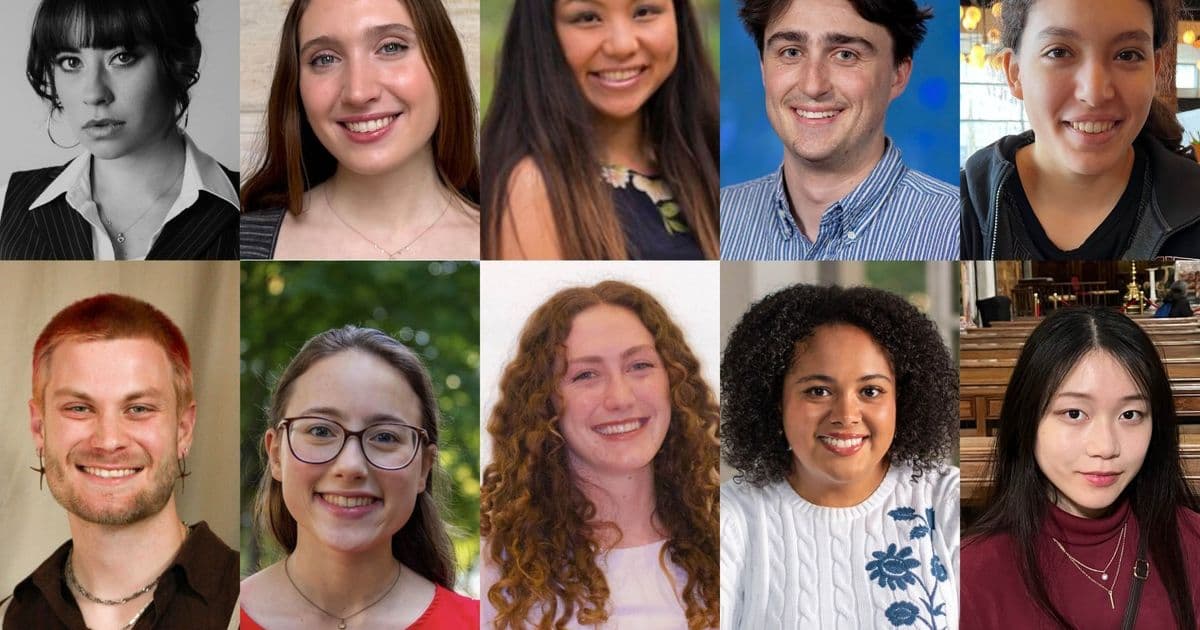
MIT reports that ten current students and alumni have accepted Fulbright grants for 2026‑27, spanning projects in Spain, Denmark, Iceland, Korea, Brazil, Sweden, Portugal, Romania, and Switzerland. The selections underscore MIT’s leadership in STEM‑focused Fulbright awards and illustrate how cutting‑edge research—from AI‑driven health tools to adaptive exosuits—will be applied abroad.
Ten MIT Scholars Accept 2026 Fulbright Awards
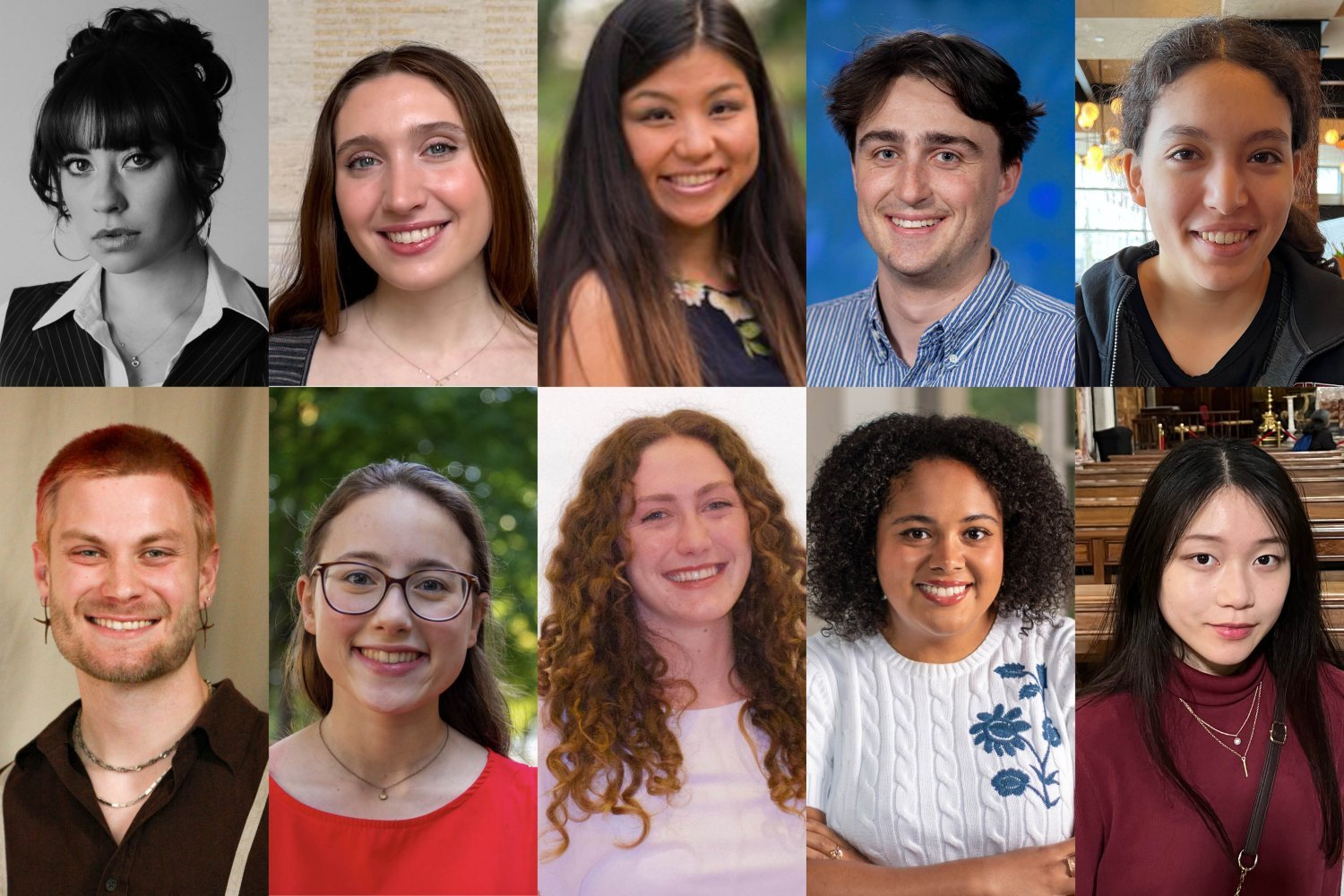
Over half of MIT’s 30 Fulbright applicants secured awards this cycle, and ten of those scholars have confirmed their plans for the 2026‑27 academic year. The winners represent a cross‑section of MIT’s undergraduate, graduate, and alumni communities, and their projects illustrate how the institute’s research strengths are being exported to laboratories and classrooms around the globe.
From Science Communication in Barcelona to Microbiome Work in Copenhagen
Jessica Chomik‑Morales (SM ’25) will spend a year at Universitat Pompeu Fabra’s Center for Brain and Cognition. Her project examines how narrative structures in science writing interact with reader traits to shape comprehension, trust, and engagement. The work builds on her experience producing the Spanish‑language neuroscience podcast Mi Última Neurona and aims to produce empirically grounded guidelines for inclusive science communication.
Stella Gassman, graduating with a BS in Biological Engineering, heads to the University of Copenhagen to study microbiology. Her prior work on the vaginal microbiome and a stint at Pfizer Oncology give her a translational perspective that she hopes to extend toward a future medical career.
AI, Systems Design, and Arctic Communities
Chen Li (SM ’25) earned her master’s in System Design and Management before joining Novo Nordisk’s MISTI Denmark project, where she built generative‑AI tools for patient engagement. As a Fulbright Iceland‑NSF Arctic Research Award recipient, she will investigate how AI‑enabled systems thinking can improve health and well‑being in remote Arctic settlements. Her research will combine large‑language‑model analytics with participatory design methods, a blend that could inform policy for sparsely populated regions.
Geophysics Meets Icelandic Volcanoes
Liam Moser, a new PhD graduate from the MIT‑WHOI Joint Program, focuses on subduction‑zone dynamics. His Fulbright postdoctoral fellowship at Reykjavík University will use dense earthquake recordings to map the structure of the Hengill volcanic system, providing data that could refine eruption forecasts and geothermal energy assessments.
Robotics, Energy, and Climate Resilience
Lilia Ould‑Hammou, a senior in Mechanical Engineering, received the Fulbright U.S.–Korea Presidential STEM Initiative Award. At Seoul National University’s Wearable Robotics Lab she will develop adaptive exosuit controllers for balance recovery, extending the soft‑modular robotic straps she helped create in MIT’s d’Arbeloff Robotics Lab.
Bryan Sperry (’23) will join the Cenergia Lab at the Federal University of Rio de Janeiro to study climate‑resilient urban power grids. His background designing superconducting transmission lines at VEIR positions him to evaluate low‑carbon pathways for Brazilian megacities.
Materials, Biomedical Engineering, and High‑Energy Physics
Sophie Thompson heads to the Swedish School of Textiles to test recycled carbon‑fiber composites for prosthetic sockets. Her prior work in the MIT Media Lab’s Herr Lab on low‑resource prosthetics informs a project that could lower costs for amputees worldwide.
Claire Underwood, a senior in Chemical‑Biological Engineering, will work at the University of Minho in Portugal on high‑throughput fabrication of cell‑embedded microtissues, a platform with direct implications for drug‑screening pipelines.
Sophie Vulpe (Physics & Mathematics) travels to Romania’s Extreme Light Infrastructure‑Nuclear Physics institute to develop data‑processing algorithms for a monoenergetic gamma‑ray spectrometer. Her experience characterizing black‑hole quasi‑normal modes provides a strong theoretical foundation for handling high‑precision photon data.
Brain‑Inspired AI in Switzerland
Josephine Wang, a computer‑science senior, will join EPFL’s NeuroAI Lab. Her research asks whether brain‑inspired language models can self‑organize into functionally specialized clusters, mirroring cortical columnar architecture. The project blends computational neuroscience with large‑scale language modeling, potentially offering new insights into how modularity emerges in artificial systems.
What This Means for MIT and the Fulbright Program
MIT was recently recognized as the nation’s top “special‑focus STEM” producer of Fulbright scholars. The diversity of disciplines—ranging from AI‑driven health tools to adaptive exosuits—demonstrates how the institute’s research pipeline feeds directly into international collaboration. For students, the Fulbright award remains a pathway to apply MIT‑honed skills in real‑world settings while building cross‑cultural networks.
Prospective applicants are encouraged to contact Julia Mongo, Fulbright program advisor in the Distinguished Fellowships office, for guidance on eligibility and application strategy.
Looking Ahead
The ten scholars highlighted here will embark on projects that not only advance their individual fields but also generate data, prototypes, and publications that can be fed back into MIT’s labs. Their experiences abroad will likely shape future curricula, joint research initiatives, and industry partnerships, reinforcing MIT’s role as a hub for globally relevant engineering and scientific innovation.
Comments
Please log in or register to join the discussion