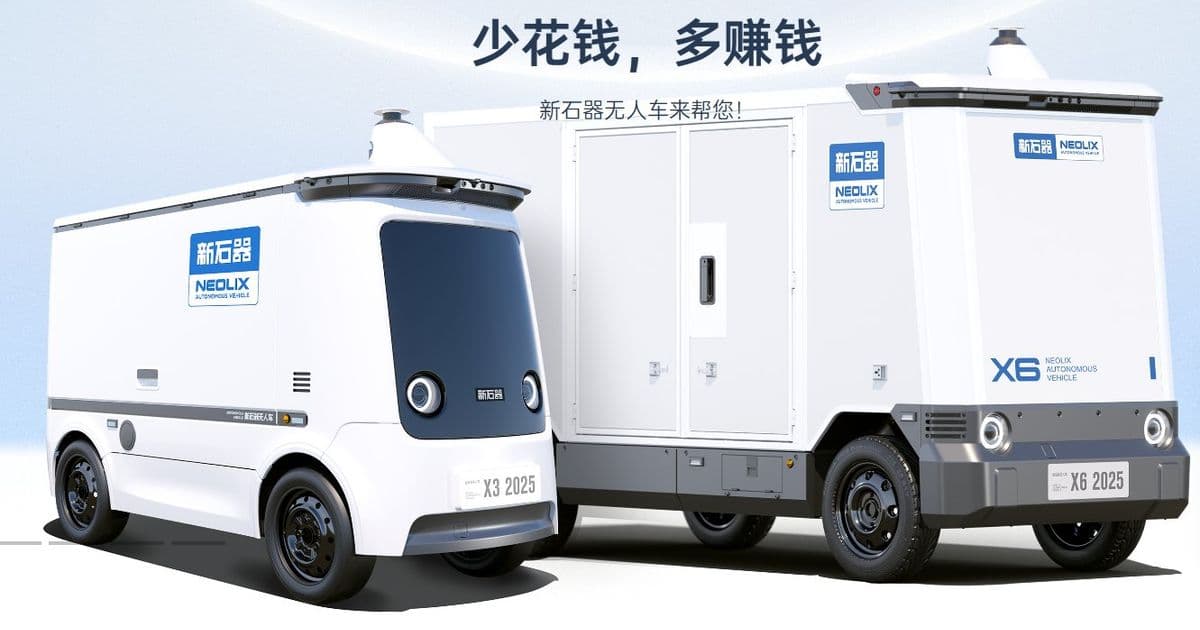
Tencent has acquired a stake in autonomous vehicle startup Neolix, accelerating commercial deployment of Level 4 self-driving logistics solutions for urban environments.
Chinese tech conglomerate Tencent has strategically invested in autonomous delivery vehicle manufacturer Neolix, signaling intensified momentum for Level 4 self-driving technology in urban logistics. The investment, confirmed through China's corporate registry filings, positions Neolix to leverage Tencent's capital infusion alongside its cloud computing capabilities and ecosystem partnerships.
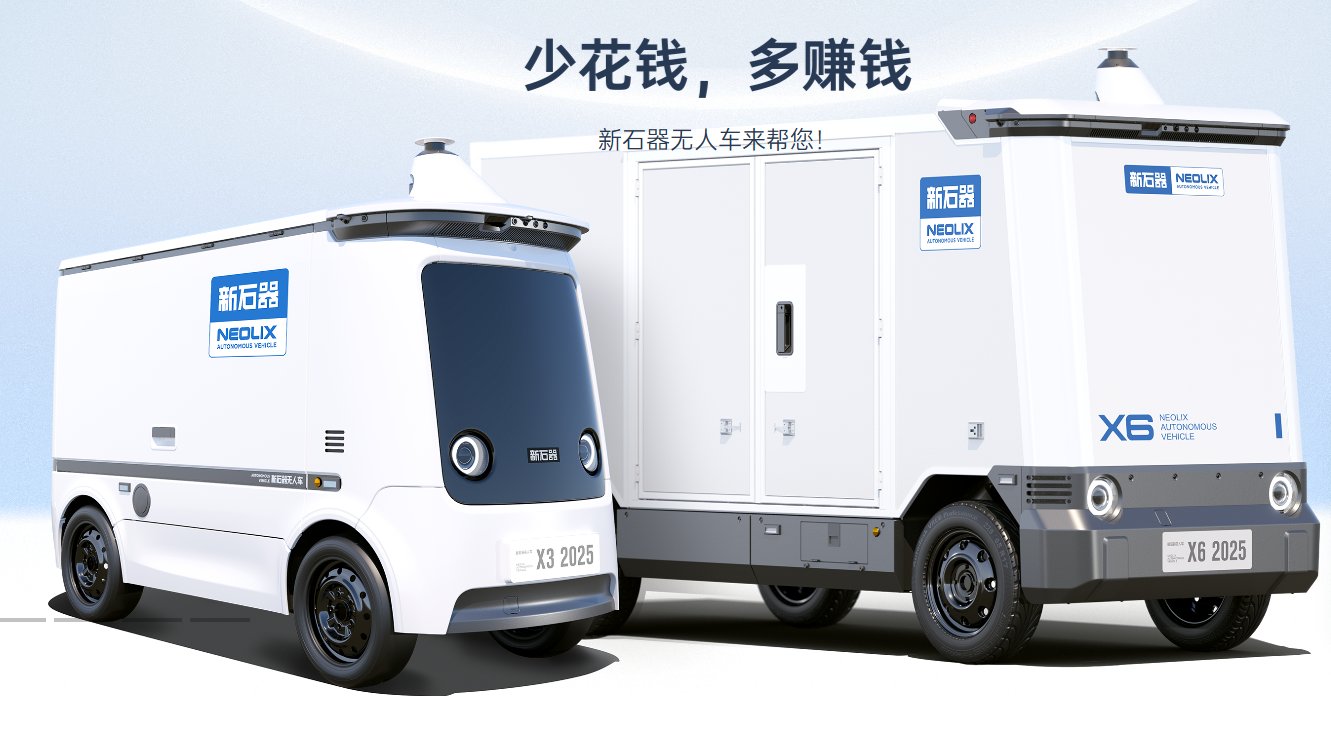
Founded in 2018, Neolix specializes in purpose-built autonomous delivery vehicles optimized for last-mile logistics. Their electric pods, operating at SAE Level 4 autonomy (high automation requiring no human intervention in mapped operational zones), navigate urban routes carrying parcels, food deliveries, and retail goods. Unlike experimental prototypes, Neolix vehicles have logged over 2 million commercial kilometers across 40 Chinese cities and international markets including Dubai.
Tencent's involvement extends beyond capital. The tech giant will provide computational resources through its cloud infrastructure, crucial for processing the sensor data from Neolix's camera, lidar, and radar arrays. Additionally, Tencent's AI research division may collaborate on perception algorithms and simulation testing environments. This ecosystem support accelerates Neolix's roadmap toward broader commercial deployment.
The timing aligns with critical shifts in urban logistics. Rising e-commerce demand and labor shortages intensify pressure on delivery networks. Level 4 autonomy offers potential solutions: 24/7 operational capability, reduced accident rates through predictable driving patterns, and optimized routing efficiency. Neolix's compact vehicles target constrained urban spaces where larger autonomous trucks remain impractical.
Global expansion forms a core objective for Neolix post-investment. The company established operations in the Middle East last year and recently initiated trials in Japan. Tencent's international cloud infrastructure and partnerships could streamline regulatory navigation and deployment in new markets. Meanwhile, technology upgrades will focus on enhancing operational design domains (ODDs) – expanding the environmental conditions (weather, traffic complexity) where vehicles operate safely.
This investment reflects Tencent's broader strategy to enable smart infrastructure. Unlike competitors backing robotaxi ventures, Tencent appears focused on near-term commercial applications with measurable efficiency gains. For Neolix, the backing validates a product-first approach: Rather than pursuing fully driverless passenger vehicles, they concentrate on solving tangible logistics bottlenecks through specialized hardware.
Success hinges on scaling economically. Manufacturing costs must decrease significantly to compete with conventional delivery methods. Tencent's resources could aid production scaling and supply chain optimization. The collaboration represents a significant step toward autonomous vehicles transitioning from pilot programs to essential urban infrastructure components.
Comments
Please log in or register to join the discussion