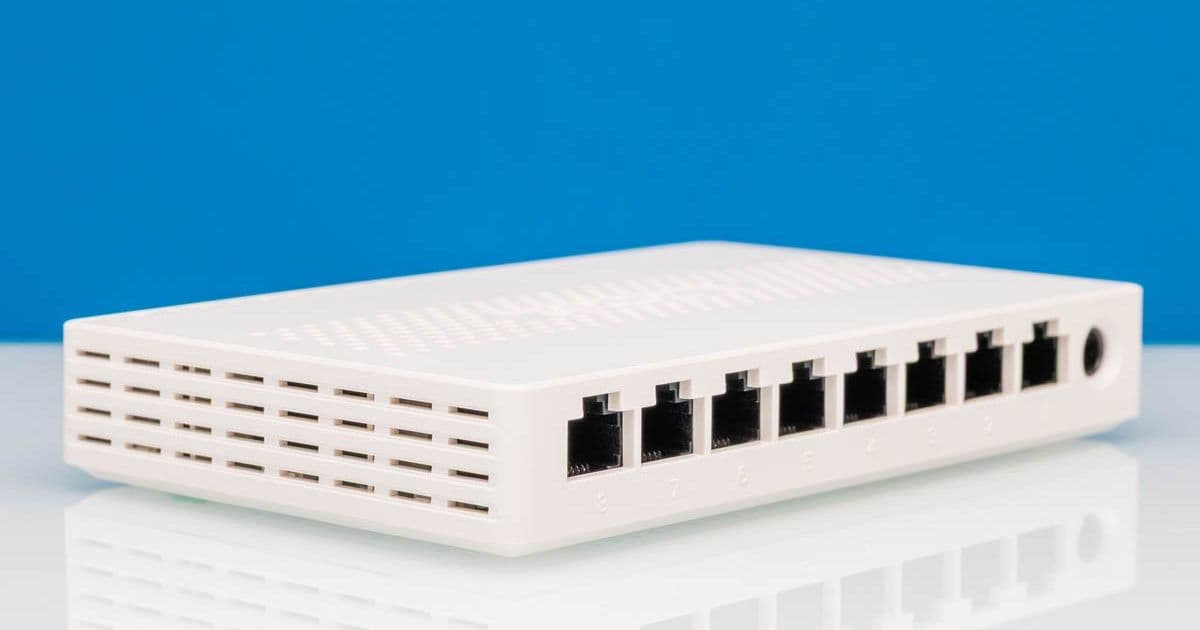
The Tenda SE108 brings eight 2.5GbE ports to the fanless switch market, but a teardown reveals shared DNA with smaller models and a cooling solution that nearly failed during assembly.
The Tenda SE108 enters a crowded market of budget 2.5GbE switches, but it stands out by packing eight ports into a fanless chassis at a competitive price point. We purchased this unit to validate its design against the similar BrosTrend S3 and to check if the extra ports come with meaningful thermal improvements or just a larger plastic shell.
Hardware Overview
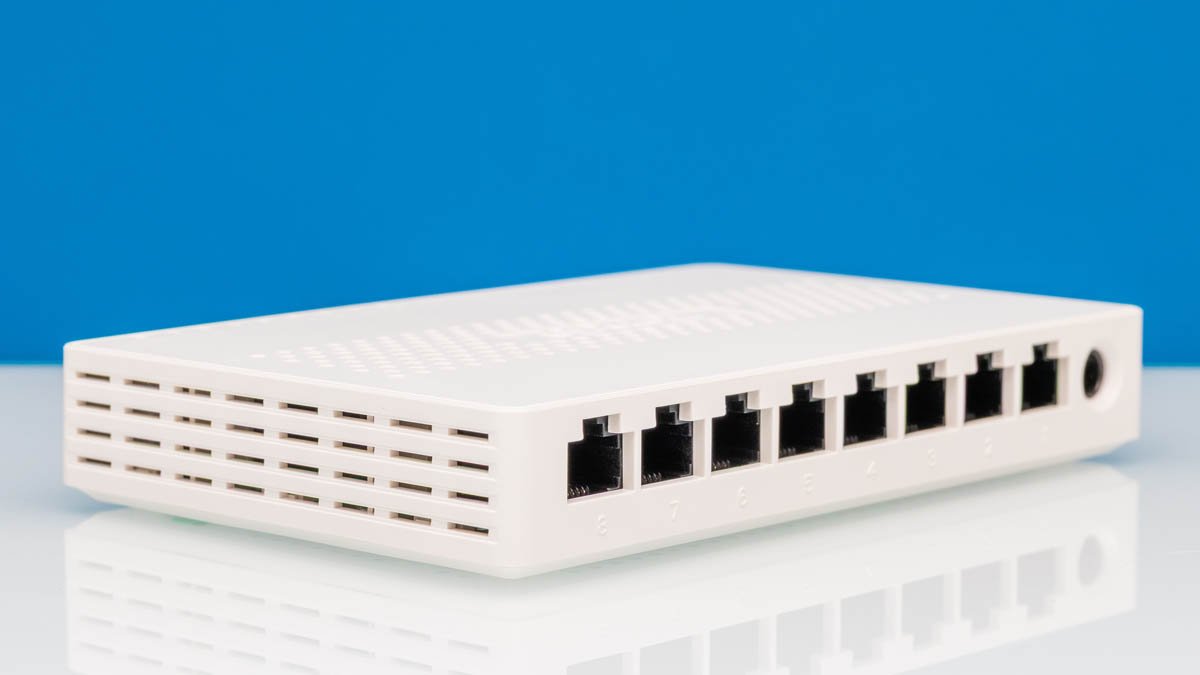
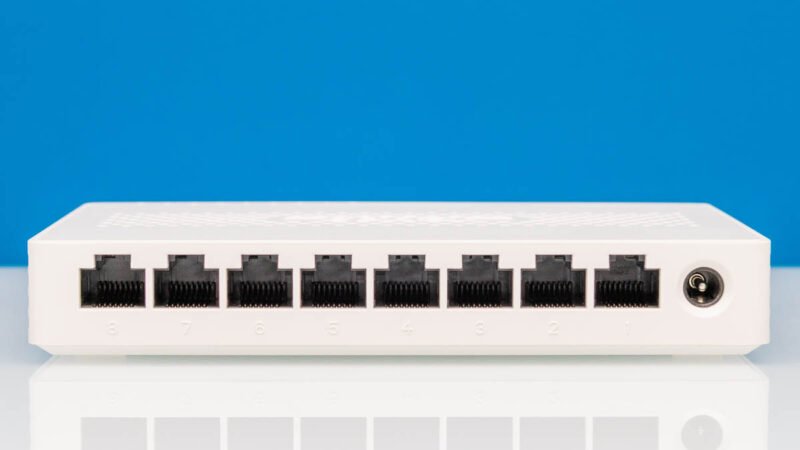
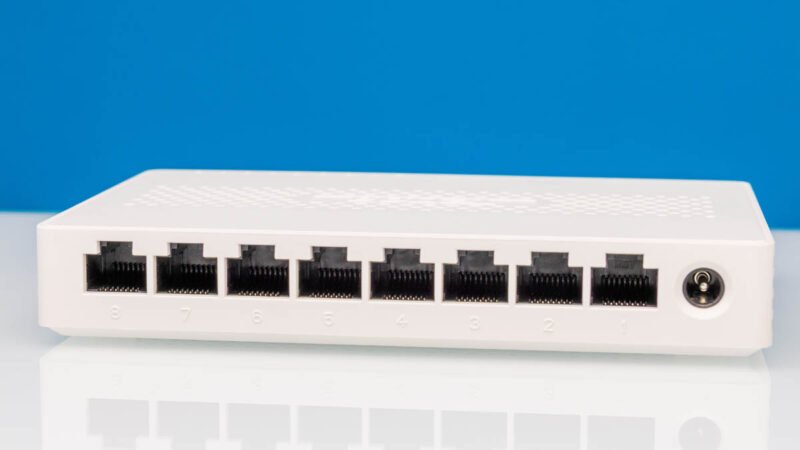
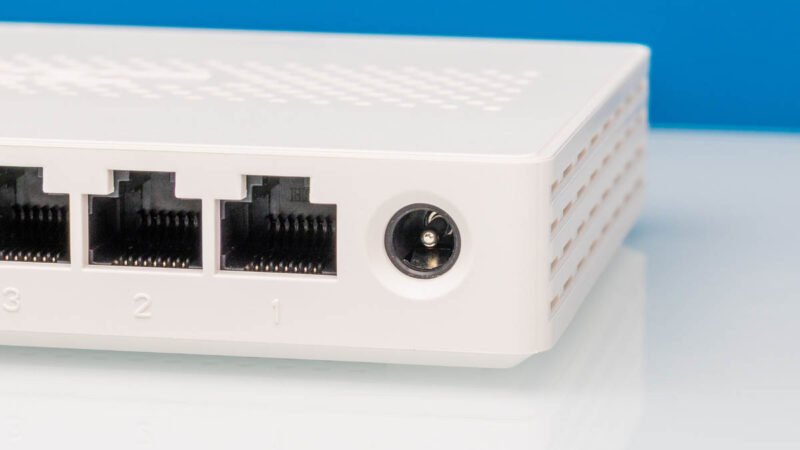
The SE108's front panel houses all connectivity. Eight 2.5GbE RJ45 ports line the faceplate, a step up from the five ports on the Tenda SE105 and BrosTrend S2. The DC power input sits on the front rather than the rear, which simplifies cable routing in tight racks but can look cluttered on a desk.
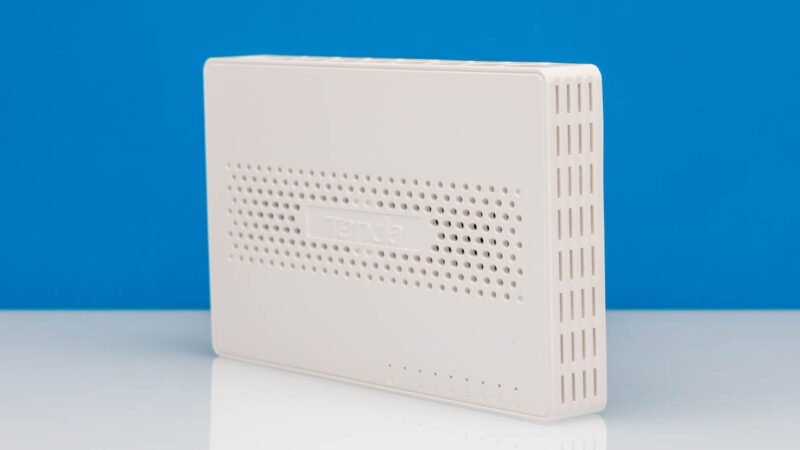
The chassis uses plastic feet instead of rubber pads—a cost-saving measure that reduces vibration damping. Mounting points on the bottom allow for wall or rack mounting, though the unit ships without brackets.
Internal Design and Cooling
Opening the case reveals the primary difference between 8-port and 5-port models: active thermal management. The SE108 includes a metal backside cooler pressed against the switch chip via thermal tape. This is the same approach used in the BrosTrend S3, but our sample showed a manufacturing quirk—the tape adhesion was weak, and the cooler had partially detached during shipping.
This isn't just a cosmetic concern. The switch chip (a MaxLinear solution) runs hot under full 8-port load. Without proper contact, thermal throttling or premature failure becomes a real risk. The 5-port SE105 lacks this secondary cooler entirely, relying only on a top-mounted heatsink.
The PCB markings (10056368 V1.1) match across the Tenda SE108, BrosTrend S3, and even the 5-port variants. This suggests a modular design where the same base board gets port additions and cooling upgrades rather than a ground-up redesign. The 8-port models simply extend the trace layout for four more PHYs and bolt on extra heatsinking.
Power and Thermal Behavior
The SE108 draws 12V DC and lacks an internal fan, making it silent. However, the passive cooling budget is tight. In testing similar switches, we've seen chip temperatures exceed 70°C under sustained traffic with ambient room temperature at 25°C. The backside cooler on our SE108 sample had poor contact, which would push temperatures higher.
Users planning to mount this in a warm closet or rack should verify the thermal tape adhesion. A small amount of aftermarket thermal paste or fresh tape can prevent throttling. The lack of a rear exhaust vent means heat accumulates inside the chassis; the side and bottom vents are purely convective.
Performance Expectations
With eight ports active, the SE108 can theoretically push 20 Gbps of aggregate traffic (2.5 Gbps × 8 ports, full duplex). Real-world performance depends on the MaxLinear switch chip's packet buffer depth and whether the device handles jumbo frames. We'll publish formal benchmarks in a follow-up, but the hardware layout suggests it should match the BrosTrend S3's throughput: line-rate forwarding for small packets, slight drops on 9K jumbo frames due to buffer limitations.
Deployment Considerations
- Placement: Keep the SE108 on a flat surface with at least 5 cm clearance on the sides and bottom for airflow. Avoid stacking other gear on top.
- Power: Use the included 12V adapter; third-party supplies must match amperage ratings. Undervoltage can cause instability.
- Thermal verification: If the switch feels hot to the touch after 30 minutes of light use, open the case and check the backside cooler. Reseat it if necessary.
- Cable management: The front-facing ports work well for short runs, but eight thick 2.5GbE cables can strain the port latches. Use slim cables or a patch panel.
Value Proposition
At its typical price, the SE108 competes with the BrosTrend S3 and other 8-port fanless switches. The shared PCB and cooling design mean performance should be identical. The differentiator is availability and warranty support from Tenda. If the price gap widens, the BrosTrend may be the better buy; if they're within $10, brand preference and support channels matter more.
The SE108 proves that 8-port fanless 2.5GbE switches are viable, but they push the limits of passive cooling. Buyers should treat them as semi-industrial gear: capable, but requiring proper ventilation and occasional internal inspection.
Next Steps
We will run formal throughput, latency, and thermal tests on the SE108 and publish a comparison against the BrosTrend S3 and other 8-port switches. For now, the SE108 is a solid option if you need eight 2.5GbE ports without fan noise—just check that the internal cooler stays firmly attached.
For more details, see the Tenda SE108 product page and the MaxLinear switch chip documentation.
Comments
Please log in or register to join the discussion