Julio Merino's experiment with vibecoding an Emacs module reveals tensions between AI-assisted productivity and the diminishing joy of creation, raising profound questions about the future of software development.
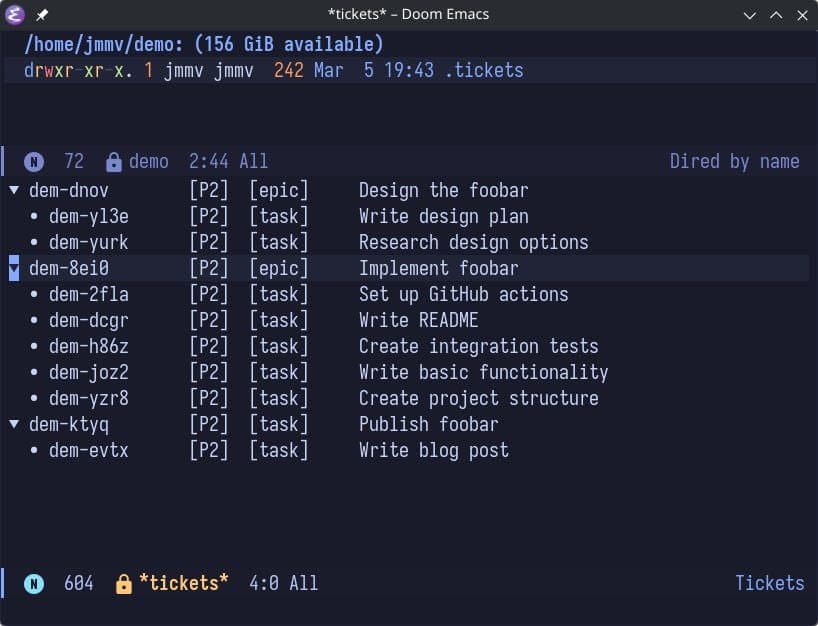
In the evolving landscape of human-AI collaboration, Julio Merino's recent experiment with vibecoding ticket.el offers a compelling case study of both the promise and peril of AI-assisted software development. Merino, who admits to lacking Elisp knowledge, successfully created a functional Emacs module for ticket tracking using only AI coding assistants, yet emerged from the process with complex feelings about what he had accomplished.
The journey began with Merino's dissatisfaction with existing ticket tracking tools. After dismissing Beads as a "300k SLOC vibecoded monster" that was "sluggish enough to increase development latency," he turned to Ticket (tk), a pure shell implementation. As he began using tk more extensively, he desired integration with Doom Emacs—a task that would typically require Elisp expertise. This is where vibecoding entered the picture.
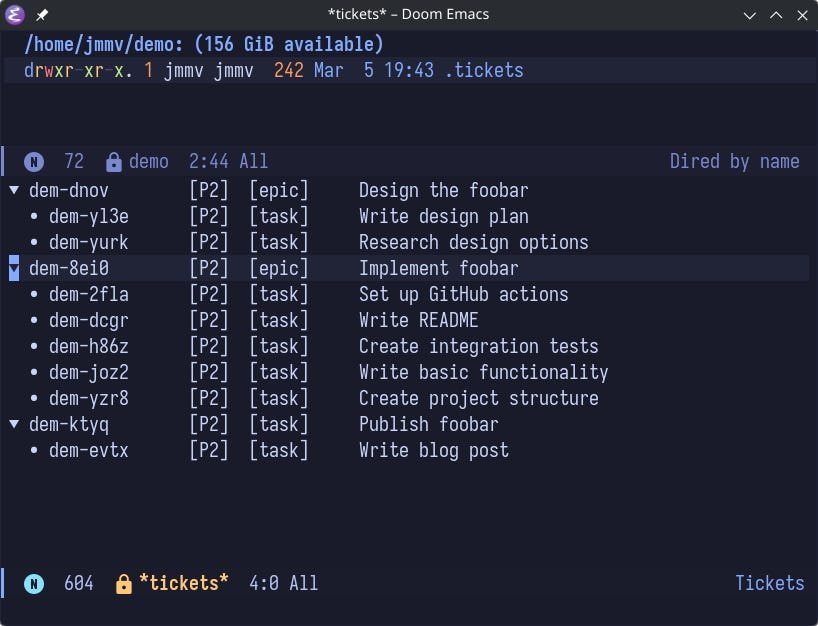
"Normally, I would have discarded this idea because I don't know Elisp," Merino writes. "However, it quickly hit me: 'I can surely ask Claude to write this Emacs module for me.'" What followed was a process of refinement through iterative prompts, resulting in a tree-based interactive browser for ticket management that goes beyond tk's original capabilities.
The reflections that follow this introduction reveal the core tension of vibecoding: the ability to create functional software without the traditional investment of time and learning. Merino successfully built something useful, yet describes the experience as "hollow" and expresses an inability to feel pride in the achievement. "I don't have any connection to what I have made and published," he admits, "so if it works, great, and if it doesn't… well, too bad."
This emotional detachment represents a significant departure from traditional software development. For many developers, the process of solving problems, refining solutions, and gaining mastery over a domain provides intrinsic rewards that often outweigh the value of the final product. Vibecoding, by short-circuiting this journey, delivers the product without the developmental experience.
The learning implications are equally profound. Despite successfully creating an Emacs module, Merino remains "as clueless as ever about Elisp." This raises a critical question: if AI can generate code in domains we don't understand, does this create a generation of developers who can build without comprehending? The potential consequences for software maintainability and problem-solving capacity are significant.
Merino also observes concerning patterns in AI-generated code. "Coding agents tend to take the path of least resistance to adding new features, and most of the time this results in duplicating code left and right," he notes. This tendency toward bloat contradicts the principles of elegant, efficient software design and could lead to performance issues as AI-generated codebases scale.
The article's most forward-looking concerns relate to open source software. Merino worries that vibecoding could enable new forms of abuse: "taking over existing projects or drowning them with poor contributions." This touches on complex questions about intellectual property, attribution, and the ethical implications of AI systems trained on open source code now contributing back to those same ecosystems.
The economic dimension adds another layer to this complexity. Merino notes the Jevons paradox in action—while vibecoding increased his overall productivity by enabling parallel work, it didn't necessarily free up time in the traditional sense. The relationship between human effort and output becomes increasingly ambiguous when AI systems can generate code in the background.
What emerges from Merino's experiment is not a simple verdict on vibecoding, but a nuanced recognition of its dual nature. The approach clearly lowers barriers to creation, enabling useful software to exist that otherwise wouldn't. At the same time, it threatens to diminish the craft of programming, potentially leading to a generation of developers who can consume AI output without understanding the underlying principles.
The implications for software quality are particularly concerning. Without human oversight, AI-generated code tends toward duplication rather than abstraction, creating bloated systems that may work but lack elegance. As Merino notes, "I fear we are about to see an explosion of slow software like we have never imagined before."
Yet the experiment also reveals possibilities for new forms of collaboration. The ability to make progress in small increments, without requiring extended blocks of focused time, represents a significant advantage for developers with limited availability. The potential for AI to handle routine tasks while humans focus on higher-level design could reshape development workflows in positive ways.
Ultimately, Merino's experience with ticket.el serves as both a proof-of-concept and a cautionary tale. It demonstrates that vibecoding can deliver functional software, but at what cost to the developer's growth, connection to their work, and understanding of the systems they help create? As AI tools become more sophisticated, these questions will only grow in importance.
The future of software development may not lie in choosing between human and AI coding, but in finding ways to integrate the strengths of both. The challenge will be preserving the joy of creation, the depth of understanding, and the commitment to quality that has characterized great software development, while leveraging the productivity gains that AI assistance can provide.
Comments
Please log in or register to join the discussion